
Overview of the strike and immediate airspace impact
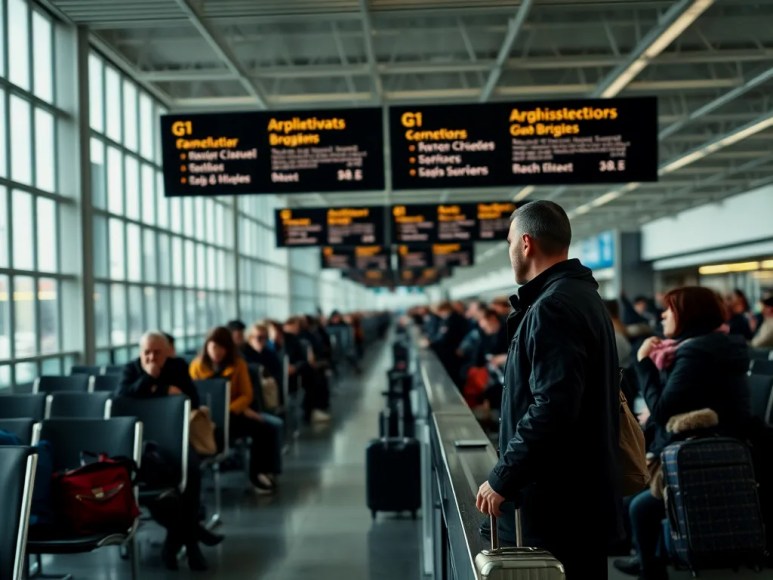
Belgium’s national strike on 23 November 2026 halted most commercial flights after a significant portion of Skeyes air traffic controllers walked off the job. Authorities suspended routine air traffic control between 07:00 and 21:00 local time (09:00–23:00 TRT), creating a 14‑hour gap that forced airports to cancel scheduled operations except for emergencies and essential safety flights.
Exact disruption at Brussels Airport: numbers and timeline
Brussels Airport had planned 429 passenger flights for the day—213 departures and 216 arrivals—affecting an estimated 59,500 passengers. Most flights scheduled within the suspended window could not operate. Airport controllers and operations teams prioritized safety and systematically removed affected flights from active control to prevent departures during the blackout period.
Complete shutdown at Charleroi and ripple effects
Brussels South Charleroi Airport canceled its entire schedule for the day. Low-cost carriers that concentrate operations there saw all services suspended, stranding both origin and transfer passengers. The sudden notice compressed airlines’ ability to rebook or reroute travelers, producing large queues at ticket desks and overwhelming customer service lines.
Why the strike happened: policy changes and union demands
Union federations organized the walkout in direct response to federal budget measures and reforms that aim to cut public spending and modify worker protections. Unions framed the strike as a coordinated national protest to pressure the government into revising measures that, in their view, would weaken social safety nets and worker benefits. The aviation sector’s participation amplified consequences beyond ground transport and public services.
How authorities managed air traffic and safety during the outage
Air navigation service providers activated contingency protocols: they issued NOTAMs (Notice to Air Missions) announcing the suspension, restricted entry into Belgian airspace for scheduled flights, and allocated corridors for emergencies. Airlines holding aircraft at other airports delayed departures affecting crew duty times and connecting passengers across Europe. Ground handling, refueling, and turn‑around teams shifted to standby or reallocation modes to limit aircraft block time and passenger inconvenience.
Practical steps for affected passengers right now
Check flight status first: contact your airline via its official website, app, or phone line before traveling to the airport. Airlines typically update impacted flights in real time before they receive formal NOTAMs and control center confirmations.
Options to pursue: request rebooking on the next available flight, ask for refunds where applicable, or arrange vouchers/compensation according to the carrier’s policy and EU Regulation 261/2004 when cancellations fall under airline responsibility. Keep boarding passes, booking references, and all receipts for meals, accommodation, or alternative transport for potential reimbursement claims.
If you’re in transit: consult both origin and destination carriers, because connecting itineraries commonly involve different operators. Airlines may reroute you via neighboring hubs (Amsterdam, Paris, Frankfurt) when slots and crew availability permit.
Typical airline responses and what to expect from carriers
Airlines typically take one or more of these actions: automatic rebooking on the next service, offering a full refund, or issuing travel vouchers. Low-cost carriers may have limited transfer options and stricter fare rules, so passengers should press for alternatives or refunds promptly. Expect long hold times; digital channels often update faster than call centers.
Impact on ground transport and urban mobility
The strike extended beyond aviation: metro, tram, and bus services in Brussels operated at reduced capacity or with altered timetables as many municipal workers joined the protest. Travelers relying on public transport should anticipate delays and seek private transfer, taxi, or rideshare options when essential. If you planned a same‑day flight connection via Brussels, arrange alternatives in advance to avoid missed links.
How airlines and airports can reduce future disruption risk
Airline and airport resilience strategies include creating rapid rebooking pools, mutual aid agreements with neighboring hubs, and flexible crew rostering practices that preserve minimum duty coverage. Skeyes and carriers can also coordinate earlier contingency NOTAMs and staggered slot releases to reduce catchment‑area congestion when industrial action is announced.
Step‑by‑step checklist for travelers affected by the 23 November shutdown
1. Verify current flight status on the airline’s site or app.
2. If canceled, choose rebooking, refund, or voucher based on your preference.
3. Save all documentation and receipts for claims.
4. If trapped at the airport, request hotel or meal support from the airline when eligible.
5. Consider alternative routings through nearby hubs and coordinate with travel companions to consolidate claims.
Examples of realistic rebooking scenarios
– A traveler from Istanbul with a Brussels connection can be rebooked via Amsterdam with the same carrier if the carrier has interline agreements and free seats on the alternate route.
– A passenger booked on a low‑cost carrier with no next‑day flight option may receive a refund and a voucher to rebook on a different airline, depending on the ticket contract.
Longer‑term consequences for Belgian and European aviation
Frequent industrial action erodes passenger confidence and increases operational costs for carriers and airports. Airlines may reroute hub structures or diversify transfer options to reduce single‑point‑failure risk. Regulators and employers might also accelerate social dialogue to build binding contingency clauses for essential national services to limit cascading cross‑border effects.
Where to find official updates and reliable information
Monitor the following sources for authoritative updates: Brussels Airport and Charleroi Airport official pages, Skeyes advisories and NOTAM feeds, airline customer portals, and national civil aviation authorities. For compensation rules, consult EU Regulation 261/2004 texts and your airline’s contract of carriage.
Quick answers to common passenger questions
Will I get compensation? Compensation depends on whether the cancellation falls under extraordinary circumstances. If the airline could have avoided the cancellation and it refuses reasonable alternatives, EU rules may entitle you to compensation in addition to rerouting or refunds.
Can I claim hotel and meal costs? Keep receipts; Airlines sometimes reimburse reasonable expenses when the carrier is responsible or offers no timely alternative. Credit card travel insurance may also cover incidental costs.
How long before flights resume? The suspension covered 07:00–21:00 local time that day; airlines and airports published phased recovery plans after controllers returned or contingency staffing restored.
Be the first to comment