
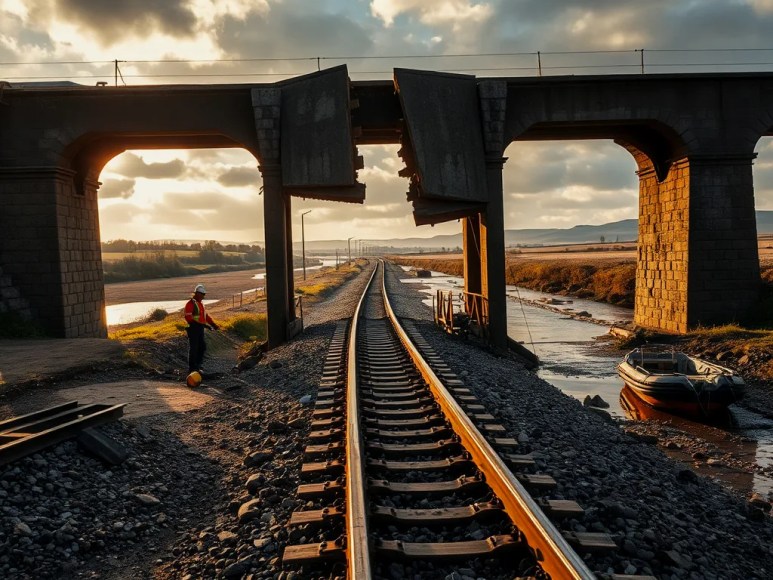
Extent of damage along the Antonito–Chama line and estimated costs
Severe autumn storms in October and November 2026 washed out multiple critical sections of the 103-kilometer Cumbres & Toltec Scenic Railroad. Field engineers identified two primary loss zones: the Chama River east approach to the bridge and the Coxo fill near Cumbres Pass. Initial on-site surveys estimate roughly $5 million to rebuild washed-out trackbeds, replace embankment fill and install new culverts. Separate assessments put Chama station and related historic-site repairs at about $1 million, bringing an early aggregate estimate to $6 million or more once locomotive water-supply infrastructure and additional mitigation are included.
What failed at the Chama River bridge approach and how crews will fix it
Intense runoff first undermined the east bank of the Chama River near the bridge on October 23, then a subsequent storm on November 1 removed the remaining supporting soil As a result, roughly 15 meters of track and ties now span unsupported, exposed to scour and settlement. Structural inspections of the bridge itself found no major defects, but the approach needs rebuilt riverbank protection and a new, deeper foundation for the approach embankment.
Repair steps planned by engineers:
1) Lower the river stage where feasible through temporary flow control to permit dry working conditions; 2) place large angular rock toe protection and layered riprap to resist future scour; 3) reconstruct the embankment with compacted engineered fill and geotextile separation layers; 4) replace the track structure and signal/utility ducts across the approach; 5) monitor settlement and scour through staged instrumentation for at least one high-flow season.
Why the Coxo fill collapse matters and how reconstruction will proceed
The Coxo segment near Cumbres Pass experienced catastrophic erosion: a contiguous fill roughly 30 meters long and 24 meters deep washed away, interrupting the rail corridor and eliminating the supporting soil mass beneath the track. That scale of loss requires more than spot repairs — it requires a full earthwork reconstruction and redesigned drainage to prevent repeat failure.
Reconstruction actions include sourcing ~15,000 cubic meters of engineered fill, installing larger capacity culverts or possible drilled piers where concentrated flows exist, regrading adjacent slopes, and adding permanent surface drainage and subdrain systems. Geotechnical investigation will define allowable slope angles and compaction specifications; Those reports will guide contractors on fill layering, moisture control, and settlement allowances.
Damage to Chama station, yard, and locomotive water system
Floodwaters inundated the historic 1899 Chama station, saturating foundations and basement damaging walls and the platform substructure. Ancillary facilities — coal ramp, sand drying unit and several historic yard elements — also sustained water and debris impact. Estimated initial repair costs for structures and site restoration are near $1 million, not including specialized historic preservation treatments.
Crucially, the water intake facility that supplies steam locomotives became buried under rock and debris after the Chama River shifted roughly 30 meters. Restoring locomotive service requires either excavating and rehabilitating the original intake or designing and permitting a new intake and conveyance system. That work involves hydrologic permitting with New Mexico authorities and an assessment of seasonal flow reliability; the cost remains undetermined pending the intake design alternative selected.
Timeline to reopen sections and the 2027 season outlook
Operators inspected approximately 80 kilometers of the Antonito–Cumbres corridor and concluded that much of that section can be repaired and made operational in time for a May 29, 2027 seasonal start if funding, permits and winter weather cooperate. The 2027 regular schedule currently runs through October 17. Smaller localized repairs, such as the Tanglefoot curve stabilization, have already been completed or are near completion.
Key dependencies for meeting the 2027 opening:
• Rapid authorization of emergency repairs and environmental clearances; • secured funding or interim financing for earthworks and materials; • mobilization of heavy rock-handling equipment during low-flow seasons; • contingency plans for winter freeze-thaw and early spring runoff.
How special December trains will operate while repairs continue
Because the full 103-kilometer mainline will likely remain partially closed into winter, the railroad revised its holiday operations. December 5–6 departures from Chama will run shortened, circuit-style trips within the immediate rail yard and adjacent preserved trackage. December 12–13 departures from Antonito will run towards the Lava area on a modified alignment that avoids the most damaged sections. These special trains maintain passenger experience while avoiding unsafe stretches of rail.
Tourism, revenue impact and reservation context
The line contributes meaningfully to local tourism in both Colorado and New Mexico. As of the November 7 commission meeting, reservations for 2026 — including the altered December services — showed 24,008 reservations and roughly $3.7 million in gross revenue recorded as deposits or paid reservations. Those figures reflect reservations at meeting time, not necessarily completed passenger movements. Limited capacity or shortened routes during repair seasons will depress fare-based revenue and may shift community economic impacts.
Funding routes, agency roles, and what to expect next
State and federal emergency aid remain under evaluation. Historically, similar rail preservation and emergency repair projects use a mix of state transport funds, FEMA public assistance for eligible infrastructure, and targeted grants for historic preservation. The railroad’s path to full recovery will require:
• submission of detailed scope and cost estimates to funding agencies; • geotechnical and hydrologic reports to support permit applications; • Staged contracting to prioritize safety-critical segments (bridge approaches and washed fills) before aesthetic or historic repairs.
Operators will continue to monitor and document repairs with cameras, settlement sensors and flow gauges to support warranty claims and future mitigation design.
Practical advice for visitors and stakeholders
If you planned travel to Cumbres & Toltec in spring–summer 2027, confirm service maps and departure points directly with the railroad. Group organizers should verify which segments will operate and allow flexible itineraries; Tour operators might consider alternative experiences such as on-site historical exhibits, locomotive shop tours where safe, or bus transfers linking open segments. Local businesses dependent on train arrival patterns should communicate with the railroad about changes to arrival windows and expected passenger counts.
Conclusion — recovery is possible but contingent on multiple factors
Engineers have a clear remedial path: replace eroded embankments, install robust scour protection, rehabilitate historic station fabric, and restore locomotive water supply. Achieving a May 2027 opening for most of the line is feasible if permits, funding and winter conditions align. Full restoration to pre-flood operational parity will likely require phased investments and careful geotechnical design to reduce the risk of repeat flood damage.