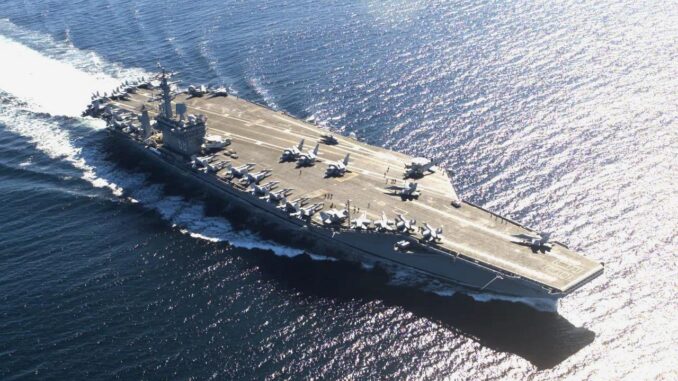
US Navy Demonstrates Global Naval Power with Nimitz Carrier Deployment
The United States Navy has once again showcased its formidable maritime presence by deploying the Nimitz-class aircraft carrier along with accompanying warships to the Caribbean. This strategic move underscores America’s commitment to maintaining maritime dominance across key international waterways, especially amidst growing geopolitical tensions in the Indo-Pacific and Middle East regions.
Details of the Deployment and Naval Components
The USS Nimitz (CVN-68), a flagship of the US Navy, was assigned to a task force that includes the CVW-17 (Car-air Wing 17), the USS Gridley (DDG-101), and the USNS Patuxent (T-AO-201). These vessels form a formidable naval group capable of executing a wide range of military operations, from air strikes to amphibious assaults.
Strategic Importance of the Nimitz Deployment
Deploying the Nimitz Carrier Strike Group to Caribbean waters is a calculated move, emphasizing the Pentagon’s strategic priorities. The Caribbean serves as a critical juncture for American interests, particularly in monitoring drug trafficking routes, countering regional instability, and projecting power into Latin America. Historically, carrier groups like Nimitz have been instrumental in swift response scenarios, capable of deploying air power within hours of a crisis.
Operational Capabilities and Mission Readiness
The USS Nimitz boasts an impressive array of capabilities, including a full complement of over 60 aircraft, including F/A-18 Hornets, E-2 Hawkeyes, and EA-18 Growlers. Its nuclear propulsion allows for sustained operations without the need for refueling, giving it unmatched endurance at sea. The carrier’s carrier air wing provides unmatched versatility, from aerial combat to surveillance and electronic warfare.
Enhanced Presence Amid Regional Tensions
The deployment comes at a time of heightened regional tensions. North Korea’s provocative missile tests, China’s assertive stance in the South China Sea, and Iran’s regional activities underscore the need for robust US naval presence. Carrier groups serve as a visible symbol of American military readiness, capable of rapid escalation if necessary.
Historical Context and Lasting Impact
Historically, the deployment of carrier strike groups has been pivotal during crises such as the Gulf War, Iraq invasions, and recent Middle East conflicts. The Nimitz’s extensive deployment history demonstrates its importance as a flexible, multi-mission platform. This latest deployment aligns with America’s broader strategy to project power and reassurance allies, especially in volatile regions.
Future Outlook and Strategic Goals
As the US continues to adapt to evolving global threats, the focus remains on maintaining maritime superiority. The Nimitz deployment signals US intent to sustain a forward-deployed naval presence, deter adversaries, and reassure regional allies. Upcoming naval exercises and joint drills further enhance interoperability, ensuring that America’s naval forces remain ready for any scenario.
In conclusion, the deployment of USS Nimitz to the Caribbean exemplifies America’s unwavering commitment to global maritime dominance. It reflects strategic foresight in navigating complex geopolitical landscapes and showcases the unmatched power projection capabilities of the US Navy.