Russia’s Drone Force Surge and Military Innovations
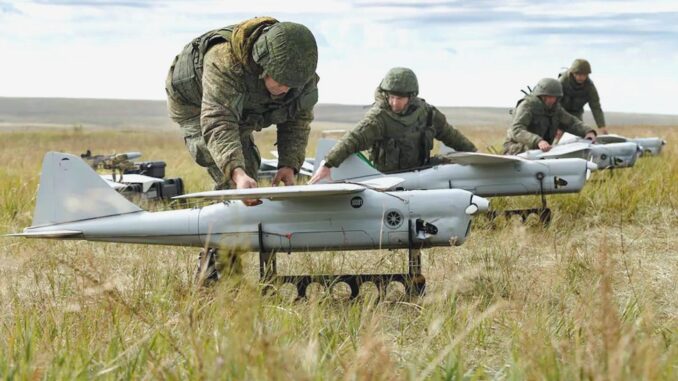
Over the past year, Russia has dramatically increased its unmanned aerial vehicle (UAV) personnel and operations, signaling a strategic shift towards autonomous warfare. According to Ukrainian Unmanned Systems Forces Commander Robert “Magyar” Brovdi, the personnel count in Russia’s UAV units grew from roughly 86,000 at the beginning of the year to over 114,000 by May 2026. Moscow aims to raise this figure to approximately 168,000 by year-end, underscoring its commitment to expanding drone warfare capabilities.
Russian Recruitment of University Students as Drone Operators
Russia’s approach involves mass recruitment across universities nationwide, actively engaging students in drone warfare. Since February, at least 269 universities have hosted *demonstration and recruitment events*, according to reports from CNN and The New York Times. These events target students in technical fields, promising lucrative benefits such as high salaries, remote deployment options, *free training*, and promising career paths within the military’s drone programs.
For instance, at St. Petersburg State University, students received offers of a $56,000 one-time payment and an annual salary of $70,000 for drone operation roles. Some universities also facilitate priority admission to advanced programs and provide accommodation, making drone specialization an attractive option for tech-savvy youth. The *Moscow Higher School of Economics* even hosted a dedicated “Unmanned Systems Festival,” further illustrating the militarization of educational environments.
The Controversial Recruitment Tactics and Student Resistance
However, this aggressive recruitment strategy triggers internal dissent. Several students report coercive techniques by university administrations, including compulsive briefings and disciplinary threats for those refusing to participate in drone training. These practices raise concerns over mandatory military service and the potential exploitation of young talent for strategic drone warfare.
Russia Mimics Ukraine’s Drone Warfare Model
Strategic insights from Brovdi reveal Russia’s deliberate effort to emulate Ukraine’s successful deployment of unmanned systems. Since establishing its UAV Brigade in 2024, Ukraine integrated drones at the core of its military tactics, accounting for a significant portion of battlefield casualties—up to one-third of Ukraine’s enemy losses, despite UAVs constituting only about 2% of its military force.
This underscores how unmanned systems have become force multipliers in modern combat. Russia’s investments in “Rubicon,” a centralized UAV operation hub, aim to replicate this success. Rubicon, managed by Brovdi’s unit, targets Ukrainian supply lines, detects drone operators, and intercepts reconnaissance UAVs, exemplifying a comprehensive approach to drone-based battlefield dominance.
Development of Russia’s Own Satellite-based Communication Infrastructure
Communication reliability remains a cornerstone of efficient drone operations. Ukraine benefits immensely from Starlink, SpaceX’s satellite internet, which ensures unstoppable connectivity despite electronic warfare efforts. This advantage allows Ukraine’s drone operators to perform real-time surveillance and strike coordination, even amidst intense jamming and signal interference.
Recognizing this vulnerability, Russia actively develops its own satellite internet networks. Early prototypes involve large, rudimentary systems prone to detection, but Moscow’s aim is to produce reliable, covered satellite communication to ensure seamless drone control. If successful, this would substantially elevate Russia’s drone operational capacity, enabling persistent battlefield presence and rapid tactical responses.
Growing Investment in Russia’s “Rubicon” and Drone Warfare Infrastructure
The “Rubicon” project signifies Russia’s strategic move toward establishing centralized UAV command and control hubs, modeled after Ukraine’s operational structure but with distinct Russian characteristics. These hubs facilitate targeting logistics, reconnaissance, and combat drone coordination directly on the frontline, enhancing operational autonomy and effectiveness.
However, Brovdi admits that Russia’s rapid expansion faces quality control issues. The speed of growth may dilute training standards, leading to less-skilled operators and potential operational vulnerabilities. Nevertheless, the sheer scale of deployment and the focus on internal capacity-building demonstrate Moscow’s commitment to surpass Ukraine in drone warfare dominance.
Implications and Future Trajectory of Russian Drone Warfare
By intent and design, Russia is positioning itself as a formidable player in the evolving domain of unmanned warfare. The concerted effort to recruit youth, mimic Ukraine’s successful tactics, and develop proprietary satellite communication systems reflect Moscow’s comprehensive strategy to achieve total operational independence in drone warfare capabilities.
As these programs mature, we can expect an escalating arms race in UAV technology, more sophisticated drone swarms, and the potential for unprecedented battlefield control. The pivotal question remains whether Russia can maintain quality amidst aggressive growth, or if operational shortfalls could undermine its expanding drone empire. The ongoing developments will undoubtedly shape the next phase of this technological and strategic militarization.