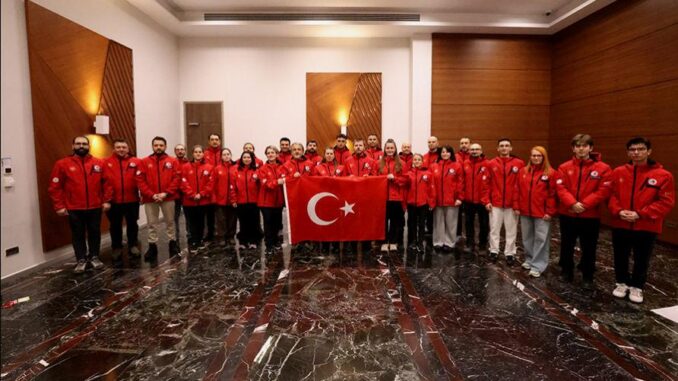
In a bold stride toward establishing itself as a key player in global polar research, Turkey has officially launched its 10th Antarctic scientific expedition — a comprehensive mission aimed at deepening scientific understanding, enhancing international collaboration, and solidifying its strategic presence in the frozen continent. This initiative underscores Turkey’s unwavering commitment to expanding its scientific horizons beyond traditional borders and leveraging innovation to solve pressing climate and environmental challenges.
The expedition, named the 10th National Antarctic Scientific Expedition (TAE X), was launched under the auspices of the Presidency, managed by the Ministry of Industry and Technology, and coordinated rigorously by the TUBITAK Polar Research Institute (KARE). Organized with a team of 17 scientists—including 16 Turks and 1 Bulgarian—this expedition marks a significant milestone in Turkey’s ongoing efforts to elevate its scientific footprint in polar regions. Departing from Istanbul, the team aims to reach the active expanse of Antarctica and establish enduring research mechanisms to support future scientific endeavors.
Strategic Significance of the Antarctic Mission
Turkey’s focus on the Antarctic is rooted in a broader strategic vision: to become a consultant country within the framework of the Antarctic Treaty System. This goal is more than diplomatic rhetoric; it reflects a carefully crafted plan to participate actively in global scientific diplomacy, contribute valuable data, and eventually set up a permanent research base on the continent. The mission’s trajectory reveals a clear emphasis on nation-building in scientific innovation and international cooperation.
At the heart of this expedition lies a desire to generate long-term, impactful data related to climate change, oceanography, and geological processes. The research on Horseshoe Island, where Turkey previously established a transient research camp, continues to serve as a strategic location for conducting geophysical, biological, and marine studies. Recognizing the importance of these efforts, Minister of Industry and Technology, Mehmet Fatih Kacır, emphasized the value of such scientific pursuits in shaping Turkey’s technological future — viewing Antarctica not just as a scientific front but as a platform for technological breakthroughs.
Cutting-Edge Scientific Work in Extreme Conditions
Executing scientific research in Antarctica poses unique challenges — extreme cold, unpredictable weather, and logistical hurdles demand meticulous planning and resilience. Yet, Turkey’s team approaches these obstacles with innovative methodologies, harnessing advanced technology and international partnerships. The expedition will focus on:
- Seafloor mapping: Continuing the detailed mapping of Horseshoe Island’s surrounding seabed to understand the region’s geological features and seismic activity, which can offer insights into plate tectonics and natural disasters.
- Climate observation: Installing and maintaining meteorological stations and GNSS (Global Navigation Satellite System) devices to gather real-time data on atmospheric and oceanic conditions, vital for modeling global climate patterns.
- Biological studies: Investigating microbial and marine life adaptations to polar climates, which could unlock secrets for developing resilient biological or biotechnological innovations.
These activities aim to complement Turkey’s existing research infrastructure, ultimately facilitating a permanent scientific station on the continent, a goal supported by both scientific and diplomatic incentives.
Climate Change Research and Global Collaboration
The importance of this expedition extends far beyond scientific curiosity. With the Antarctic region being a vital indicator of climate shifts, Turkey’s active participation directly contributes to understanding global warming’s impact on sea levels, ice melt, and ecosystem stability. The team will conduct extensive data collection through activities such as atmospheric measurements, oceanic monitoring, and ice core sampling—vital data sources for climate models and international research collaborations.
Furthermore, Turkey is strengthening ties with prominent scientific nations through joint efforts, including co-hosting initiatives such as the newly established Low Frequency (VLF) Measurement Station with the United States. These collaborations enable Turkey to share data, access advanced technologies, and foster groundbreaking research, positioning itself as an active participant in climate diplomacy.
The Role of Young Scientists and Future-Talent Development
Recognizing that the future of polar research lies with innovative, educated minds, Turkey integrated young scientists and high school students into the expedition. The TEKNOFEST Polar Research Competition served as a recruitment and motivation platform, bringing in top-performing students from Aydın and Ankara who participated under the mentorship of their teachers. Their involvement demonstrates Turkey’s investments in cultivating the next generation of scientists who will lead future expeditions and technology development in extreme environments.
This strategic move aligns with the national vision to build a scientific and technological ecosystem capable of addressing complex global issues, from climate change to renewable energy sources. The inclusion of youth not only fuels scientific curiosity but also embeds innovation into Turkey’s long-term strategic framework.
Preparing for Arctic Expeditions: The Next Frontier
Following the success of the Antarctic missions, Turkey is gearing up for the 6th Arctic Scientific Expedition, which will focus on the northern polar region. The Arctic holds critical significance due to its rapidly changing environment, melting ice caps, and emerging geopolitical interest. Turkish military and scientific units are collaborating to ensure logistical support, safety protocols, and scientific rigor.
This future expedition underscores Turkey’s ambition to be a pan-polar power—a nation capable of conducting extensive research across both poles. Such efforts will involve deploying advanced ice-breaking vessels, establishing permanent research stations, and enhancing scientific data collection infrastructure. With these initiatives, Turkey aims to contribute meaningful insights into climate models, marine ecosystems, and geopolitical stability in threatened polar areas.
Technological Innovation and National Pride
Central to Turkey’s polar ambitions is the development and deployment of cutting-edge polar technology. From specialized insulated laboratories to autonomous underwater vehicles capable of operating in extreme cold, Turkey invests heavily in R&D to ensure the resilience, accuracy, and efficiency of its scientific tools. These technological advancements serve dual purposes: bolstering scientific research and showcasing Turkey’s technological prowess on a global stage.
Public awareness campaigns, driven by initiatives like TEKNOFEST, aim to inspire young engineers and innovators to view polar science as a frontier for scientific exploration and technological development. The national pride derived from such achievements fuels a cycle of innovation, positioning Turkey as a formidable scientist and technologist in the international arena.
Implications for Global Climate Policy
Turkey’s active involvement in polar research permits it to influence global climate strategies and international environmental policies. Contributing reliable, localized data helps shape climate agreements and environmental conservation efforts worldwide. Moreover, Turkey’s role signals a shift toward more inclusive stakeholder participation in climate diplomacy, emphasizing that climate change is a collective challenge requiring diverse, global solutions.
By expanding its scientific capabilities and diplomatic influence, Turkey aims to be recognized not just as an observer but as a leader and active participant in international efforts to address climate deterioration, preserving these fragile environments for generations to come.