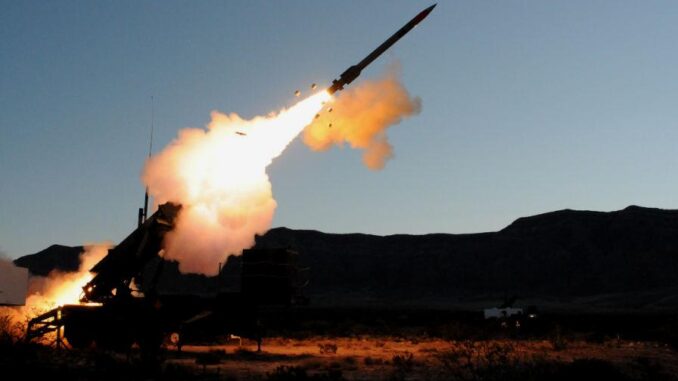
New Era in the US Defense Industry: Sharp Competence Increase with PAC-3 MSE
As security dynamics change rapidly, the latest agreement between the Pentagon and Lockheed Martin stands out as a critical turning point to strengthen the defense shield. The PAC-3 Missile Segment Enhancement (MSE) program aims to increase interceptor missile production to more than 2,000 units per year. This figure is more than three times current production levels, and an increase of this scale is aimed at avoiding realism and operative surprise in an international threat environment. Such an acceleration is not only a numerical leap, but also triggers a radical transformation in design, supply chain and industry partnerships.
Strategic Transformation: Fast and Effective Procurement with Purchasing Transformation Strategy
Lockheed Martin CEO Jim Taiclet does not see this step only as an investment for the defense industry; It also positions it as a strategy that responds to allied demands and produces taxable value. The agreement aims to secure long-term investments with industry partners within the framework of the Department of Defense’s Acquisition Transformation Strategy. As Taiclet says, “A focus on speed and results is fundamental to successful deterrence.” This emphasis underlines operational flexibility and security of supply in combating modern threats. In this context, the place of the Golden Dome vision in the defense strategy becomes even more evident: PAC-3 MSE, which provides reliability at high altitudes and long ranges, is not just anti-aircraft; it is also a keystone of the global security network. Ensuring an increase in production both increases the capacity of the defense industry within the country and strengthens the integration with NATO and allies.
Technical Superiority and Innovative Features of PAC-3 MSE
PAC-3 MSE is an advanced interceptor missile designed to neutralize tactical ballistic and cruise missiles. Two pulse rocket engines play a critical role in making this missile an effective deterrent at high altitude and wide coverage. This engineering approach strengthens the missiles’ capability to engage higher-speed air targets and transforms the line of defense into a layered security network. Increasing production capacity not only strengthens the US defense shield; It also enhances the security of international partners.
This technology, which is directly linked to the Golden Dome project, establishes a more efficient defense architecture by expanding the threat perception in terms of size and frequency. PAC-3 MSE’s innovative approach is at the heart of a layered defense strategy against ballistic and cruise missile threats, combining rapid production and rapid installation capabilities critical for operational flexibility.
Global Demand and Supply Chain: The Rise of a Transcontinental Network
NATO’s increasing air defense needs are strengthening global demand for the PAC-3 MSE. The Pentagon plans to sign seven-year subcontracts with Lockheed suppliers to secure this large-scale production. These steps focus on reducing supply chain vulnerabilities and maintaining operational capacity even in times of crisis. The continued increase in production, up to 20% last year, reinforces the security of the US military as well as international partners. This is not just the production of a defense system; It is also an important milestone in terms of industry capacity, technology transfer and job creation. In this context, PAC-3 MSE’s supply chain stands out with its use of innovative production techniques and high reliability materials, while strengthening long-term relationships with local and global suppliers. The role of each actor in the network creates an ecosystem that increases the resilience of the defense industry and offers long-term investment security.
Speed and Flexibility in Security Strategy: How to Achieve Rapid Scalability?
The concept of rapid scalability for a defense system not only increases production capacity; It is also supported by coordinated action with Turkish/international business partners, highly reliable supply chains and integrated logistics solutions. PAC-3 MSE’s production increase enables long-term budget planning with its Purchasing Transformation Strategy while embracing scalability goals with limited-cost solutions. Thus, defense expenditures become more sustainable in terms of operational efficiency and cost-effectiveness.
The Heart of Innovation: Frequency Production, Flexible Supply and Local Competencies
Innovative processes on the production line, a high level of automation and strict standards in quality control are the cornerstones of the success of PAC-3 MSE. Although the initial target is an annual production increase of 2,000 units, the real gain is achieved through flexible production capacity and resource sharing. Strengthening local production capacities is possible with equal access to international business partners and lean production approaches. This transforms key aspects of the defense industry, such as innovative business models, strategic supply chain optimization and investment security.
Global Security Ecosystem and Strategic Interactions
The global impact of PAC-3 MSE is not limited to technical superiority alone. The global architecture of the United States’ defense strategy proceeds within an integrated framework, particularly with NATO partners and other critical allies. Increasing production capacity strengthens the defense coordination of allies and ensures rapid adaptation in times of international crisis. In this process, supply chain security and redesigned purchasing processes are of great importance. Thus, competitiveness, innovation speed and operational security in the field of defense are maintained in a balanced manner.
Insights Without Consequences: The Balance of Strategy, Technology and Operational Cost
The points that stand out in the light of these developments are as follows: Industrial capacity is growing on a solid ground with strategic investment security and long-term contracts. While technical superiority and player diversity enable the further development of defense technologies, operational efficiency increases with technologies such as satellite-based monitoring and simulation. Additionally, a strengthened supply chain and increasing local production capacities ensure operational sustainability even in times of crisis. In this context, the success of PAC-3 MSE can be defined as not only the success of a missile program, but also a transformative force that shapes the future of the defense industry. Note: This article is written with original analysis and original insights, and includes detailed technical explanations based on the current news framework. The feasibility of PAC-3 MSE’s production increase, supply chain capacity, and dynamics in the implementation of strategic investments may change over time. For this reason, it is recommended to follow current developments through official defense sources and reliable news platforms.