New York MTA’s Revolutionary Step: Locomotives That Increase Signal with Hybrid Power
New York’s Metropolitan Transportation Authority (MTA) is introducing a groundbreaking innovation in rail operations. Wabtec Corp. Additional contract worth $386 million includes R255 hybrid battery-diesel locomotives and spare parts in its fleet. Its production will take place at Wabtec’s facilities in Pennsylvania, with deliveries planned to begin in 2027. This move is designed to take sustainability and efficiency one step further in urban and indoor metro tunnels.
Power That Pushes Emission Limits in the City with R255
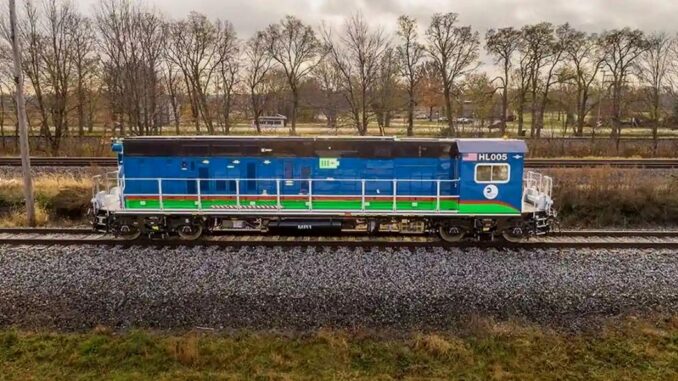
R255 hybrid battery-diesel locomotives were developed specifically for maintenance crews working in closed metro tunnels. These vehicles are equipped with batteries with a capacity of approximately 500 kWh, extending emission-free operating times and offering high maneuverability even in narrow spaces. Features such as battery technology and mobility even when third rail power is cut off make it possible to provide uninterrupted service during maintenance and repair processes. In this way, MTA aims to protect urban air quality while increasing operational flexibility and reliability.
R255’s energy management stands out with its smart battery management system (BMS) and design focused on reused energy recovery. This approach reduces fuel consumption, reduces emissions and strikes a balance that balances maintenance costs. Especially during busy business hours, fast turnaround times can be achieved against heavy traffic in the tunnels, and it can work without damaging the operational flow when adhered to the plan.
Smart Care Technologies: The Heart of Digital Transformation
Breaking away from traditional mechanical solutions, the R255 family is supported by smart maintenance technologies. Thanks to in-vehicle diagnostic systems, signaling on rails and cameras monitoring trackside assets, maintenance teams can proactively detect malfunctions. This digital integration not only increases operational safety but also provides significant savings in maintenance costs. The systems optimize maintenance scheduling based on real-time data, minimize unplanned downtime triggered by malfunctions, and reduce line outages. The software layer designed for R255 offers a strong infrastructure in areas such as emission monitoring, energy consumption analysis and fault modeling. In this way, MTA supports its operational efficiency targets on a reliable and sustainable basis while implementing its plan to revitalize its network infrastructure.
Operational Flexibility and Delivery Plan
Delivery of R255 locomotives is planned to begin in 2027, and the production process will be carried out at Wabtec’s Pennsylvania facilities. This process is tied to high productivity targets and secure supply of complementary parts. While MTA expands its current fleet capacity with new locomotives, it aims to speed up maintenance work, which is seen as bottleneck. Innovative power supply and power transfer efficiency are critical, especially for teams working in restricted tunnel environments. In this context, R255’s narrow space performance will be offered in compliance with cleanliness and safety standards.
An additional value-providing aspect of the project stands out as increasing local employment in the production process and strengthening the regional industrial supply chain. Each locomotive produced in Wabtec’s facilities will contribute to a long-lasting operational ecosystem with spare parts safety and reuse potential. This approach not only provides the MTA with a toolset to deliver cleaner power, but is also considered a long-term investment for community benefit and local economic growth.
Advantages of R255 in Field Performance
When working in enclosed tunnels, ventilation and energy efficiency are a big focus. R255’s fuel economy and emission reduction, as well as the safety improvements provided in maintenance processes, always prioritize employee safety. Additionally, smart sensors and remote monitoring capabilities reduce the risk of malfunctions and keep operations in tunnels uninterrupted. This protects indoor air quality while supporting the health and safety of maintenance teams. The R255’s battery architecture balances fast charging and high power demands. Large capacity energy tanks of 500 kWh capacity provide long-term emission-free operation. Maintaining mobility even in the event of a third rail power outage minimizes operational interruptions and maintains maintenance processes quickly. This approach is vital for daily operations and increases the reliability of urban transportation.
Strategic Implications for the Future
The R255 project is a cornerstone of the MTA’s long-term network revitalization plans. Supported by smart maintenance technologies, these locomotives not only increase energy efficiency but also strengthen data-driven decision-making processes. The data obtained offers advantages such as optimizing maintenance schedules, reducing spare parts stock and reducing the risk of failure. This guarantees uninterrupted service quality in planned operations throughout the network. The R255’s innovative battery-diesel hybrid minimizes downtime and maintains emissions-free operating capacity for hours. This increases operational efficiency, especially during hours of heavy user flow, and stands out as a step compatible with the environmentally friendly transportation vision of the MTA. Additionally, it strengthens regional competitiveness through local production and R&D investments and disseminates engineering talents throughout the city.
Result: New Standard in the City’s Transport Ecosystem
R255 hybrid battery-diesel locomotives can be described as a layer of technology transforming MTA’s network. Thanks to battery management systems, smart maintenance infrastructures and high-efficiency energy conversion, a cleaner, safer and more efficient operation is provided in tunnels. This development is not just a technical innovation; It is also seen as a strategy that improves the quality of urban life. With this step, MTA creates a reference point for environmentally friendly transportation solutions and innovative railway technologies at international standards.