
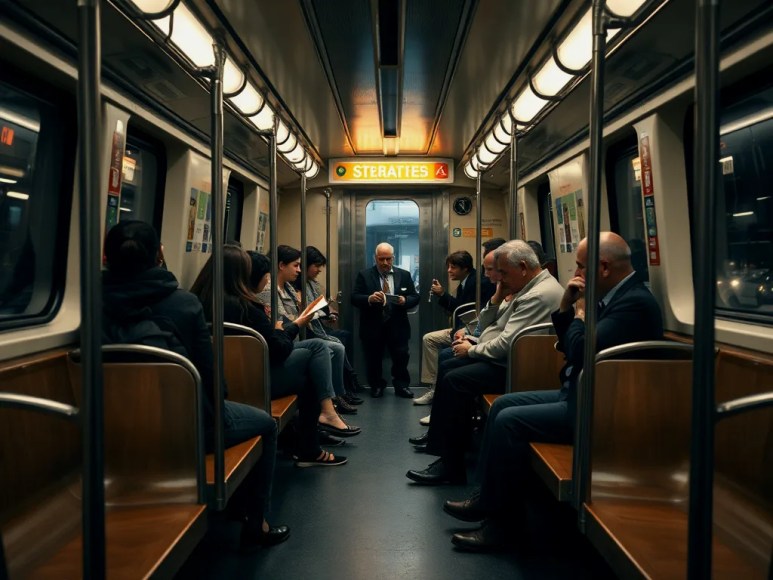
Why transit systems place seats facing each other
Facing seats concentrate seating along the sides or in transverse bench groups so the central aisle remains as wide and unobstructed as possible. Transit planners adopt this layout to increase standing capacity, speed up boarding and alighting, and improve access to doors during peak periods. When a car’s middle corridor stays clear, more passengers can fit per square meter and move to exits faster—reducing dwell time at stations.
How facing seats increase usable standing area
Arranging benches opposite one another pushes seated zones to the car edges and preserves a continuous central volume. That continuous volume translates directly into standing footprint: for a typical subway car, converting staggered or longitudinal seats to facing benches can add the equivalent standing space for several dozen passengers at crush loads. In practice, operators measure this by passengers-per-square-meter and by door-area density during peak runs to quantify capacity gains.
Impact on dwell times and passenger flow
Shorter dwell times follow from faster ingress and egress—passengers standing near doors can board immediately while seated passengers remain out of the direct transfer path. Field studies in major systems show that blocking in front of doors causes the largest single increase in station dwell time. Facing seats reduce bottlenecks at doorway zones by keeping the central corridor free; However, if benches are packed and people cluster around doorways, benefits decline. Operators balance seat placement with passenger education, signage, and platform management to preserve flow.
Comfort trade-offs and design responses
Facing benches often reduce individual seat width and legroom compared with transverse forward-facing seats, which some riders perceive as less comfortable on longer journeys. Systems with mixed trip profiles respond by creating hybrid interiors: longitudinal benches in the center for standing capacity paired with forward-facing seats at car ends for comfort on longer runs. Chicago and other systems have used this mixed strategy to address complaints while maintaining throughput.
Examples and data-driven choices from global systems
New York City and London frequently maximize longitudinal or facing seating on inner-city lines where many trips are short; Measured benefits include higher peak throughput and lower average platform wait times. By contrast, commuter rail and airport express services retain more forward-facing seats because average trip length and passenger expectations require greater comfort. Transit agencies choose seating types using origin-destination surveys, load factor modeling, and passenger feedback metrics tied to trip length distributions.
Design variations that preserve both capacity and dignity
Practical modifications keep the benefits while addressing downsides: staggered facing benches to increase personal space, removable or flip-up seats to adapt to service conditions, and designated priority seating clusters for elderly or disabled riders. Modern car designs also use visual cues—floor patterns and overhead strips—to direct foot traffic away from doorways and toward carriage centers during peak times.
Step-by-step approach transit planners use to decide seating layouts
1. Gather ridership data: average trip lengths, peak vs off-peak loads, door-area congestion measurements.
2. Model capacity scenarios: simulate passengers-per-square-meter under various seating formats using CAD or crowd-flow software.
3. Prototype and survey: fit a test car or mock-up, run limited trials, and collect rider satisfaction and flow data.
4. Iterate interior features: add mixed seating, handholds, or adaptive seats based on trial feedback.
5. Deploy and monitor: roll out updated cars and continue monitoring dwell times and complaints to fine-tune.
When to avoid facing seats
Facing benches become unsuitable when average trip lengths are long, when a system carries many older or mobility-limited riders, or where private space expectations are high—such as airport links. In those contexts, forward-facing seats or a hybrid mix improves passenger comfort without catastrophically sacrificing capacity.
Summary: matching layout to service goals
Choosing facing seats is an intentional trade-off: it prioritizes throughput, faster station stops, and flexible standing room over maximum seated comfort. The most successful transit operators use data, prototypes, and hybrid interior strategies to align seating with trip characteristics and customer needs, keeping systems efficient while preserving rider experience.