
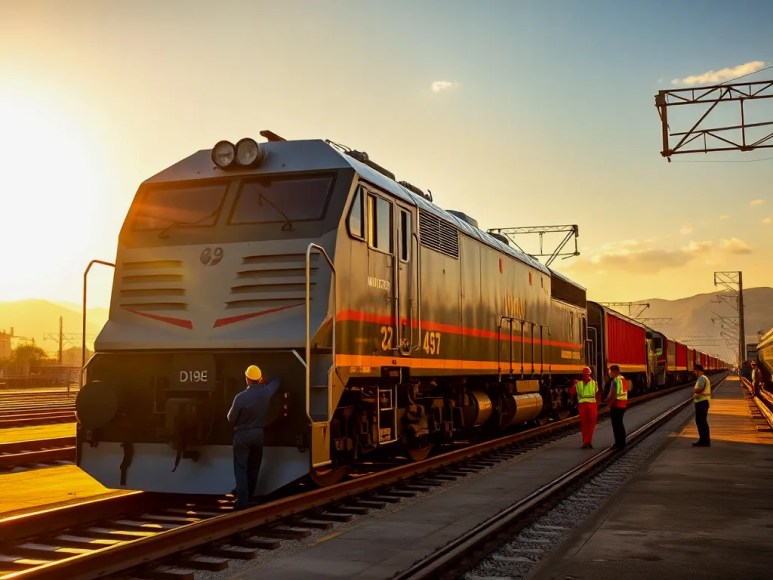
Vietnam Railways has received a new batch of upgraded D19E diesel-electric locomotives designed to increase hauling capacity, improve safety, and meet surging passenger and freight demand ahead of the Lunar New Year period. The units entered service after factory and field tests and are already operating on key corridors to replace aging motivated power.
Modernization program and deployment timeline
The locomotives arrive as part of a nationwide investment plan running through 2030 to renew Vietnam’s locomotive fleet. Rail operators accepted the first group of these units at Yen Vien Station in Hanoi on 29 August 2026. After controlled commissioning, the new locomotives completed integration trials and began scheduled runs on the Thong Nhat mainline, where they replaced older machines nearing the end of their economic life.
Operational performance and early service data
In initial service, the first delivered locomotives logged roughly 25,000 kilometers across mixed passengers and freight duties Field data show consistent tractive effort during heavy freight starts and stable speed profiles on regional express services. Maintenance teams reported fewer unscheduled interventions compared with legacy units, owing chiefly to simplified fault diagnostics and modular subassemblies that shorten exchange times for common wear items.
Key technical upgrades and what they deliver
The latest D19E series integrates more than 40 technical improvements over earlier generations. Major design changes include a diesel-electric propulsion layout with six traction motors, a computerized train management system, and a reinforced cab structure for collision protection. These modifications collectively yield higher operational reliability, improved crew safety, and lower lifecycle maintenance hours.
Notable specifications and practical implications
Propulsion and speed: Diesel-electric drive with six traction motors allows robust tractive effort for heavy freight and consistent acceleration for passenger services; the locomotives are rated to a maximum design speed of 120 km/h, suitable for mixed-traffic schedules.
Control and diagnostics: A new computer-controlled management system centralizes engine, traction, and braking control and provides onboard fault logging. Rail depots can download event histories to accelerate troubleshooting and target preventive maintenance.
Operator comfort and safety: The cab structure is strengthened to meet higher crashworthiness standards, while interior ergonomics and noise-reduction measures (including a screw-type compressor and better insulation) reduce crew fatigue on long runs.
Structural materials: High-strength, corrosion-resistant steel in the body reduces structural maintenance needs and extends service life in Vietnam’s coastal and humid environments.
Examples of operational improvements and cost impacts
One regional operator reported that a freshly introduced D19E hauled a 1,200-ton freight set from a coastal port to an inland yard with a continuous average speed improvement of 8–10% compared with the replaced unit; fuel consumption per tonne-kilometer declined modestly due to improved traction control. Depot staff estimate mean time to repair (MTTR) for common electrical faults fell by nearly 30% after crews adopted modular replacement procedures made possible by the new design.
How the upgrades support busy seasonal demand
Vietnam expects significant travel spikes around the Lunar New Year. The additional locomotives increase roster flexibility, enabling operators to lengthen trains and add services without overstretching maintenance windows. By allocating newer units to high-frequency routes, railways aim to reduce delays that historically arise from cascading late connections when older locomotives require unscheduled repairs.
Maintenance strategy and depot changes
Maintenance teams have transitioned to condition-based inspections enabled by onboard diagnostics and scheduled component swaps for items with predictable wear. Depots implemented a two-tier parts inventory: fast-moving modular exchange units at line depots and long-lead spares centralized at regional workshops. This reduces train downtime and optimizes stock levels across the network.
Network effects and capacity planning through 2030
Planned locomotive deliveries through 2030 form part of a broader capacity plan: replace aging units in stages, reassign rehabilitated locomotives to secondary duties, and prioritize new units on high-volume corridors. This staged approach preserves asset value while progressively raising average fleet reliability and network throughput without requiring immediate large-scale infrastructure upgrades.
What passengers and shippers can expect
Passengers will notice smoother acceleration, reduced onboard noise, and improved punctuality on routes that receive the new locomotives. Freight customers should expect fewer route cancellations and more predictable transit windows, especially on heavy bulk corridors where tractive effort and reliability matter most.