
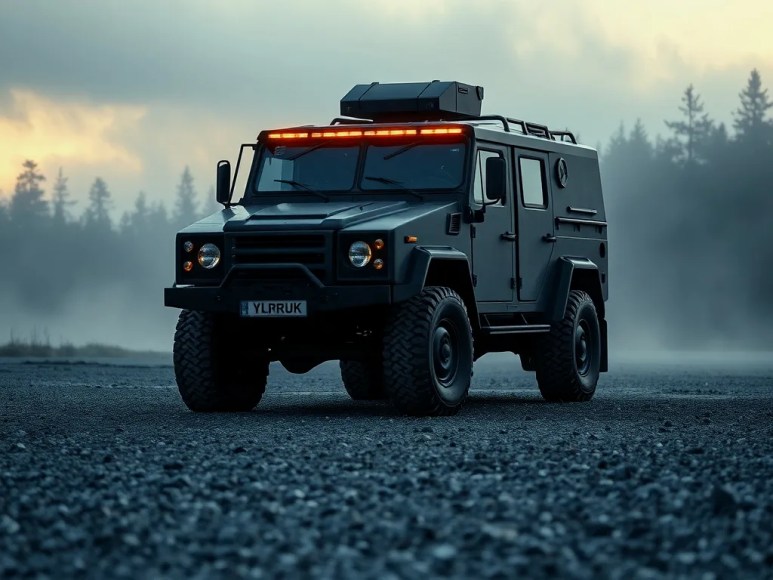
Estonia signs new supply deal for Turkish-designed YÖRÜK (Nomad) 4×4 vehicles
Estonia’s Defense Investments Center (ECDI) and NMS UK finalized a contract to produce a fresh batch of YÖRÜK 4×4 armored vehicles—known commercially as Nomad—at NMS UK’s Royal Leamington Spa facility in the United Kingdom. Officials signed the agreement during a ceremony at the Estonian Embassy in London on 17 November 2026. The decision follows more than two years of operational experience with earlier deliveries and reflects Estonia’s intent to deepen industrial ties with its suppliers while expanding local production capacity.
Why Estonia moved to UK production and what changes this creates
Estonia moved part of its Nomad production to the UK to secure industrial access to maintenance, faster and upgrades inside NATO’s supply chain. Producing vehicles in Royal Leamington Spa brings several concrete benefits: reduced lead times for locally-sourced components, strengthened logistics within Europe, and the ability to create up to 50 new jobs at NMS UK according to Estonian officials. The program also aims to integrate British suppliers into specific subsystems such as electrical harnesses, seating, and localized armor treatments to improve sustainment.
How many vehicles, cost and delivery timing — what we know and what remains undisclosed
ECDI and NMS UK have not announced exact production quantities, contract value or the full delivery schedule. Public statements confirm only that a separate UK-based production line will manufacture the new batch. Analysts assess the 2023 framework (roughly €200 million for 230 vehicles across two Turkish suppliers) estimate this follow-on order is likely a partial top-up rather than a full new fleet; if typical tranche sizes are applied, the UK-run batch could range from several dozen to under a hundred vehicles. Final numbers will depend on options exercised, local content agreements, and any configuration changes requested by Estonia.
Operational feedback from Estonia’s existing Nomad fleet
Estonia has operated Nomad 4×4 platforms for over two years. Field commanders reported reliability in patrol, transport and force-protection roles under Baltic climate and terrain conditions. ECDI stated earlier batches met delivery timelines and performed in training and real operations, which influenced the decision to extend procurement. Specific strengths cited by Estonian users include modular mission kits, wheeled mobility on narrow roads and low maintenance downtime compared with some tracked alternatives. Lessons learned prompted adjustments to spare-part stocking, crew training modules and planned software updates that the UK production run will incorporate.
Technical profile: what YÖRÜK/Nomad offers and how it fits Estonia’s needs
The YÖRÜK/Nomad is a wheeled, protected military vehicle configured for troop transport, command-and-control, reconnaissance and logistics. Key features relevant to Estonia’s use include: modular armor packages scalable to threat levels, multiple mission-configurable interiors, and a driveline optimized for European road speeds and constrained by weight limits for bridge crossings. For Estonia’s dispersed force posture and requirement to move rapidly between infrastructure-limited locations, a 4×4 wheeled solution balances protection and strategic mobility better than more heavily tracked systems.
Industrial and employment impact in the UK and Estonia
NMS UK expects the program to create local jobs and deepen supplier relationships in the UK, particularly in Warwickshire’s manufacturing ecosystem. Estonian officials highlight benefits beyond employment: developing a robust in-region sustainment chain reduces dependence on distant supply nodes and supports future upgrades. The UK line will likely handle final assembly, system integration and quality assurance while major hull castings or original design inputs may continue to come from Turkey depending on export approvals and commercial terms.
How this order relates to Estonia’s 2023 armored vehicle procurement
In October 2023 Estonia signed contracts approaching €200 million to procure 230 vehicles from Turkish manufacturers: Nurol Makina’s 4×4 family and Otokar’s 6×6 ARMA series. That framework included approximately €70 million for Nurol’s 4×4s and €130 million for Otokar’s 6×6s, along with training and support packages. The new UK-production agreement appears to be an extension or industrial evolution of that program rather than an entirely separate procurement, intended to sustain existing fleets and improve logistical continuity.
What to expect next: milestones and information likely to follow
Watch for three near-term milestones: (1) a public release of the production quantity and contract value, (2) an initial production timeline with first-article build and acceptance trials, and (3) announcements of UK supplier contracts and planned staffing levels. Once NMS UK begins assembly, Estonia will likely publish a phased delivery schedule tied to acceptance testing and integration of requested modifications based on previous operational feedback.
Broader significance: Turkish defense firms expanding European manufacturing footprints
The deal illustrates a growing pattern of Turkish defense platforms being supported by European production nodes. Shifting final assembly to allied countries helps address local industrial participation requirements, eases political export hurdles, and increases resilience of supply lines. For buyers such as Estonia, locally-based production reduces logistical friction and can speed future modernization cycles by situating expertise and spares closer to operators.
Quick answers to likely questions (People Also Ask style)
Are the UK-made Nomad vehicles different from Turkish-built ones? They share core design and performance specifications but UK production will incorporate locally sourced subsystems and any Estonia-specific configuration changes, plus supply-chain and sustainment advantages due to geographic proximity.
Will other NATO countries get Nomads built in the UK? It is plausible: once a production line and supplier base exist in the UK, NMS UK can offer UK-assembled variants to other partners subject to export approvals and contractual terms.
Does this change Estonia’s defense strategy? No strategic pivot; rather, it strengthens operational sustainment and industrial resilience within an existing modernization plan focused on mobile, protected wheeled platforms.
Practical example: how Estonia might use a UK-built Nomad in a Baltic operation
Scenario step-by-step: (1) A reconnaissance squad loads a Nomad configured with ISR sensors and secure datalinks, (2) vehicle transits narrow rural roads using wheeled mobility advantages, (3) on contact, the crew employs the modular armor and remote weapon station for force protection, (4) after engagement, a UK-based maintenance cell supplies spares quickly from a nearby European warehouse, which reduces downtime and returns the vehicle to operational status faster than transcontinental logistics would allow.