
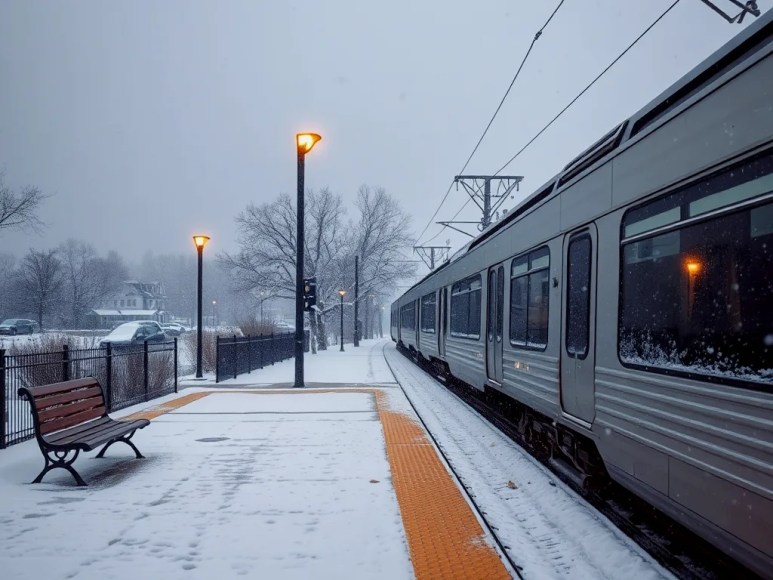
The severe Thanksgiving storm that struck New Jersey forced widespread rail disruptions across multiple NJ Transit lines, halted service on parts of the North Jersey Coast Line and prompted a statewide emergency declaration affecting operations, schedules and passenger planning.
Which lines were suspended and why
Morris & Essex Line service was suspended in both directions after trees onto fell the tracks, physically blocking trains and damaging wayside equipment. On the North Jersey Coast corridor, the section between Aberdeen-Matawan and Long Branch was taken out of service when downed trees and snapped overhead wires created live-safety hazards. Between Long Branch and Bay Head, signal failures produced delays of up to 20 minutes as dispatchers reverted to manual train control procedures while technicians isolated and repaired faulty circuits.
How NJ Transit replaced trains and what riders needed to know
Where track service could not safely operate, NJ Transit deployed shuttle buses to cover affected segments on the Atlantic City Line and for portions of Princeton Dinky and River LINE light-rail routes. Operators prioritized timed bus-to-train connections at transfer points; However, riders reported longer on-board times due to single-lane detours and passenger-load limits on replacement buses. Travelers were advised to allow at least 30–60 extra minutes for commutes that normally relied on the suspended segments and to expect altered boarding locations at major stations.
State of emergency and forecasted impacts
The governor declared a state of emergency covering 21 counties starting the evening of November 25. Coastal wind gusts were forecast to exceed 113 km/h (70 mph) in exposed areas, increasing the likelihood of additional downed trees and power outage County road closures and transit detours followed as local officials prioritized clearing primary arterial routes and restoring electrical service to critical infrastructure such as signal houses and substation facilities.
Holiday and special-event service changes
With New York’s Thanksgiving parade postponed from Thanksgiving Day to Saturday, November 28, NJ Transit prepared extra trains to handle the shifted travel demand. The agency released an early-hours advisory on November 27 indicating that the suspension or reduced service pattern for the three heavily affected lines would remain in flux pending damage assessments; Other lines were expected to operate on holiday schedules where safety conditions permitted. Passengers using rail to reach parade staging or spectator locations were urged to check real-time announcements, since late schedule updates and platform changes were likely.
Practical steps for affected passengers
Passengers can minimize disruption by following these steps:
1. Check official real-time sources: Use NJ Transit’s mobile alerts, website alerts and official social channels for minute-by-minute service notices and confirmed replacement-bus stops.
2. Allow extra travel time: Anticipate at least a 30–60 minute buffer for journeys that involve interrupted segments; for cross-harbor or transfer-heavy trips, allow more time.
3. Plan alternate routes: Review nearby bus lines, park-and-ride options and shore-bound schedules; consider rideshare only as a last-mile supplement where public transit remains delayed.
4. Prepare for limited amenities: Replacement buses lack restrooms and may have reduced luggage space—pack essentials in a carry bag and bring weather-appropriate gear.
5. Keep mouse and ticketing flexible: Save digital confirmation screenshots in case of intermittent connectivity; NJ Transit typically honored existing tickets for replacement bus segments but verify through official notices.
Operational details technicians used to restore service
Crews followed a step-by-step restoration process: assess and clear debris; repair or replace damaged overhead catenary and energized wires using insulated boom lifts and night-shift linemen; test and recalibrate signal circuitry with trackside test trains; and progressively reintroduce scheduled trains during low-traffic windows to validate timed meets and dispatch protocols. This staged approach minimizes the risk of cascading failures and allows rapid rollback to bus substitution if a subsequent fault appears.
Examples of similar past storm responses
In previous New Jersey storms, NJ Transit and rail partners shortened schedules, ran shuttle buses and instituted manual dispatch procedures to maintain a base level of mobility. Those events show three common outcomes: (a) first 24–48 hours focused on safety and triage, (b) partial restorations within 72 hours for major corridors if substations remained online, and (c) multiweek repairs only when signal houses or bridges were structurally compromised. Riders who tracked restoration-crew bulletins during those events regained predictable service sooner by routing through unaffected transfer hubs.
What officials monitor next
Transit agencies and emergency managers continue to monitor weather cell trajectories, vegetation load on lines, and power-grid stability. Priority metrics include time to clear primary obstructions, estimated time to repair (ETTR) for signal systems, and commuter-volume forecasts for the rescheduled parade weekend. Officials update the public through scheduled press briefings and targeted alerts when travel patterns change.
Final actionable summary
Expect continued adjustments across NJ Transit’s network until crews complete damage assessments and restore signal and power integrity. Check NJ Transit’s live announcements before leaving, plan extra time, and consider alternate travel methods for segments between Aberdeen-Matawan, Long Branch and Bay Head until full rail service resumes.
Be the first to comment