
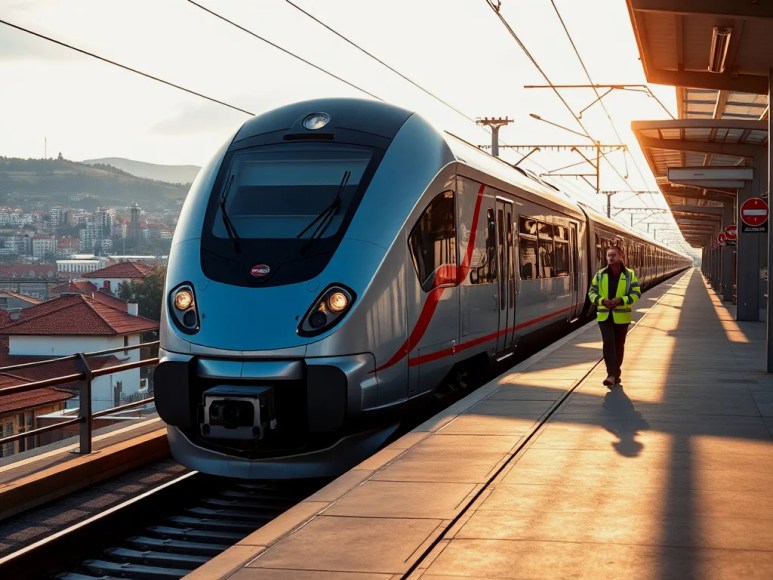
Turkey advances toward a 32-city high-speed rail network by 2030
The Ministry of Transport and Infrastructure has set a clear target: expand direct high-speed rail service from 14 to 32 provinces by 2030. This plan prioritizes 18 provinces — including Bursa — provinces. to shorten travel times, shift freight to rail, and relieve road congestion. Current construction already covers 4,724 kilometers of new rail, while existing high-speed lines total 2,604 kilometers.
Which provinces join and why their inclusion matters
List of provinces slated for direct high-speed connections: Bursa, Balıkesir, İzmir, Manisa, Uşak, Afyonkarahisar, Çorum, Kayseri, Niğde, Mersin, Adana, Osmaniye, Gaziantep, Kahramanmaraş, Adıyaman, Malatya, Iğdır and Kars. Each selection balances geography, industrial output and passenger flows: coastal and agricultural exporters (İzmir, Mersin), industrial hubs (Bursa, Kayseri, Gaziantep), and eastern connectivity (Iğdır, Kars) that supports tourism and regional development.
How the Bursa–Bandırma connection will boost the regional economy
The Bursa–Bandırma line will serve both passengers and freight. Manufacturers around Bursa can move finished goods faster to Bandırma’s port for export, reducing truck miles and logistics costs. Example: a medium-sized automotive supplier that now trucks parts to the Marmara ports could cut door-to-port transit time by hours, lowering inventory carrying costs and improving turnaround for exports. The line also redirects long-haul passenger trips from highways to rail, freeing capacity for local traffic and reducing accident exposure.
Construction scale and long-term network goals
Current construction footprint and ambitions: 4,724 km under construction now, aiming toward a national network of roughly 31,439 km. That expansion mixes new high-speed corridors and upgrades of conventional lines to support faster, higher freight. Building at this scale requires phased project staging: corridor surveys and environmental planning first, followed by earthworks and bridges, then track-laying, electrification and signaling, and finally testing and commissioning. Each phase unknown reduces and allows resource reallocation to maintain schedules.
Practical timeline and what to expect for opening dates
2030 is a target, not a guaranteed opening date for each line. Rail projects face variable permitting, land acquisition, technical integration and testing periods. Typical milestone sequence with estimated durations: feasibility & route design (6–12 months), detailed engineering & tendering (12–18 months), main civil works (18–48 months depending on terrain), systems installation (6–18 months), testing & certification (3–9 months). Mountainous or urban segments lengthen schedules; coastal plain sections move faster. Expect staggered openings rather than a single nationwide launch.
Operational and logistical effects on freight and passenger flows
Shifting modal mix: routing intercity freight through upgraded lines and dedicated freight paths near industrial centers reduces heavy-truck kilometers on highways. This produces measurable benefits: lower fuel consumption, fewer road maintenance cycles, and reduced accident rates involving heavy vehicles. For passengers, predictable high-speed timetables increase business travel efficiency and can catalyze day-trip tourism between cities like Bursa and İzmir.
Examples of benefits by sector
Industry: factories near Bursa will access ports faster, lowering export lead times.
Agriculture and food processors: perishable goods from Aegean and Mediterranean provinces can reach domestic and export markets with shorter cold-chain duration.
Tourism: improved links to eastern provinces (Malatya, Kars, Iğdır) open seasonal and cultural tourism corridors that previously required long bus or air rides.
How residents and businesses can prepare
Actionable steps: local governments should map industrial logistics to future stations and freight terminals, offer land-use plans that reserve rail-adjacent zones for warehousing, and provide training programs for rail operations and maintenance jobs. Businesses can model revised inventory policies to exploit faster transit times and reduce safety stock. Commuters can anticipate modal shifts and lobby for feeder bus services to planned stations.
Key risks and mitigation strategies
Main risks: land acquisition delays, complex engineering in difficult terrain, supply chain bottlenecks for signaling and electrification equipment, and fiscal shifts. Mitigations: early stakeholder engagement for land issues, split contracts to keep civil works moving while systems are procured, phased commissioning to deliver benefits sooner, and public–private partnerships to diversify funding sources.
What success will look like by 2030
Measurable outcomes: increased share of intercity passenger kilometers on rail, reduction in heavy-truck kilometers on key corridors, shorter average door-to-port times for exporters, and improved regional connectivity indices for the included provinces. Successful rollout will show progressive openings, visible economic uplift around station areas, and smoother freight flows to ports like Bandırma and Mersin.
Related searches and quick answers
Will Bursa get high-speed trains by 2030? Bursa is planned for inclusion, but a company opening date depends on phased construction and testing.
How long is Turkey’s high-speed rail network now? Existing high-speed lines total about 2,604 km, with 4,724 km under construction.
Which cities benefit most economically? Industrial and port-linked cities such as Bursa, İzmir and Mersin, plus logistics hubs like Kayseri and Gaziantep.