
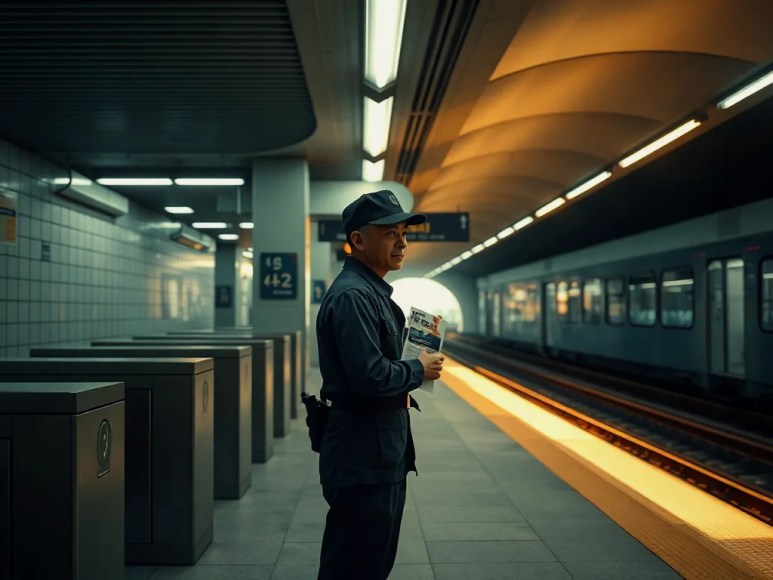
What triggered the slowdown and where it started
On 20 November 2026, Seoul Metro staff initiated a coordinated work slowdown after pay and staffing talks stalled. Union leaders demanded hiring 1,313 new employees and a 3.5% wage increase; management rejected those terms, and unions warned that a full, indefinite strike would begin on 25 November unless talks progress. The action began on morning shifts and spread across train operations, maintenance, and station staff under union direction.
How the slowdown changes daily operations and passenger experience
Workers are executing every procedure strictly by the letter of safety rules while refusing overtime and extra holiday shifts. Train drivers maintain regulated speeds and normal station dwell times rather than compressing schedules to recover delays. Maintenance and field crews perform hazardous tasks only with two-person teams, which lengthens repair times. As a result, the network remains open but runs with reduced operational flexibility, increasing risk of delays during peak periods and during incidents requiring rapid response.
Which lines and services are most likely to be affected
Seoul Metro operates most services on lines 1–8 and part of line 9. Those lines bear the brunt of the slowdown because the unions represent large portions of staff assigned there. Expect greater crowding and more frequent timetable disruption on major transfer hubs such as transfer stations on lines 2 and 4, where staff reallocation is limited by union restrictions.
Detailed timeline and likely escalation steps toward a full strike
Negotiations stalled in late September and failed to resume productively after mediator involvement ended on 2 November. Unions held high-turnout strike authorization ballots and set the 25 November deadline. If mediation fails between 20–24 November, unions have planned an across-the-board walkout starting 25 November. Management has signaled it will try to maintain scheduled runs while deploying extra nonunion staff and temporary contractors, but large-scale absenteeism could force cancellations and longer-term service gaps.
Why unions demand 1,313 hires and a 3.5% raise — the numbers explained
Unions base the 1,313 figure on current vacancy rates plus predictable long-term absences (parental leave, military service) and upcoming retirements; they also want the reversal of a proposed redundancy plan covering 2,212 positions. The wage demand dropped from an initial 5.2% request to 3.5% in negotiations, reflecting compromise intent. Unions argue that understaffing raises safety risks and forces existing employees into unsustainable schedules, while management cites the system’s structural deficit as a constraint.
Financial context: Seoul Metro’s revenues, losses and why funding matters
Seoul Metro reported approximately 2.37 trillion won in revenue and 3.20 trillion won in expenses for 2025, producing a net loss of about 826.8 billion won Public-service obligations — free rides, transfer discounts and other social fares — accounted for roughly 816.7 billion won of costs that the operator says the central government should partially underwrite. On lines 1–8, average operating cost per passenger exceeds fare revenue, creating systemic pressure on payroll and hiring decisions.
Operational examples of slowdown impact (realistic scenarios)
– During a mechanical fault: with two-person rules and no overtime, track-side repairs can take hours instead of the usual rapid fixes, pushing ripple delays across the line.
– At peak transfer stations: fewer platform staff and constrained train turnarounds dwell time variability, causing cascading knock-on delays on interconnected lines.
– On weekend events: temporary surge staffing normally provided by overtime shifts is absent, so special-event services become congested and customer assistance slows.
Contingency measures city authorities and operator can implement
Short term (hours to days): redeploy municipal transit staff to critical stations, increase bus services on affected corridors, and open rapid-response teams from overseas agencies. Medium term (days to weeks): contract temporary safety-certified staff for nonunion-locked roles, stagger fare gates or adjust timetables to stabilize flow, and run targeted public information campaigns to guide passenger choices. Long term: negotiate legally binding staffing schedules tied to ridership metrics and seek earmarked government subsidies to close the fare-revenue gap tied to public-service fares.
How commuters can plan and minimize disruption
Riders should build flexibility into travel plans starting 25 November: allow extra commute time, shift commute hours where possible, use alternate routes or parallel bus lines, and purchase rechargeable transit cards in advance to avoid station queue delays. For critical appointments, consider hybrid remote options or travel outside peak windows. Follow real-time operator alerts through official apps and local transit feeds rather than social media rumors.
Wider labor movement context inside South Korea’s rail sector
The Seoul Metro slowdown coincides with similar moves elsewhere: GTX-A operator staff joined slowdowns, Korea Railroad Workers’ Union planned a slowdown starting 23 November, and KORAIL threatened an indefinite strike from 10 December if talks fail. The clustered timing increases the chance of simultaneous disruptions across corridors that interconnect with Seoul Metro services, amplifying potential regional commuter impact.
Probable outcomes and points before 25 November
Key variables that determine whether a full strike occurs include: rapid reopening of mediation channels, concrete government funding offers for public-service fare deficits, management concessions on immediate and phased wage increases, or legal interventions. If none materialize, unions will likely commence the planned indefinite strike, producing significant commuter and economic disruption across the capital.
What to watch for in official communications
Track these indicators: announcements from the Seoul Metro management about emergency staffing or hourly timetable revisions; formal government statements on subsidy commitments; union press releases specifying partial versus full strike steps; and real-time service bulletins on mobility apps. Rapid, transparent updates from these four sources generally precede either de-escalation or full escalation.
Short checklist for businesses, schools and essential services
Organizations should prepare a rapid-response plan: (1) identify remote-work-capable roles and test VPN capacity, (2) stagger shifts to avoid peak congestion, (3) provide employee travel stipends for alternate transport, (4) set clear messaging channels for staff, and (5) coordinate with suppliers to adjust delivery windows.
Bottom line: how likely is a 25 November strike and what it would mean
Given the unions’ high-authorization vote turnout and the failure of talks after formal mediation closed, the risk of a 25 November indefinite strike is significant unless either management or government makes immediate concessions on hiring or funding. A strike would severely constrain Seoul’s primary metro network, with extended delays, cancellations and major passenger flow disruptions across lines 1–8 and parts of line 9.