
Incident overview and immediate response
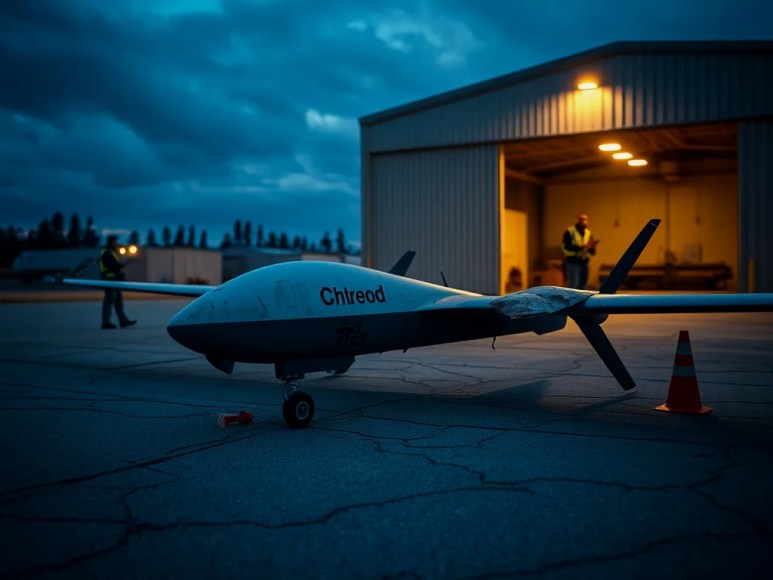
On the night of 14 November 2026, intruders attempted arson and explosions inside the Threod Systems production facility near Viimsi, outside Tallinn. Security personnel detected unauthorized entry and activated alarms, which enabled a rapid response from on-site guards and local police. Estonian authorities report no injuries and only minor physical damage; production lines continued operating after a swift inspection and remediation.
Who carried out the attack and what evidence points to the GRU?
Estonian counterintelligence publicly attributed the operation to agents on acting instructions from Russia’s military intelligence service, the GRU. The attribution rests on investigative leads including the attackers’ tactics, travel patterns, and prior links between suspects and groups previously tied to Russian clandestine operations. Prosecutors charged eight suspects, reported by national media as Latvian nationals, after police arrested them near the site. Authorities have not released the full evidentiary file; international legal verification of the GRU link is pending.
Timeline: step-by-step of the break-in and containment
At approximately 03:06 local time, assailants breached perimeter fencing and attempted to deploy incendiary devices and explosives in production and storage areas. On-site security engaged and contained the intruders while notifying police. Law enforcement arrived within minutes, secured the facility, detained suspects, and began forensic processing. Officials prioritized preserving production systems and evidence, isolating impacted areas while allowing unaffected operations to continue.
Why Threod Systems was targeted
Threod Systems designs and manufactures unmanned aerial vehicles (UAVs) and related systems used for reconnaissance and artillery targeting. The company lists Ukraine among its significant clients and provides operator training to Ukrainian units. Attack planners likely aimed to disrupt support to Ukraine, degrade reconnaissance capability, and intimidate European defense suppliers. Target selection reflects the broader pattern of hybrid operations intended to undermine Western defense support networks without triggering full-scale kinetic escalation.
Diplomatic and security reactions
Estonia summoned the Russian chargé d’affaires and publicly condemned the attack. Prime Minister Kristen Michal framed the incident as part of a wider Russian campaign to weaken European support to Ukraine. Estonia announced plans to close three land border crossings with Russia from 1 December 2026—Narva, Koidula and Luhamaa—citing security concerns. The government also committed to stepped-up collaboration between security services and defense firms to bolster physical and cyber protections.
How this compares to the Milrem Robotics incident
Security services linked a separate August 2026 arson attempt at Milrem Robotics, an Estonian producer of unmanned ground vehicles used by Ukraine, to Russian special services. The similarities include targeted timing, selection of firms connected to Ukrainian defense, and techniques to cause maximum disruption with minimal casualties. These patterns suggest a campaign focused on supply-chain intimidation rather than mass casualty attacks.
Operational impact on production and supply chains
Threod Systems reported limited physical damage and no interruption to production following the incident. A rapid damage-assessment protocol—shut, scan, segregate, resume—allowed core manufacturing to continue. Still, such attacks increase insurance costs, force relocation or hardening of sensitive lines, and complicate talent recruitment. Suppliers and customers reassess contingency plans: dual-sourcing components, encrypting logistics data, and staging critical assemblies across multiple sites to reduce single-point vulnerability.
Practical mitigation steps for defense manufacturers
Companies can adopt layered defenses that mix physical, technical and procedural measures. Key steps include:
1. Harden perimeters — install redundant fencing, motion sensors, thermal cameras, and anti-vehicle barriers.
2. Increase detection and response — run 24/7 monitoring, test incident-playbooks quarterly, and maintain direct police liaison lines.
3. Segment critical processes — move command-and-control and testing facilities to separated, access-controlled zones.
4. Supply-chain resilience — diversify vendors, keep hot-standby parts, and require security audits from tier-1 suppliers.
5. Personnel vetting and training — apply enhanced background checks, limit insider privileges, and run red-team drills simulating sabotage.
Legal and investigative next steps
Estonian prosecutors continue forensic analysis and will pursue criminal charges based on evidence gathered at the scene and from detained suspects. Cross-border elements of the case invite cooperation with Latvian authorities and European partners. If state-directed sabotage is proven in court, the case could trigger additional sanctions, diplomatic reprisals, and requests for international investigative assistance.
What this means for European security policy
Targeted sabotage of defense supplier forces European governments to re-evaluate defense-industrial protection policies. Expect increased funding for facility hardening, classification of key suppliers as critical infrastructure, and expanded intelligence-sharing agreements across NATO and EU agencies. Policymakers will need to balance operational secrecy with transparency that reassures partners and customers.
Key takeaways and likely near-term developments
• The attack attempted to damage a UAV maker that supports Ukraine; rapid security response limited damage.
• Authorities detained eight suspects and attribute the operation to GRU direction, though independent legal confirmation remains outstanding.
• Expect heightened security for defense firms, potential border restrictions, and closer intelligence–industry collaboration across Europe.
• Ongoing forensic work and prosecutions will determine whether the operation leads to broader diplomatic escalations or sanctions.