
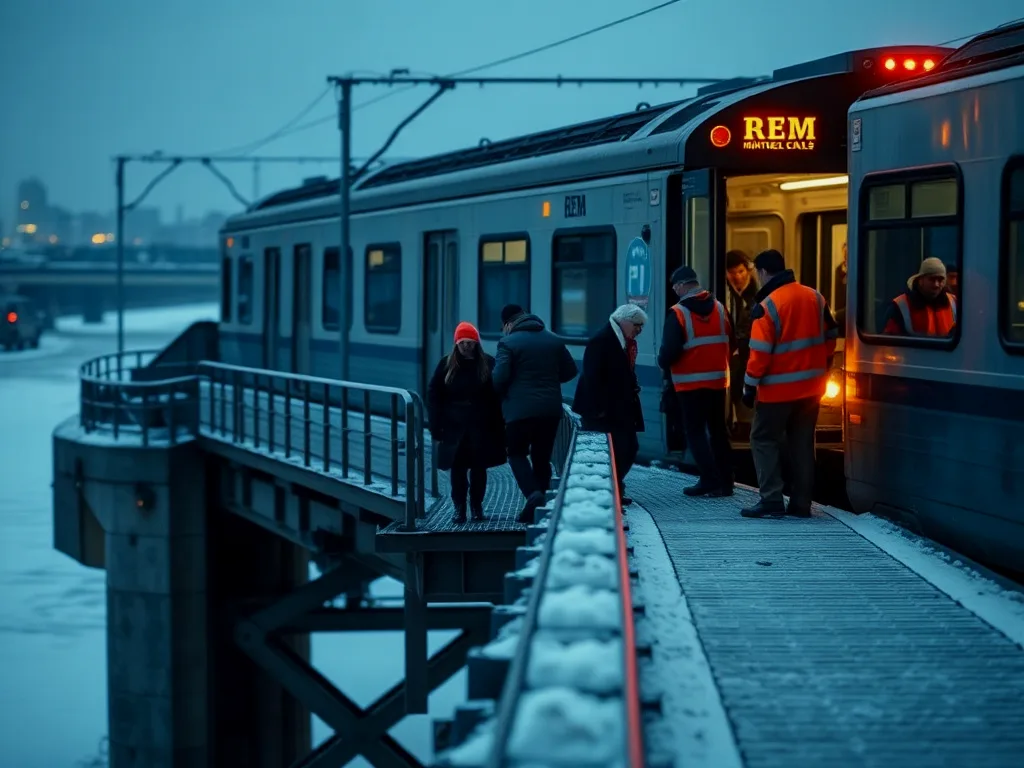
Two automated REM trains stopped on the Samuel-De Champlain Bridge after an overhead power system failure late on 27 November 2026. Operator Pulsar evacuated all 14 passengers from the trains and restored service gradually the next morning.
What caused the trains to stop and how did operators respond
Pulsar identified a fault in the overhead electrical supply (catenary) between Île-des-Sœurs and Panama stations. The fault cut traction power to two driverless light metro trains, leaving them stranded on the bridge. Crews arrived on site, isolated the failed section and carried out manual passenger evacuation procedures. Operators determined that additional technical issues—separate from pantograph icing—prevented remote or manual movement of the units, so trains remained immobilized until crews could secure safe walking and evacuation routes. The entire evacuation took under an hour; all 14 passengers were removed without injury.
How passengers were evacuated step‑by‑step
Pulsar followed an established emergency evacuation checklist. Steps taken on the night included: 1) verifying the power cut and confirming no live feed on the affected catenary section; 2) assessing bridge access points and safe walking surfaces; 3) communicating directly with each train’s onboard systems and passengers to explain procedures; 4) deploying trained staff with high-visibility gear and portable lighting to lead passengers along the trackway to a secure access ramp; and 5) moving passengers to a secure area where alternative transport information was provided. Pulsar later acknowledged shortcomings in passenger information flow during the event and said it would refine communications protocols.
Was weather responsible and what did investigations find
Initial media speculation connected the stoppage to freezing rain and icing, but Pulsar’s technical team publicly stated the failure was not caused by ice build-up. Investigators focused on a localized catenary fault and an associated control-system anomaly that prevented remote reset. Forensically, technicians inspected contact wire continuity, pantograph conditioning records and the train control logs; Early findings pointed to an electrical component failure in the feeder section rather than a systemic network outage.
What immediate operational changes were implemented after the incident
Pulsar suspended service across the affected section and replaced trains with shuttle buses where track access allowed. Night crews performed targeted maintenance on the feed section and ran diagnostic resets on adjacent feeders to ensure stability. Service resumed in a phased manner the following morning: first single-train movements under escort, then limited passenger service with reduced headways, and finally a return to regular schedules once system redundancy checks passed.
Which preventive measures are being used for winter operations
Two days before the incident, Pulsar announced a winter readiness plan focused on overhead-line resilience. Measures now emphasized or expanded after the event include: equipping roughly one-third of the fleet’s pantographs with active de-icing brushes; deploying two specialized maintenance vehicles designed to clear ice and inspect the catenary at low speed; increasing preventive inspections on feeder substations; and intensifying training for night-time evacuations on exposed structures such as the Samuel-De Champlain Bridge. Pulsar also committed to more frequent passenger advisory alerts during extreme weather.
How this affects REM ridership and network performance metrics
The REM network reached 25 million passenger trips year-to-date after its extension to 64 km and 23 stations in May 2026. Daily weekday ridership averaged about 130,000 rides since late August. Pulsar and CDPQ Infra reported that the isolated, short-duration interruption did not materially alter monthly ridership trends; however, operational teams flagged the event as a catalyst to tighten reliability targets and reduce incident-driven delay minutes per thousand train-km.
Examples of similar incidents and lessons learned
Comparable incidents on other automated light-rail and metro networks have shown that single-point catenary faults can have outsized passenger impact when they occur on elevated or constrained structures. Lessons applied elsewhere include building sectional redundancy in feeder design, placing emergency pedestrian egress points at regular intervals on bridges, and automating clearer passenger-facing alerts when service-affecting faults occur. Pulsar’s follow-up actions mirror these industry best practices: hardening feeder sections, improving pantograph maintenance, and strengthening passenger communications.
What passengers should expect next and how to prepare
Passengers can expect more visible winter preparedness activities: periodic maintenance runs on the overhead network, signage and in-station messaging about evacuation procedures, and alerts pushed through the operator’s app when service on vulnerable sections is impacted. Riders using the Samuel-De Champlain Bridge corridor should allow extra travel time during severe weather windows and sign up for real-time notifications. For those who travel during night hours, carrying a charged phone and familiarizing themselves with station egress points reduces confusion in rare evacuation scenarios.
Data and sources used in this article include Pulsar operator statements, CDPQ Infra ridership releases dated 17 November 2026, and technical summaries provided by the REM maintenance team. The technical timeline and procedural steps reflect standard light-rail emergency operations adapted to the REM’s driverless environment.
Be the first to comment