
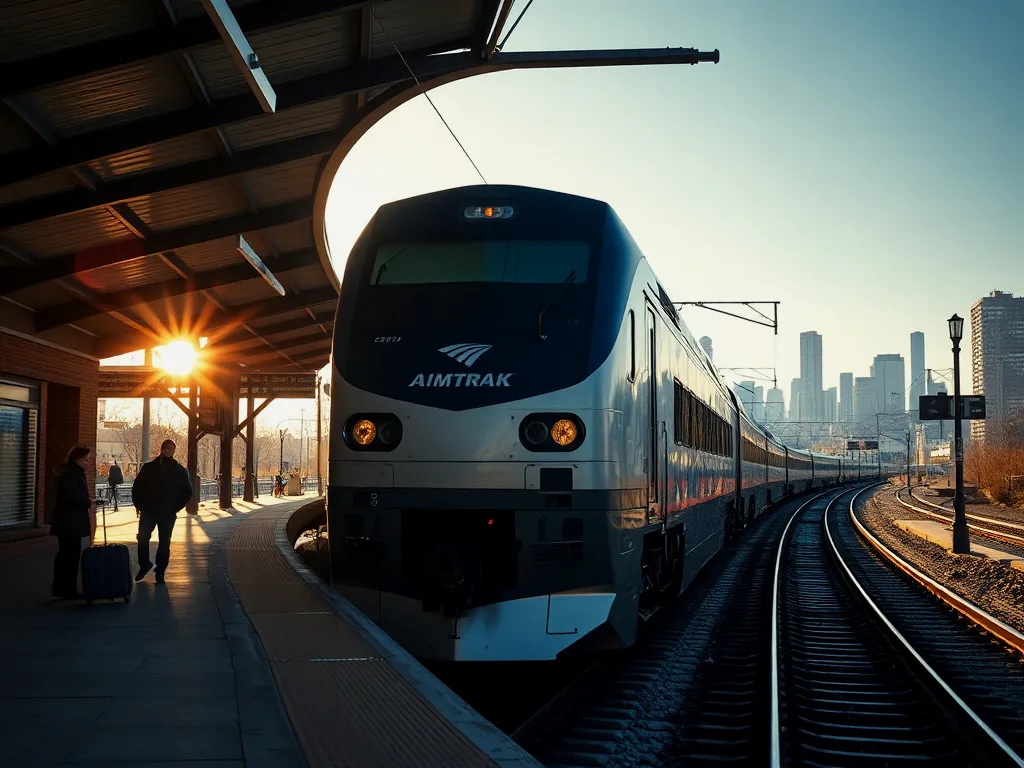
Amtrak restored Keystone Corridor service between Philadelphia and Harrisburg on November 27, 2026 after crews removed several trees that had fallen across the tracks east of Paoli. The interruption coincided with Thanksgiving travel, forcing cancellations and temporary suspension of the route during the morning rush.
Service disruption and rapid clearance: what happened and how crews responded
Crews discovered multiple trees blocking the right-of-way early that morning. Amtrak quickly canceled the 600 and 644 Keystone departures for the Philadelphia–Harrisburg segment and suspended other Keystone movements while crews deployed chainsaws, cranes and track-clearance vehicles. A mechanical fault in a primary piece of clearance equipment briefly slowed progress; crews switched to backup units and completed removal operations by 11:06 am, when dispatchers authorized trains to resume. Operators kept the corridor closed only as long as necessary to confirm track geometry and signal integrity, which minimized further risk and allowed for a controlled return to service.
Operational impacts and passenger management during the suspension
Rail dispatch prioritized safety and then train sequencing to reduce knock-on delays across the Northeast. Amtrak used the following measures to manage passenger disruption:
Immediate actions
– Canceled affected trains 600 and 644 for the Philadelphia–Harrisburg leg to avoid stranding equipment in the blocked segment.
– Reaccommodated passengers on later Keystone runs and alternate Northeast Regional trains where capacity allowed.
– Deployed platform staff and customer-service teams at major stations to provide updated arrival/departure information and assist with connections.
Follow-up handling
– Reserved recovery slots to move delayed equipment through the corridor once inspection cleared the right-of-way.
– Implemented temporary speed restrictions in the immediate aftermath while track inspections verified rail alignment and signal function.
Ridership context: Keystone’s growth compared with Amtrak’s national trend
In fiscal 2026 the Keystone service transported 1,480,827 passengers, an 11.3% increase compared with the previous fiscal year. By contrast, Amtrak’s nationwide ridership rose about 7.4% to roughly 37.1 million trips. That means Keystone’s growth outpaced the system-wide average by nearly four percentage points, reflecting strong demand on the Philadelphia–Harrisburg corridor for both commuter and intercity travel during peak periods such as Thanksgiving.
Why Keystone’s demand rose: factors and examples
Several concrete factors likely drove the Keystone increase:
1) Service frequency and reliability improvements
– Incremental timetable enhancements and rolling-stock availability added seats on popular mid-day and evening runs, allowing more ticketed customers to travel without peak overcrowding.
2) Modal shift from highways
– Congestion on parallel interstates and rising toll or fuel costs encouraged choice-shifting to rail, especially for business travelers who value predictable travel times between downtown stations.
3) Targeted marketing and institutional travel
– Partnerships with universities and corporate accounts on the corridor yielded block-bookings for events and conferences, increasing off-peak ridership.
Real-world example: how a holiday disruption affects a weekday timetable
When two Keystone trains were canceled that morning, connecting slots for regional and long-distance trains required resequencing. For example, a midday regional that normally follows a Keystone departure moved into an earlier recovery window, which an outbound to hold at an origin platform for a connecting passenger transfer. That holding, in turn, produced minor delays further along the corridor. Practices such as staging crews, assigning recovery slots and running empty equipment moves (“deadheads”) help restore normal flows within hours, as occurred when service resumed at 11:06 am
Passenger guidance and best practices during short rail suspensions
Passengers can reduce stress and missed connections in similar incidents by taking these steps:
Before travel
– Monitor real-time alerts from Amtrak and station social channels the morning of travel; subscribe to text alerts for automatic updates.
– Allow extra connection time on holiday travel days: build a buffer of 60–90 minutes rather than the usual 30.
If affected
– Seek rebooking immediately at staffed counters or through the Amtrak app; ask about alternate Northeast Regional or intercity routings if Keystone seats are full.
– Request meal or lodging assistance only when Amtrak’s published policies apply—staff at the station will confirm eligibility.
Network resilience: lessons for operators and planners
The incident highlights three resilience priorities operators can implement to reduce disruption duration and passenger impact:
1) Equipment redundancy for clearance operations
– Maintain multiple functioning clearance units across the region so crews can switch immediately if a primary tool fails
2) Pre-positioned response teams
– Station trained response crews at critical nodes like Paoli during high-travel holidays to improve reaction time and minimize suspension time.
3) Real-time passenger flow management
– Use predictive dispatching that reserves recovery slots proactively when weather or seasonal risk factors raise tree-fall probability.
Applied together, these measures shorten downtime and preserve schedule integrity for high-demand corridors such as Keystone.