
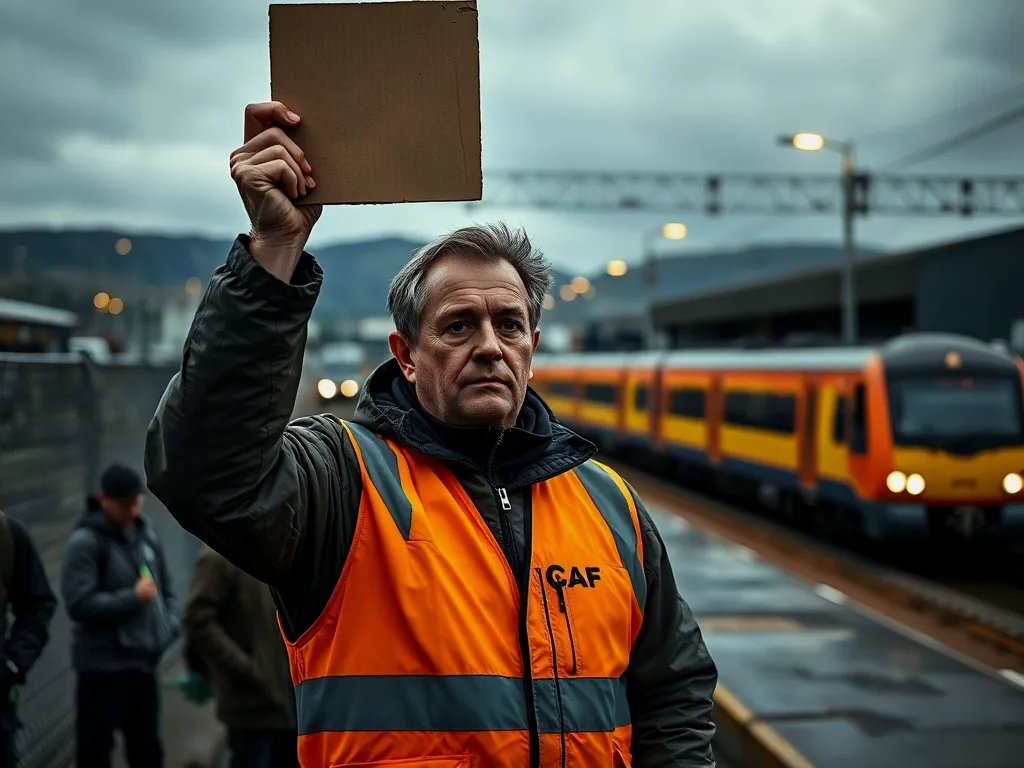
ScotRail franchise bid draws protest over CAF’s role in Jerusalem Light Rail
On 26 November, members of the Palestine Solidarity Campaign staged a sit-in at the Scottish Parliament to press for the exclusion of Construcciones y Auxiliar de Ferrocarriles (CAF) from ScotRail’s suburban fleet tender Protesters argued CAF’s participation in the Jerusalem light rail project links it to operations they say support Israeli settlement activity. The campaign framed its action around a single objective: persuade procurement authorities to apply exclusionary measures under human-rights related procurement rules.
Which manufacturers remain on ScotRail’s shortlist?
The procurement pre-qualification left five manufacturers on the shortlist: CAF, Alstom, Hitachi Rail, Siemens Mobility, and Stadler. The tender covers a replacement and expansion programme: a minimum of 69 new electric and battery-electric units with an option for 37 additional trains, designed for services across Glasgow, Fife, Borders and East Kilbride. Train deliveries are planned to enter service in the early 2030s, subject to contract signature and funding approvals.
What legal and policy tests determine bidder exclusion?
Scottish procurement law and public-entity exclusion guidance set narrow, evidence-based grounds that can disqualify a supplier. Authorities told campaigners that inclusion on a UN database does not automatically trigger exclusion. Decision-makers must demonstrate a supplier meets statutory exclusion criteria—such as involvement in serious misconduct or breaches of international law—using admissible, contemporaneous evidence. Scottish Rail Holdings concluded the pre-qualification stage without finding the legal threshold met for CAF’s exclusion.
What is CAF’s involvement in the Jerusalem project?
CAF jointly won the 2019 Jerusalem light rail contract with Shapir, covering construction of 27 km of new track, 53 stations, supply of 114 new Urbos trams and refurbishment of 46 existing trams. CAF also holds a 50% stake in the operating and maintenance joint venture for two lines. That commercial footprint spans manufacturing, systems integration and long-term operations—roles that procurement critics cite when arguing for exclusion under human-rights-linked procurement policies.
How do procurement authorities weigh reputational and human-rights concerns?
Procurement teams balance multiple factors: legal obligations, commercial value, technical fit, delivery risk and reputational exposure. In practice this means:
Step 1: Gather credible evidence (contracts, delivery records, corporate reporting, third-party audits and authoritative databases).
Step 2: Map evidence to statutory exclusion grounds and assessment causation—whether the supplier’s conduct directly and materially contributes to the alleged breach.
Step 3: Consider proportionality and remediation—can conditions, monitoring or contractual safeguards mitigate the risks sufficiently without full exclusion?
Authorities will only exclude a bidder where law and evidence support that response; otherwise they may impose contract clauses, transparency requirements, or supplier engagement to manage risk.
What specific evidence did activities cite and how procurement responded?
Activists pointed to CAF’s listing in the UN Human Rights Office database and to contractual roles in Jerusalem’s light rail construction and operations. Procurement officials responded that the UN listing forms part of the evidence picture but does not on its own meet the exclusion test. Scottish Rail Holdings stated that, at pre-qualification, the supplier did not meet exclusion conditions. The final award decision will follow detailed tender evaluations and public finance approvals.
What are the practical implications for ScotRail services and timelines?
If the award proceeds on schedule, new electric and battery-electric units will progressively replace diesel fleets on suburban routes. Procurement timelines typically include detailed technical evaluation, commercial negotiation, and affordability sign-off—each adding months to the procurement calendar. Deliveries starting in the early 2030s imply design, manufacture and testing will occupy most of the remainder of the decade. Any legal challenges or contract amendments linked to exclusion debates could delay contract signature and push back entry-into-service dates.
How have similar procurement disputes been handled elsewhere?
Comparable cases show three common outcomes: full exclusion where legal thresholds are met; conditional award with specific compliance obligations; or inclusion with enhanced supervision. For example, public buyers have opted for contract clauses requiring supplier adherence to human-rights due diligence, while others have pursued procurement competitions and judicial review when exclusion was contested. Those precedents illustrate that outcomes hinge on evidentiary strength and statutory interpretation, not solely on public pressure.
What should stakeholders watch next?
Key signals to monitor: (1) the final tender evaluation report and award decision, (2) any formal procurement challenge or judicial review filings, (3) contract clauses addressing human-rights risks, and (4) public finance approvals. Activists will likely pursue reputational and legal channels if the contract proceeds with CAF involvement; conversely, procurement transparency and enforceable safeguards could defuse some campaign pressure.
Why this matters for public procurement practice
The case highlights how modern public tenders increasingly interfere with geopolitics and human-rights concerns. Buyers must reconcile statutory procurement duties with public expectations for responsible sourcing. The ScotRail tender demonstrates the practical test: evidence-based legal thresholds determine exclusion, while contractual and governance tools provide alternative risk-management pathways when exclusion is not legally warranted.