
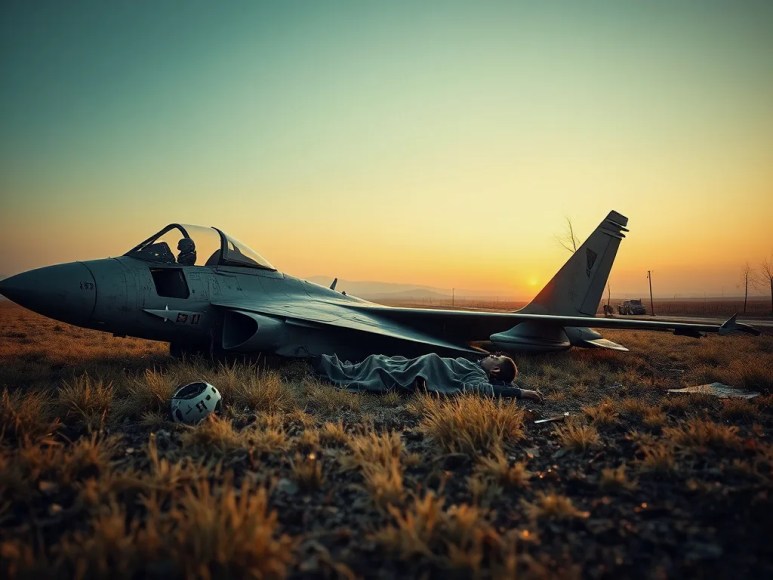
A Serbian Air Force MiG-29 crashed near Stara Pazova on the morning of 17 November 2026, killing Major Goran Bulajić. Military and judicial investigators have opened parallel investigations to determine cause, gather evidence and assess responsibility.
What happened at the crash site and immediate response
At 08:45 local time a MiG-29 from the 204th Air Brigade went down close to Stara Pazova, just outside Belgrade. Military police, search-and-rescue teams and forensic units secured the scene within minutes. Investigators established a perimeter, documented wreckage distribution and recovered the pilot’s remains. Local air traffic control and unit flight logs were collected on site to preserve a continuous timeline of communications and control inputs prior to the loss.
Who is conducting the investigations
Two distinct but coordinated investigations began immediately: a military technical investigation under the Ministry of Defense and an independent criminal investigation led by the Sremska Mitrovica High Prosecutor’s Office. The military panel focuses on aircraft maintenance records, operational planning, pilot training and compliance with flight orders. The prosecutorial team collects evidence for potential negligence, inspects physical debris for criminally relevant failures and interviews witnesses and ground personnel.
What investigators are checking first: technical and operational factors
Investigators are prioritizing four technical and operational lines of inquiry:
1) Engine and airframe systems: Specialists inspect turbine sections, fuel and hydraulics traces, and flight-control actuators for signatures of failure. They will perform metallurgical analysis on fractured components to distinguish fatigue cracks from overload breaks.
2) Maintenance and service history: Teams will audit logbooks, recent inspections, deferred defect orders and component replacement records to verify whether the MiG-29 flew within prescribed maintenance intervals and whether any known deficiencies were outstanding.
3) Pilot performance and health: Forensic toxicology, medical records and duty-rest schedules will determine whether physiological factors or fatigue affected performance. Flight data and cockpit voice data—if available—will indicate pilot inputs and any warnings the pilot received.
4) Environmental and tactical conditions: Weather at the time, bird-strike risk, nearby electromagnetic interference and training-area hazards will be reconstructed to identify external contributors to the accident.
Evidence and data sources that will shape the final report
Investigators will combine physical wreckage analysis with documentary and digital evidence. Relevant data sources include:
• Maintenance logs and technical service bulletins — reveal deferred actions and component service life.
• Flight orders and mission plan — show intent, altitude and maneuvers planned for the sortie.
• Radar and air-traffic control recordings — establish the aircraft’s track, altitude profile and potential loss of communications.
• Onboard sensors and any recorded telemetry — if the MiG carried a flight data recorder or ground telemetry uplinks, they provide precise control surface, engine and system-state histories.
• Witness statements and ground-camera footage — corroborate timing, smoke/plume observations and last-seen attitude before impact.
Who was Major Goran Bulajić and why his background matters
Major Goran Bulajić, born 25 March 1973 in Belgrade, joined the Serbian Armed Forces in 1996 and served as a career military aviator for roughly 30 years. Investigators will review his flight hours, recent simulator checks and multi-crew training records to evaluate whether pilot proficiency, currency or recent mission exposure contributed. Contextualizing his experience helps separate human factors from systemic technical issues when attributing causal weight.
What the MiG-29’s known characteristics imply for the probe
The MiG-29 is a twin-engine, highly maneuverable fighter with legacy Soviet-era systems and varying upgrade levels across operators. Older avionics and mechanical architectures complicate cause-finding because wiring, connectors and legacy components can fail in subtle ways. If this aircraft had undergone avionics modernization or engine time overhaul recently, those interventions will be scrutinized for installation errors, software incompatibilities or maintenance-standard lapses.
Probable timelines and expected public updates
Military technical boards typically take weeks to months to produce preliminary findings; criminal investigations may run in parallel and extend longer if prosecutions follow. Expect an initial public brief within days or weeks summarizing collected evidence and confirming what has been ruled out. Detailed technical reports that include metallurgical analyses, recorder downloads and comprehensive cause statements usually arrive after laboratory work, which can take several months.
Possible outcomes and consequences for the Air Force
Investigations can end with several outcomes: confirmation of a technical failure leading to aircraft grounding and fleet inspections; identification of maintenance or procedural lapses prompting policy and training changes; or determination of pilot error or unavoidable environmental factors. Each outcome triggers corrective actions—airworthiness directives, reissued maintenance protocols, or criminal charges—and informs future procurement, upgrade and safety-investment priorities.
How similar incidents inform likely corrective steps
Historical cases show that when legacy fighters suffer accidents investigators often require immediate fleet-wide inspections for the implicated system, mandatory specific retraining on emergency procedures, and revised maintenance checklists. For example, in past MiG-series investigations, brittle fasteners and corroded wiring were common culprits—leading to targeted inspections and wiring-harness replacements as preventive measures.
What the public and stakeholders should expect next
Authorities will continue releasing verified facts as they become available. Families will receive formal notifications and support; the Ministry of Defense will coordinate press briefings and technical summaries; and international partners or manufacturers may be asked to provide expertise. Until final reports are issued, avoid speculation; focus will remain on evidence-based conclusions and transparent corrective action.
Be the first to comment