
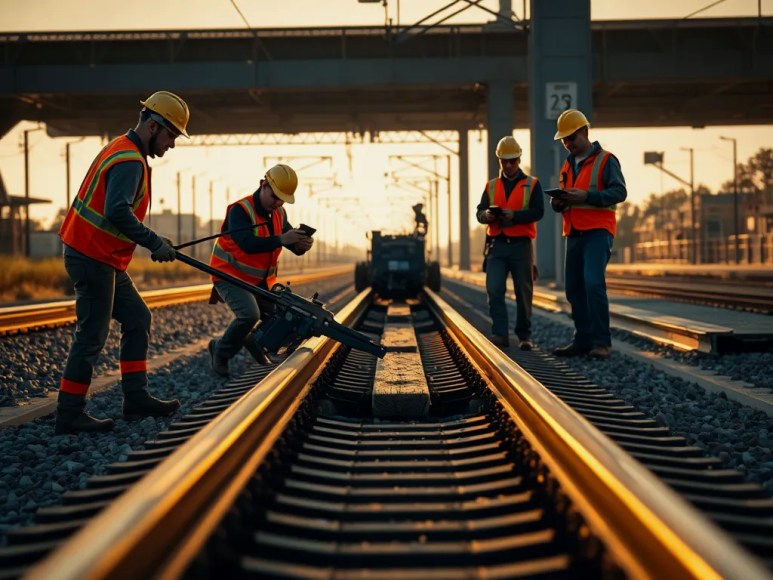
Metro-North Railroad completed a large-scale program replacing more than 68,000 wooden ties in 2026, renewing critical track structure and improving reliability across its Harlem and Hudson lines. The program used white oak ties exclusively, followed an organized staging plan to minimize passenger disruption, and tied directly to a broader $7.7 billion capital investment in the region’s rail infrastructure.
68,000+ Oak Ties Installed and How the Work Was Organized
Crews replaced more than 68,000 oak ties across Metro-North’s New York corridor, focusing work where deterioration risk and service impact were highest. Project teams used a repeatable, staged methodology: inspect, prioritize, schedule, remove, install, tamp and test. Each stage included defined acceptance criteria and on-track possession windows to limit service interruptions. Example steps for a single tie replacement shift:
Step 1: Pre-shift visual and track geometry inspection to identify ties failing FRA criteria.
Step 2: Mobilize equipment and materials to a single work block with protective safety zones.
Step 3: Remove deteriorated tie, clean ballast under the rail seats and reset rail fastenings.
Step 4: Place new oak tie, secure with appropriate fasteners, and tamp ballast to specified compaction.
Step 5: Perform post-tamping geometry and gauge checks, then reopen the block following an on-site inspection.
Project planners sequenced work to allow continuing scheduled service; During some phases between Southeast and Wassaic, buses replaced trains temporarily while crews completed contiguous sections faster and safer.
Performance Outcomes: On-Time Arrival and Reliability Gains
Despite intensive track work, Metro-North preserved and then improved punctuality. The agency reported a 12-month average on-time arrival rate of 97.3%, rising to 98.2% in October 2026. Those gains reflect fewer speed restrictions and less unscheduled slow orders tied to tie failure and track geometry deterioration. Replacing ties proactively reduces instances of gauge spread, rail cant changes, and ballast degradation that otherwise force slower operating speeds or emergency repairs.
Why Oak Ties Were Chosen and Material Insights
White oak was selected for its high density, durability and resistance to splitting compared with some softwoods. Oak’s mechanical strength helps maintain rail gauge and resist rail seat deterioration under heavy commuter and freight loads. Metro-North tracked the lifecycle tradeoffs: higher initial material and installation cost for oak vs. longer service intervals and lower frequency of mid-life interventions. Field crews reported oak ties required fewer immediate preservative treatments and held spikes and anchors reliably in high-stress locations such as curves and junctions.
How This Work Fits into the $7.7 Billion Capital Program
The tie replacement program is a discrete component of Metro-North’s $7.7 billion capital investment plan. That plan doubled the size of previous budgets and targeted structural needs across track, signals and stations. Within the program, approximately 1.7 million wooden ties and 675,000 concrete ties exist throughout the Hudson-side network; the 2026 work prioritized the most degraded wooden ties first. The investment strategy blends lifecycle modeling, risk-based prioritization and service-impact minimization to extend asset life while keeping riders moving.
Safety Standards, FRA Guidance, and Quality Controls Used
Work followed Federal Railroad Administration (FRA) safety guidelines and Metro-North’s internal acceptance standards. FRA provides minimum numbers of sound ties per defined track lengths based on class and curvature; Metro-North used those thresholds plus additional internal risk buffers. Quality control included random sampling of installed ties for tamp depth, lateral alignment and fastening torque. Where tighter tolerances were required—such as through high-speed or heavy-traffic segments—teams performed additional geometry verification and monitored short-term settlement to catch any ballast compaction needs.
Operational Benefits Beyond On-Time Performance
Replacing ties reduces the frequency of emergency repairs, lowers the need for slow orders, and improves passenger comfort by reducing track-induced vibration. Operational staff reported fewer maintenance call-outs and smoother weekend service windows for heavier repair activities. The program also enabled more predictable budgeting; scheduled capital replacements reduce the cost volatility associated with reactive repairs and material shortages.
Lessons Learned and Best Practices for Future Tie Programs
Key lessons from Metro-North’s 2026 program include detailed pre-work inspections, tight staging to limit possession sizes, and cross-discipline coordination (engineering, maintenance-of-way and operations). Procurement planning to secure oak ties and associated fasteners early reduced schedule risk. Documented best practices created a repeatable template for future capital cycles: use risk-scored inventories, stage contiguous work blocks to speed replacement, and combine tie replacement with opportunistic ballast cleaning and surfacing to maximize value per possession.
What Riders Experienced and Practical Impacts
Most passengers saw normal service because Metro-North concentrated intense activities in off-peak and weekend windows. When train-to-bus substitutions occurred, agencies provided advance notices, adjusted schedules to preserve connections and staged equipment to keep transfer times low. Rider-facing benefits include steadier timetables, fewer surprise delays, and improved ride smoothness over sections that had previously shown rough-track symptoms.
Representative photo created with AI for illustrative purposes.
Be the first to comment