
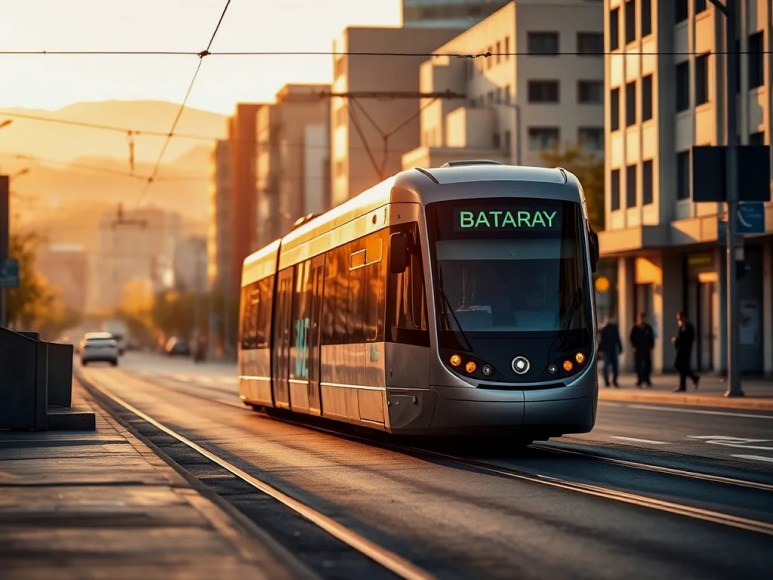
Technical Preparations in BATRAY Have Reached the Final Stage
Batman Governor Ekrem Canalp and AK Party MP Ferhat Nasıroğlu met with Dr. Yalçın Eyigün, Director General of Infrastructure Investments at the Ministry of Transport and Infrastructure in Ankara to finalize technical preparations for the BATRAY light rail system. The team evaluated route alternatives, construction feasibility, and integration with existing urban structures. Engineers presented route alignment options with projected ridership models, station spacing scenarios, and potential transfer points to bus services, aiming to maximize coverage while minimizing construction impact.
Batman’s Urban Mobility Benefits and Objectives
The project targets three measurable outcomes: reduce inner-city traffic congestion, increase public transit capacity, and shorten average journey times. Projected benefits include a 20–35% reduction in peak-hour private vehicle trips along primary corridors, based on comparable medium-sized city light-rail deployments, and expected increases in transit capacity by 2–3 times current bus-only corridors where BATRAY will operate. Planners emphasized multimodal connections—bus rapid transit synchronization, dedicated bike parking at stations, and pedestrian access improvements—to ensure first- and last-mile integration.
How New Routes Will Serve Growing Neighborhoods
Decision-makers agreed to expand the original plan by incorporating new alignments that serve rapidly developing residential and commercial districts. Route selection criteria included population density thresholds, projected housing growth over 10 years, access to employment centers, and land-use plans. For each candidate corridor, staff prepared step-by-step assessments: (1) ridership demand forecasting; (2) right-of-way and property impact analysis; (3) engineering cost estimates; (4) environmental and archaeological review; (5) utility relocation planning; and (6) construction staging to preserve traffic flow during works.
Technical Details Under Review and Expected Disclosures
While exact corridor names, total network length, and capital cost figures remain pending, the technical dossier under review contains:
– Track gauge and power supply options; electrified segments with redundancy planning for critical nodes.
– Station typologies; surface stops, semi-elevated platforms, and intermodal hubs designed to match local demand profiles.
– Rolling stock capacity scenarios; multi-car units sized for peak and off-peak service with options for future fleet expansion.
Authorities plan to publish phased documents once alignment decisions and environmental approvals are finalized. Those releases will include station lists, ridership projections, timeline milestones, and procurement schedules.
Implementation, Timeline and Risk Mitigation Steps
Implementation will proceed in discrete phases to control cost and deliver early benefits: (1) preliminary design and land acquisition; (2) utility relocation and enabling works; (3) civil construction of tracks and stations; (4) systems installation (signaling, power, communications); and (5) testing and commissioning. Typical medium-sized urban rail projects allocate 12–24 months to phase 1 and 24–48 months for construction per major corridor, subject to local permitting speed and funding availability. Risk mitigation measures under consideration staged procurement to avoid long single-contract dependencies, contingency budgets for geotechnical surprises, and community engagement programs to reduce disruption during construction.
What Residents and Businesses Should Expect Next
Residents can expect a formal announcement of selected routes, station locations, and a preliminary timeline before environmental and engineering reviews conclude. Businesses along proposed corridors should prepare for surveys and potential temporary access changes; However, planners indicated business continuity programs such as signage for alternative access, temporary loading zones, and dedicated contractor liaison officers to minimize economic disruption. Public information campaigns and stakeholder meetings will follow to gather feedback and align mitigation measures.
Visuals and Project Representation
The meeting materials included conceptual visuals; officials clarified that these are representatives and not final approved designs. Final visual assets and technical drawings will be issued after the approval of specific alignments and procurement decisions.
Next Steps for the BATRAY Programme
Authorities will complete the detailed design and finalize route choices, followed by publication of a phased delivery plan and funding framework. Interested parties can monitor official channels for release of the full technical reports, procurement notices, and public engagement schedules.