
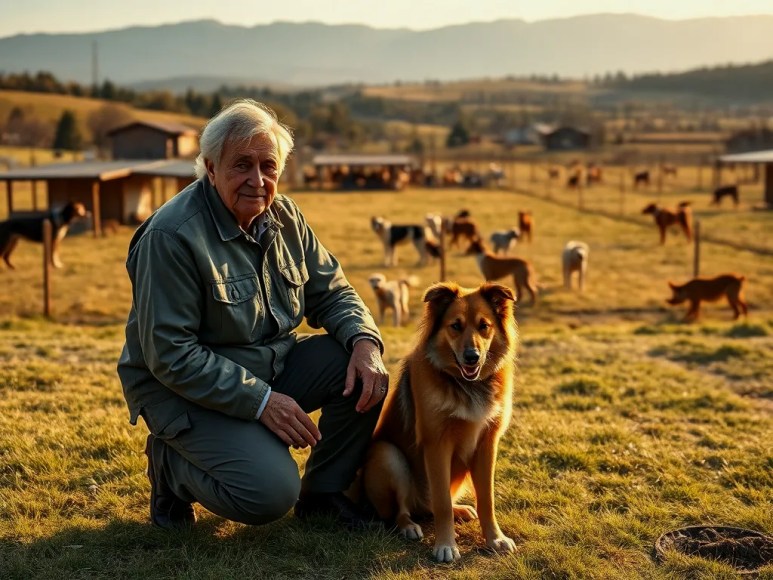
110,000 square meters designed for dogs to live, roam and recover
The Gökçeyurt Dog Natural Living Area in Mamak, Ankara spreads across approximately 110,000 square meters on land allocated for 49 years by the Ankara Regional Forestry Directorate. Planners preserved existing trees—roughly 10,000 of them—and organized the site into open pastures, shaded corridors and fenced activity sectors so dogs can move freely while staff maintain supervision and safety. At full capacity the facility will house and serve up to 5,000 dogs, with distinct zones for socialization, quarantine, long‑term recovery and behavioral rehabilitation.
How the layout supports welfare and operational efficiency
Design choices prioritize natural behavior and streamline daily care. Staff manage the population through a cluster layout: small groups of compatible dogs live in modular compounds that share a dedicated exercise field and sheltered kennel row. This reduces stress, simplifies feeding and cleaning rotations, and isolates medical cases quickly. Walkways, drainage and service roads are sized for emergency vehicles and daily logistics; dedicated entrance and exit flows prevent cross‑contamination between intake and adoption areas.
Veterinary clinic: services, capacity and clinical workflow
The on‑site veterinary clinic provides integrated care: triage and outpatient rooms, diagnostic imaging, operating theaters, sterilization suites, vaccination stations and an intensive care unit. A typical clinical workflow begins with intake screening and vaccination, progresses to diagnostics (bloodwork, imaging), then to treatment or sterilization procedures, followed by monitored recovery in the ICU or step‑down wards. The clinic supports emergency surgery and planned mass‑sterilization campaigns aimed at population control, with space and staffing to scale procedures during peak campaigns.
Rehabilitation programs: behavior, socialization and rehoming readiness
Rehabilitation pairs behaviorists and volunteers in structured programs: assessment, desensitization, positive reinforcement training and gradual exposure to domestic environments. Staff track individual progress using behavior logs and standardized scoring for sociability, fear responses and leash manners. Dogs that reach rehoming readiness receive a staged foster placement or visitor socialization sessions at the adoption center so potential adopters can observe interactions and build rapport before formal adoption.
Shelter-to-adopter pathway: step-by-step process
The adoption pipeline follows clear steps to increase successful placements and minimize returns: intake and identification; medical evaluation and necessary treatment; behavioral assessment; listing on the adoption portal with photos and profiles; controlled meet‑and‑greet sessions; temporary foster trial if needed; and finalized adoption with post‑adoption follow‑up. Staff provide adopters with vaccination records, sterilization certificates, and a short behavioral plan tailored to each animal.
Volunteer programs and community engagement
Volunteers participate in daily walking shifts, enrichment workshops, and socialization rotations; the center trains volunteers on safe handling, enrichment techniques and documentation. The facility hosts community education events—basic pet care classes, responsible ownership seminars and youth volunteer programs—to increase adoption rates and reduce future strays. The center also offers corporate volunteer days that combine team building with measurable animal welfare tasks, such as kennel maintenance and enrichment construction.
Visitor amenities and public access
Visitors access a cafeteria, waiting lounge, children’s play area and a 100‑spot car park designed to separate foot traffic from animal movement. Adoption viewing rooms and guided facility tours operate on scheduled times to protect animal routines while maximizing the public’s opportunity to meet dogs ready for adoption. Real‑time camera feeds stream the facility 24/7 on the municipality’s platform so remote visitors can observe common areas and adoption readiness footage.
Operational data, monitoring and transparency
The center logs daily metrics—intakes, adoptions, medical procedures, sterilizations and behavioral outcomes—and publishes periodic summaries to track performance. Camera surveillance and data recording ensure accountability and support continuous improvement: patterns in disease incidence or repeated behavioral issues trigger adjustments in housing density, enrichment schedules or vaccination protocols. Digitized recordkeeping links each dog’s medical, behavioral and adoption history to improve individualized care.
Design elements that reduce stress and disease
Environmental features lower stress and disease transmission: natural shade and porous substrates reduce heat and mud, partitioned airflow in kennels reduces airborne pathogen spread, and scheduled cleaning with industry‑standard disinfectants minimizes outbreaks. Enrichment includes scent trails, puzzle feeders and supervised playgroups that maintain mental stimulation. Seasonal adjustments—shaded expansion in summer and insulated bedding in winter—help maintain stable welfare year‑round.
How this model can inform other municipalities
Gökçeyurt integrates large‑scale capacity with community access and medical capability; Other municipalities can replicate its modular group housing, on-site clinical operations, and staged adoption pipeline. Key replication steps: secure long‑term land, preserve natural features, plan modular living clusters for behavioral compatibility, embed a full clinic for rapid response and mass sterilization, and build public engagement infrastructure including volunteer programs and streaming transparency.
Measurable goals and expected outcomes
The project targets measurable outcomes: capacity to maintain 5,000 dogs, annual sterilization targets to reduce street populations, increased conversion rates through staged socialization, and lower readmission rates via post‑adoption support. Tracking these KPIs will show progress—reduced stray density, faster rehoming times and improved post‑adoption success—allowing evidence‑based adjustments to operations.