
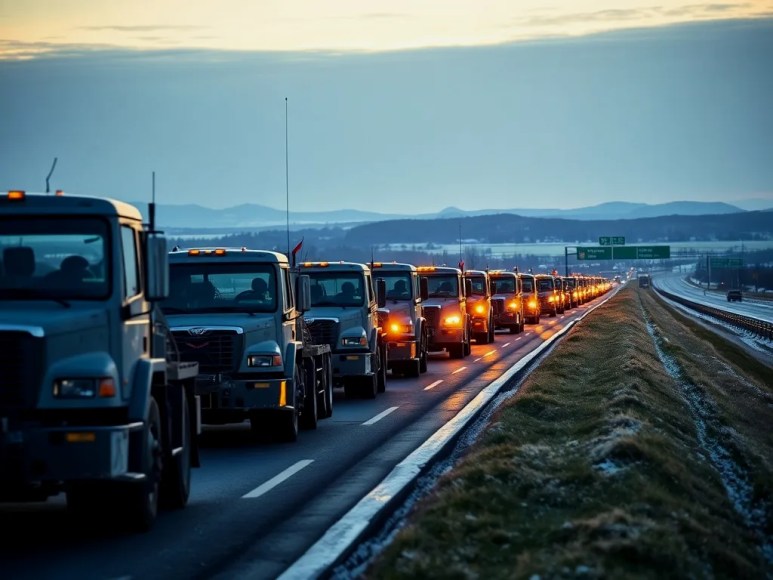
2.1 billion-lira investment renews highway fleet machinery
The Ministry of Transport and Infrastructure added 577 new machines and pieces of equipment to the General Directorate of Highways (KGM) inventory in 2026, backed by a 2.135 billion-lira investment. The acquisition includes front- and side-blade snowplow trucks, salt spreaders, asphalt plants, excavators, vacuum sweepers and backhoe loaders—types chosen to address the most frequent winter maintenance tasks across Turkey’s 68,540-kilometer road network. By prioritizing versatile, multi-role vehicles, KGM shortened equipment turnaround time and reduced the need for multiple specialized units at remote stations.
Fleet renewal goals and results: younger, more local, more maintainable
Since 2016, KGM purchased 8,886 machines and equipment items, renewing roughly 58% of its fleet. The average machine age dropped from about 18 years in 2002 to under 10 years, improving reliability and lowering maintenance costs. With the new additions, the total inventory reached 15,335 items, of which 5,818 are mobile machines. Fleet also focused on maintainability: modular components and common spare parts across models reduce repair time at field workshops, increasing daily availability renewal during storms.
Operational coverage: 457 winter centres, 14,303 personnel, 13,256 machines
KGM organized winter readiness across 457 dedicated snow-fighting centres. Each center has defined responsibility zones and prepositioned supplies, enabling crews to react within target response times calculated from historical storm data. In total, 14,303 staff and 13,256 machines will operate during the 2026–2027 season. The distribution strategy emphasizes corridors with frequent heavy precipitation and critical links such as routes to hospitals, airports and freight terminals.
Stockpiles and physical measures to keep roads open
Planners prepositioned 830,000 tons of rock salt, 400,000 cubic meters of salt aggregate and 11,500 tons of brine intended primarily for bridges and viaducts, where rapid re-freeze risk is highest Teams created 929 kilometers of snow fences in vulnerable stretches to reduce drifting and highway closures. These measures aim to maintain traction and reduce the need for repeated clearing passes, lowering fuel use and wear on equipment.
Vehicle tracking and evidence-based deployment
KGM uses video feeds and telemetry to manage winter operations. Approximately 1,700 dedicated snow-fighting vehicles will stream camera footage, while a further 6,500 units report position and status through the Vehicle Tracking System. Command centers analyze live location, road surface conditions and weather model updates to dispatch the nearest appropriate asset, cutting response times and concentrating resources where forecasts and sensor data indicate rising risk.
Local production share and industrial impact
About 80% of the 2026 acquisitions came from Turkish manufacturers. This local sourcing increased supply-chain resilience and shortened lead times for parts. It also kept procurement spending domestic, supporting local suppliers and workshops that handle maintenance. As an example, salt spreader assemblies standardized across several models allow regional repair shops to stock a single rotor and sensor package that fits multiple truck types.
Practical guidance for motorists during the 2026–2027 season
Commercial passenger and freight vehicles must use winter tires on intercity roads as of 15 November. Drivers will also find it effective to carry chains, wheel chocks and basic personal protective items; KGM recommends verifying chain fit on parked pavement before leaving. Private car drivers don’t face a blanket legal tire obligation, but tire performance falls sharply below 7°C; switching to winter tires at or before that threshold reduces braking distances on cold, wet or icy surfaces. Check road status via ALO 159, ALO 123 or KGM digital services before long trips.
How these measures reduce disruption: example scenarios and step-by-step response
1) Rapid blizzard response on a main corridor: when forecasts predict heavy snowfall on a major route, the regional center pre-deploys high-capacity snowplows and salt spreaders along predetermined staging points. Real-time vehicle tracking pinpoints the closest units; Cameras confirm visibility and traffic density. Crews clear critical lanes first (hospital access, public transit routes), then expand to freight and secondary lanes.
2) Bridge icing prevention: bridge sensors report falling pavement temperature. The system triggers brine spraying units to run a pre-treatment cycle; camera feeds confirm coverage. Pre-applied brine lowers freezing point, and patrol vehicles monitor for re-freeze; if conditions worsen, salt spreaders follow to maintain traction.
3) Remote mountain pass containment: snow fences already installed along avalanche-prone sections reduce drifting buildup. If wind-driven snow still accumulates, tracked excavators and side-blade plows remove windrows and reopen a single lane within the target response interval, enabling staged traffic control until full clearance.
What changed operationally this season and why it matters
Key operational changes include higher machine availability due to younger fleet age, a larger share of domestically produced spare parts, and integrated telemetry and camera coverage for faster decision-making. Together these changes reduce closure times, lower operational costs per kilometer cleared and improve predictability for emergency services and freight planners. Regions that previously reported repeated multi-hour closures saw measurable declines in incident duration during pilot deployments earlier in the year.
Data points and capacity summary
– Total road network: 68,540 km
– Winter centres: 457
– Personnel assigned: 14,303
– Machines and equipment: 13,256 on duty for winter operations (15,335 total inventory)
– New 2026 additions: 263 machines + 314 equipment items = 577 units
– Salt: 830,000 tonnes; pure aggregate: 400,000 m3; brine: 11,500 tons
– Snow fence length installed: 929 km
How to follow updates and what to expect during severe events
KGM will post route-specific advisories and live updates through its digital channels and hotline services. During severe events, prioritize expected clearing on critical corridors, temporary traffic restrictions and convoy operations on narrow mountain roads. Motorists should follow official channels, plan alternate routes in advance and avoid travel when authorities announce closures.