
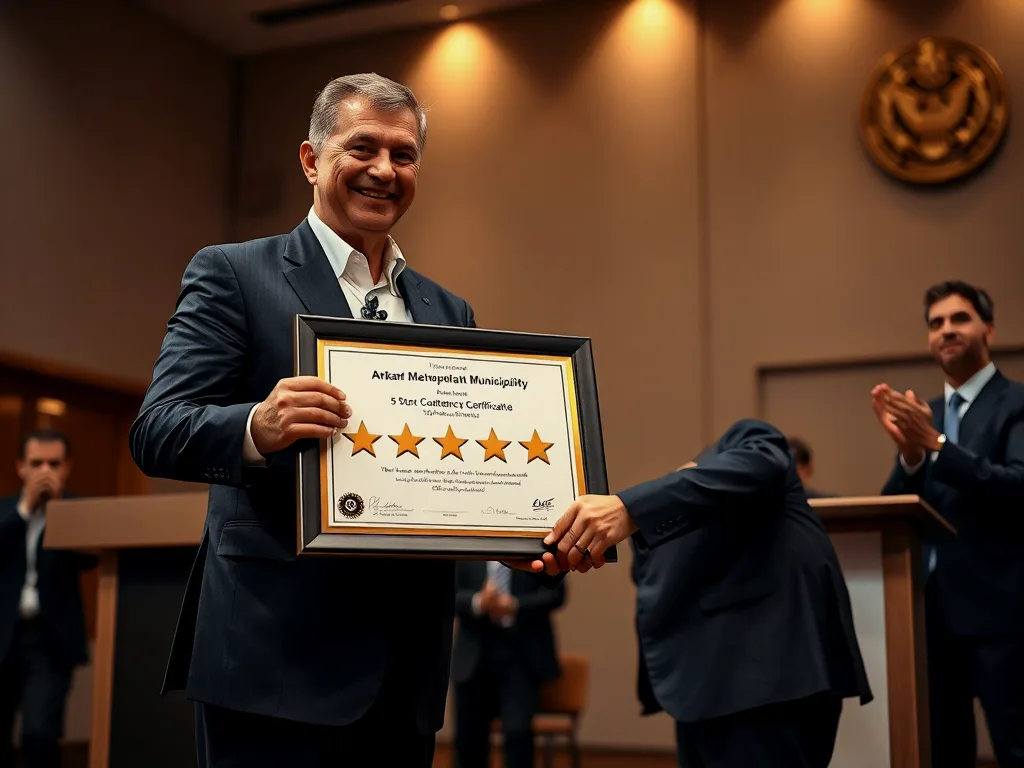
Ankara Metropolitan Municipality Achieves EFQM 5-Star Excellence
Ankara Metropolitan Municipality received the EFQM 5-Star Certificate of Excellence after an independent evaluation conducted under the 2026 EFQM Recognition and Awards Program by the Turkish Quality Association (KalDer). The award recognizes measurable advances in organizational performance, service delivery and sustainable management practices following a rigorous review process.
Rapid Progress: From Four Stars to Five in Two Years
The municipality first applied to the EFQM Model in 2024 and was four awarded stars. Focused strategic improvements and targeted capability building elevated the organization to a five-star level within two years. The certificate was presented on 26 November 2026 during the 35th Quality (Quality) Congress in Istanbul and accepted by Melek Günden Peker Çınar, Head of the Strategy Development Department.
How the Municipality Improved: Specific Actions and Measurements
The municipality applied a set of concrete measures to move from four to five stars. They integrated performance dashboards across departments, introduced quarterly outcome-based reviews, and deployed cross-functional improvement teams to remove process bottlenecks. Example: the customer-request cycle time for permit applications dropped 35% after process mapping and digital form adoption. Each improvement included defined KPIs, baseline measures, and follow-up audits to validate sustained gains.
EFQM Criteria Applied: What Evaluators Looked For
Evaluators used the EFQM Model pillars—leadership, strategy, people, partnerships & resources, and processes, products & services—tied to results. They examined how leadership cascaded strategic priorities, how workforce capability matched strategic needs, and how stakeholder voice informed service design. Evidence included documented strategic plans, training logs that showed skill gaps closed, supplier performance metrics and citizen satisfaction surveys demonstrating year‑over‑year improvement.
Citizen-Centered Service Improvements with Examples
The municipality prioritized citizen-centered outcomes: streamlined licensing processes, expanded online services, and targeted outreach for underserved neighborhoods. For instance, an online building permit portal reduced onsite visits by 60%, while neighborhood wellbeing programs used mobile units to deliver social services, increasing access rates by 20% among older residents. Concrete outcome metrics strengthened the EFQM assessment evidence base.
Data-Driven Decision Making and Resource Efficiency
Data governance and resource optimization prominently featured in the application. The municipality centralized data from disparate units into a governance platform that supported real-time performance monitoring. This enabled evidence-based budget reallocations: funds were shifted from low-impact initiatives to high-impact service lines, resulting in a 12% improvement in cost-per-service delivered without reducing service quality.
People and Stakeholder Engagement Practices
The municipality implemented structured engagement mechanisms to involve employees and external stakeholders in improvement cycles. Examples include biweekly improvement huddles, an ideas portal that yielded over 1,200 suggestions in a year, and stakeholder advisory panels that co-designed service standards for public transport and waste collection. These mechanisms produced measurable increases in employee engagement scores and stakeholder satisfaction indexes.
Sustainability and Long-Term Capability Building
Long-term capability building underpins the five-star rating. The municipality embedded continuous improvement into job descriptions, introduced recurring capability assessments, and launched leadership development tracks aligned to strategic needs. Sustainability actions—energy-efficient public lighting upgrades and green procurement policies—reduced municipal energy consumption and supported resilience goals, which evaluators cited as strengths.
What This Recognition Means for Residents and Other Cities
For residents, the award signals more reliable, efficient services and a municipality that measures outcomes and adaptations. For peer cities, Ankara offers a replicable roadmap: set measurable KPIs, align leadership and resources, centralize performance data, and engage citizens and staff in iterative improvement cycles. The municipal case demonstrates that focused governance changes can produce quantifiable service gains within a two-year horizon.
Next Steps: Maintaining and Building on Five-Star Performance
To sustain progress, the municipality plans rolling audits, periodic external validations and continued investment in digital platforms that enable transparency and performance tracking. They will expand cross-departmental learning, codify best practices into standard operating procedures and publish annual outcome reports to keep stakeholders informed and accountable.