
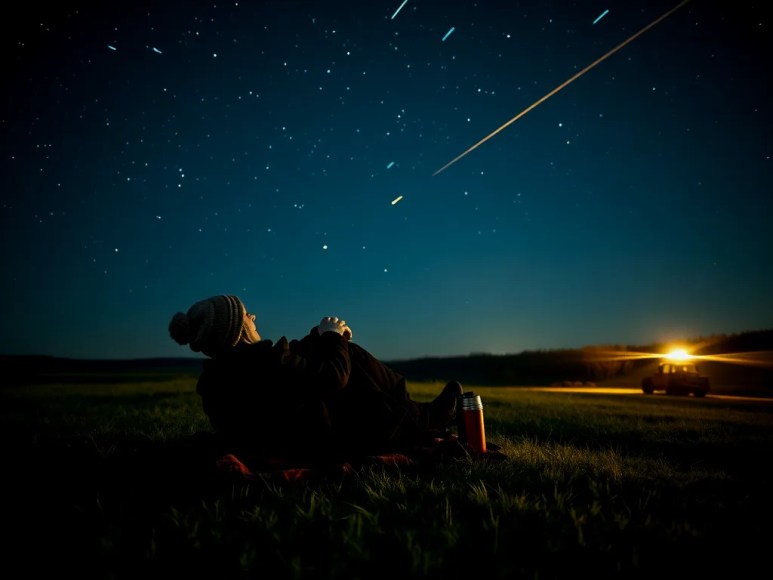
When to watch the 2026 Leonid meteor shower
The peak night falls on the night of November 17–18, 2026. For observers in Turkey and much of the Northern Hemisphere, the best window opens after midnight and typically improves toward pre-dawn hours as the radiant in the Leo constellation climbs higher. Aim to observe between 02:00 and dawn local time for the highest probability of catching meteors; earlier hours can still yield sightings, but the meteor rate often increases as Leo rises.
How many meteors you can realistically expect to see
Under optimal, moonless, dark-sky conditions, expect roughly 10–15 meteors per hour during the peak. That rate assumes little to no light pollution and clear skies. In suburban settings the rate often drops to a few meteors per hour, and in heavily lit urban centers you may see only occasional bright streaks. Past Leonid storms have produced vastly higher rates, but 2026 is forecast as a moderate display rather than a storm.
Why Leonids occur: the source and mechanics
Leonid meteors originate from debris shed by comet 55P/Tempel–Tuttle. As Earth crosses the comet’s orbit, it plows through streams of millimeter- to centimeter-sized particles. Those particles strike the upper atmosphere at roughly 71 km/h, heating the surrounding air and producing bright ionized trails. Because their paths appear to radiate from a point in Leo, observers refer to them as “Leonids.” The high entry speed often produces fast, bright meteors and occasional persistent trains.
Where in the sky to look and why a wide view works best
Although the radiant lies in Leo, meteors can appear anywhere in the sky. Look roughly toward the east to southeastern sky as Leo rises, but keep your gaze broad: a relaxed, wide-angle view increases your chance of seeing meteors that cross high elevations or the opposite hemisphere of the sky. Lie back on a reclined chair or ground pad so you can monitor large portions of sky with minimal neck strain.
Step-by-step setup for a successful Leonid observation session
1. Choose a dark location: drive 30+ minutes from major city lights to reduce skyglow.
2. Check timing: plan to be ready at least 30 minutes before the predicted optimal window (02:00–dawn local time) so your eyes adapt.
3. Verify the Moon: a bright Moon can drown out faint meteors; if the Moon is present, focus on the darkest hours after it sets.
4. Prepare gear: bring a reclining lawn chair, warm clothes, snacks, and a red-filter flashlight to preserve night vision.
5. Let your eyes adjust: avoid phone screens and white lights for 20–30 minutes before observing.
6. Scan broadly: maintain a relaxed, panoramic view rather than fixating on the radiant.
7. Log sightings: note time, brightness, color, and whether a persistent train followed; this helps compare personal notes to global observations.
Examples of observation plans for different observers
Urban observer: Find the darkest nearby park, face away from city glow, and watch for bright Leonids and fireballs; expect low hourly counts but occasional memorable streaks.
Suburban observer: Travel to an area with minimal horizon glow, arrive around 23:30 to let eyes dark-adapt, and watch from 02:00–04:30 to catch the peak.
Dedicated traveler: Book a rural or high-altitude site with clear weather forecasts, camp overnight and plan multiple observing sessions across November 17–18 to maximize chance of peak conditions.
Interpreting what you see: brightness, color, and trains
Leonids often appear fast and can produce bright, white to bluish streaks. Magnesium- and iron-rich particles sometimes produce orange or yellow hues. Persistent trains—ionized gas trails that glow for seconds to minutes—are most likely from larger particles; watch the seconds after a bright meteor to spot a lingering train that can glow and slowly shear with upper-atmosphere winds.
Common questions answered (People Also Ask style)
Will I need a telescope? No. Meteors streak across wide angles; unaided vision with a wide field is best.
What time is the peak? The predicted maximum is in the early hours of November 18, local time, often around pre-dawn when Leo is high.
Can I photograph Leonids with a phone? You can capture bright meteors with long-exposure settings and a stable mount, but dedicated wide-field cameras and DSLR/mirrorless bodies with fast lenses yield more consistent results.
Are Leonids visible from the Southern Hemisphere? Yes, southern observers can see Leonids, though the radiant’s altitude and local timing change; rates are generally higher in the Northern Hemisphere.
Weather, moon phase, and other factors that change your odds
Cloud cover is the single most limiting factor; Even partial clouds can hide meteors that would otherwise be visible. Moon phase matters: a bright waxing or full Moon reduces faint meteor visibility, while a thin crescent or new Moon improves odds. Local horizon obstructions (trees, buildings) reduce the observable sky area, cutting the expected hourly count proportionally.
How to report and contribute observations
Record time, approximate meteor count per 10–15 minute interval, and any fireballs or trains. Submit observations to established networks such as the International Meteor Organization (IMO) or national astronomy associations; coordinated reports improve shower models and help identify temporary enhancements or unexpected outbursts.
Final practical tips to maximize enjoyment and sightings
Dress warmly in layered clothing, bring hot drinks in insulated containers, and plan breaks to keep alert. Use a red headlamp to check logs or equipment without destroying night vision. Invite friends but keep the conversation low and lights off. Above all, allow at least an hour of uninterrupted sky time during the predicted peak window—many meteors come in clusters and shorter watches often miss the best moments.