
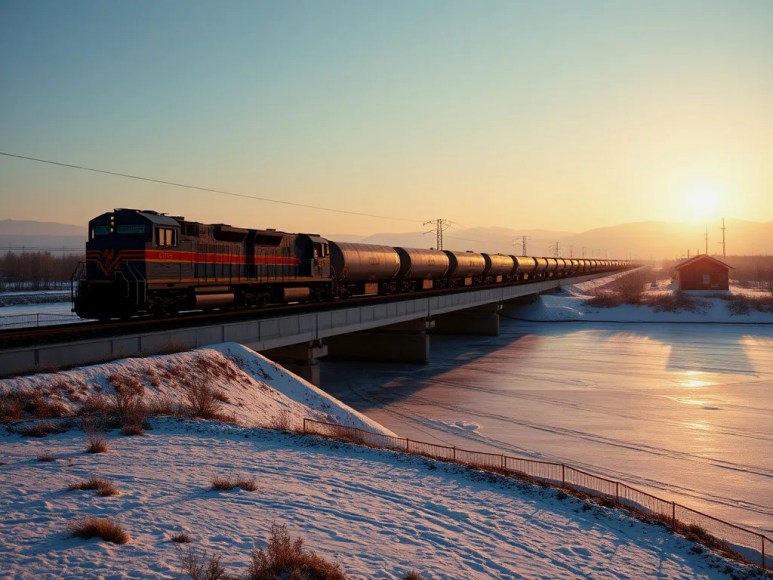
The historic rail corridor linking Beijing with Ulaanbaatar and Irkutsk has resumed regular passenger service, restoring a 2,666-kilometer international connection that strengthens regional trade, tourism, and people-to-people ties.
Weekly schedule and route details
The train departs Beijing once a week and follows a continuous corridor through northern China into Mongolia’s capital, Ulaanbaatar, before crossing into Russia and terminating in Irkutsk. Operators coordinate timetable windows for border formalities and locomotive changes; the printed schedule allocates connective layovers in Ulaanbaatar for customs and passport control. Journey planners should expect a single departure per week in each direction, with approximate departure days published by national rail authorities and cross-posted on participating operators’ websites.
Exact travel time, stops, and border procedures
The scheduled running time is about 55 hours end-to-end under normal operating conditions. Typical intermediate stops include major nodes where passengers can board or disembark and where technical servicing occurs. Border procedures include staged passport checks (exit country A, entry country B) and cargo/security inspections; Passengers remain on board for some inspections while others require brief disembarkation. Plan for additional time during peak seasons or heightened security alerts.
Equipment, onboard services, and comfort levels
Rolling stock combines long-distance sleeping coaches and seated cars adapted for international gauges and electrical systems. Expect couchettes and private compartments with bedding, heating suited to subarctic segments, food service wagons offering regional menus, and dedicated baggage handling. Operators equipped the train with multilingual staff and signage for Chinese, Mongolian, and Russian speakers. Power outlets, climate control, and basic Wi-Fi coverage vary by car and operator; passengers should carry portable chargers and paper copies of important documents.
Ticketing, fares, and reservation tips
Tickets sell through national rail portals and authorized travel agents. Pricing tiers reflect accommodation class (economy seat, couchette, private cabin). To secure preferred berths, book at least several weeks ahead for popular travel periods; cross‑border trains often allocate a fixed quota of international seats per country. Confirm visa requirements and carry printed ticket confirmations; some systems require passengers to validate tickets at departure stations before boarding.
How the corridor benefits trade and logistics
Restoring passenger service unlocks complementary freight opportunities: the corridor already supports container block trains and cross‑border rail freight that benefit from synchronized timetables and harmonized customs windows. Faster intermodal transfers at key border terminals reduce dwell time for rail‑borne goods. Local businesses along the route can leverage improved movement of high‑value, time‑sensitive goods — eg, electronics and perishables — by coordinating rail schedules with regional distribution centers.
Tourism and cultural exchange opportunities
By linking major urban centers with scenic overland stretches through Mongolia’s steppe and Siberia’s taiga, the service creates packaged tourism itineraries: multi‑day rail journeys combined with guided city stays in Beijing, cultural tours in Ulaanbaatar, and nature excursions around Lake Baikal near Irkutsk. Travel operators can design tiered experiences (heritage, wildlife, photography) that integrate rail travel as a central element rather than a point-to-point transfer.
Practical planning checklist for travellers
Before booking: verify visa and transit requirements for China, Mongolia, and Russia; check health and insurance coverage across borders; confirm departure/arrival stations and baggage limits.
Day of travel: arrive early for check-in and border formalities; carry printed documents and local currency for on‑board purchases.
Onboard: secure valuables, follow staff instructions during border stops, and use compartment locks for overnight security.
Examples of coordinated international rail operations
Comparable services—such as historic Trans‑Siberian segments and cross‑border European night trains—illustrate operational best practices: pre‑clearing manifests, fixed international seat quotas, and joint timetabling committees that publish shared schedules and contingency protocols. Adaptations used on those corridors—like through‑ticketing agreements and shared lounge access for international passengers—serve as models for incremental improvements on this reopened route.
Potential challenges and mitigation strategies
Weather extremes on high‑latitudes sections, differing rail gauges and signaling standards, and variable customs processing times represent the main operational risks. Mitigation measures include seasonal timetable buffers, standardized border processing procedures, and investment in gauge‑changing or transshipment facilities where necessary. Continuous data sharing between national operators helps anticipate delays and adjust rolling stock rotations to maintain weekly frequency.
How communities along the route will be affected
Smaller cities and towns gain predictable passenger flows that support hospitality, retail, and local transit services. Authorities can plan targeted infrastructure upgrades (station refurbishments, signage, last‑mile transport links) to capture tourism and commuter demand. Increased connectivity also enables labor mobility for seasonal work and expands access to regional markets for producers.
Where to find authoritative, up‑to‑date information
Consult official websites of the national rail operators in China, Mongolia, and Russia for timetable updates and fare rules. Embassy pages host visa guidance; national customs agencies publish cross‑border documentation lists. For practical travel tips and recent traveller reports, use specialized rail travel forums and verified travel agencies that sell international rail products.