
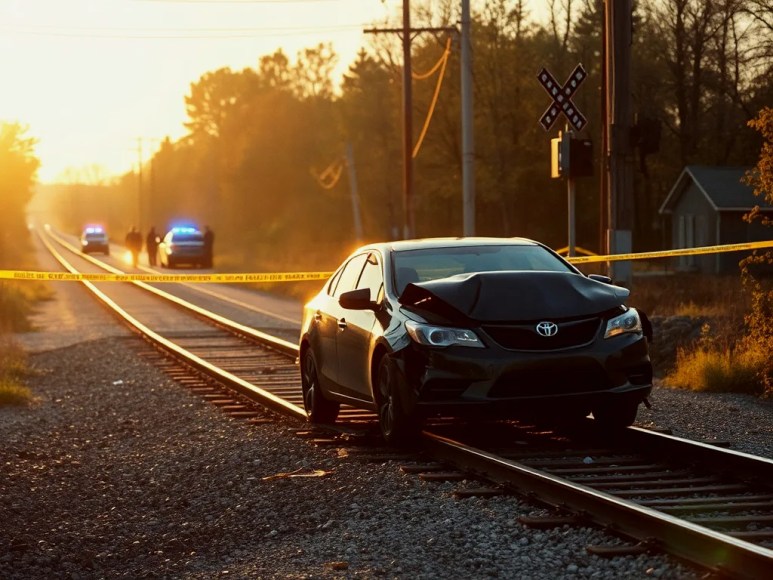
On November 26, 2026, a CSX Transportation freight train struck a vehicle at a grade crossing near New Main Street in Haverstraw, New York, killing one person. Local police opened an immediate investigation, crews closed the crossing and redirected traffic, and CSX is cooperating with authorities while investigators work to determine how the vehicle came to be immobilized on the tracks. Train crew members reported no injuries.
What happened at the Haverstraw grade crossing and when
Shortly before emergency responders arrived, witnesses reported seeing the vehicle stopped on the tracks as the freight train approached. First responders pronounced one occupant deceased at the scene; no onboard crew members were injured. Police established a perimeter, collected witness statements, and coordinated with the National Transportation Safety Board (NTSB) and Federal Railroad Administration (FRA) for technical examination of track, signal systems and the train’s event recorder.
Historical safety record of the crossing: 1979–2023 data
FRA records show that between 1979 and 2023 this specific crossing experienced 11 recorded collisions. Investigators cataloged recurring patterns: in six incidents vehicles were stopped, disabled, or trapped on the crossing when struck. That history led to a focus on mechanical failures, sightline obstructions, and user behavior as recurring causal factors. Understanding that pattern is essential to evaluate whether infrastructure upgrades, signal timing changes, or additional barriers are warranted at this location.
How investigators determine cause: steps taken after a grade-crossing collision
Investigative teams follow a standardized, step-by-step protocol: secure scene and preserve evidence; document vehicle and train positions with measurements and photographs; download the locomotive event recorder to examine speed, throttle, horn and braking inputs; inspect crossing warning devices (gates, lights, bells) for proper operation and maintenance history; examine the vehicle for mechanical issues and occupant restraints; review surveillance and bystander video; interview witnesses and first responders; and review maintenance logs, crossing design and traffic studies. Combining these data points yields a timeline and supports determinations about responsibility and preventability.
Common contributing factors at grade crossings and which apply here
Grade-crossing collisions typically involve one or more of these elements: vehicle breakdown or stalled engine, driver misjudgment of train speed or distance, obstructed sightlines from vegetation or structures, malfunctioning signals or gates, and deliberate bypassing of gates. The Haverstraw crossing’s prior incidents—where vehicles became stuck or disabled—highlight mechanical failure and entrapment risk as relevant concerns to the current inquiry. The ongoing probe will also verify whether the crossing’s active warnings functioned correctly at the time of impact.
Immediate public-safety measures implemented after the crash
Following the collision authorities closed the crossing and rerouted traffic to alternate corridors while investigators worked. Police established temporary traffic control, and CSX dispatched inspection personnel to evaluate the adjacent track and signaling equipment. Public notifications urged drivers to avoid the area; emergency crews prioritized scene safety and rapid evidence collection to minimize exposure and restore normal traffic flow as soon as practicable.
Potential mitigation and engineering improvements for high-risk crossings
When crossings show repeated collisions, agencies commonly consider layered mitigations: upgrade passive crossings to active protection (lights, gates, bells); improve sightlines by trimming vegetation and relocating signage; install four-quadrant gates that prevent circumventing; add median barriers and vehicle detection systems that detect a stuck vehicle and alert approaching trains; reduce vehicle approach speeds with geometric changes; and, where justified, consider grade separation (overpasses/underpasses) to eliminate the conflict point entirely. Cost, right-of-way constraints and traffic volumes drive which option is selected.
What residents and drivers should do to reduce risk at grade crossings
Drivers can reduce risk through specific, practical actions: never stop on the tracks; if a vehicle stalls, exit immediately and move away from the tracks toward the train’s direction to avoid debris; call emergency numbers posted at the crossing and provide the crossing’s identification sign; obey gates, lights and signs without attempting to drive around lowering gates; and avoid distractions near crossings by lowering windows and turning off audio to hear horns and bells. Local authorities can complement these behaviors with public-information campaigns targeted to known hotspots.
What to expect from the investigation and likely timelines
Investigations that involve fatal grade-crossing collisions generally take weeks to months. Immediate findings—such as whether active warnings functioned—often emerge within days. Detailed causation determinations that rely on event recorder downloads, vehicle forensic analysis, maintenance histories and reconstructed timelines can take longer. If systemic infrastructure issues are identified, agencies commonly publish interim safety advisories and collaborate with railroads to schedule corrective work.
Data-driven context: frequency and outcomes of US grade-crossing collisions
National statistics show grade-crossing incidents are relatively rare compared with vehicle crashes overall but disproportionately lethal when they occur because trains cannot swerve and stopping distances at speed are long. Historically, mechanical stoppage and driver error accounting for a substantial share of collisions recorded in FRA databases. Crossings with repeated incidents, like the Haverstraw site, are prioritized for targeted countermeasures through FRA and state rail-safety programs.
Next public updates and how to follow the case
Authorities will release formal updates after preliminary findings and as investigative milestones are reached. Monitor local police and county press releases, CSX statements, and FRA/NTSB announcements for definitive information about cause, recommendations and scheduled safety work. Crossing-specific signage often includes an emergency contact and crossing ID number; reporting that number expedites railroad response if you find an incident or malfunction.