
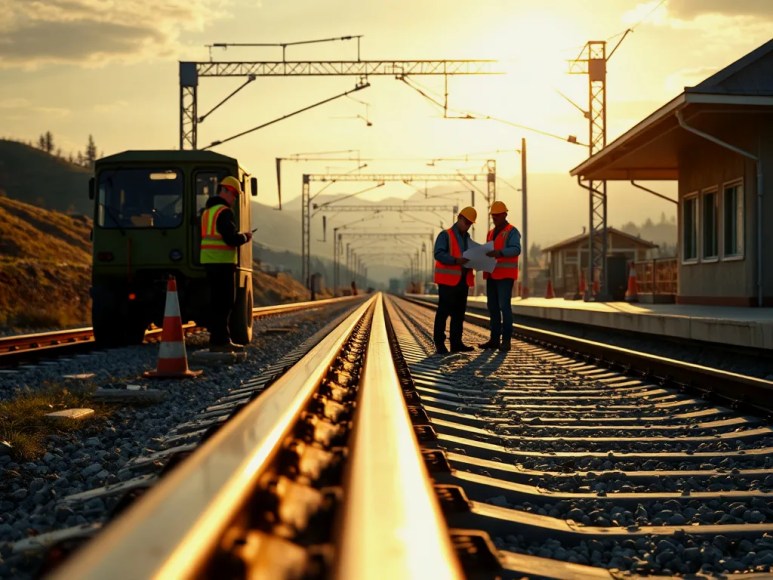
Overview of the Contracts and Objectives
CFR SA signed contracts on 25 November 2026 totaling 182.19 million lei to modernize critical rail infrastructure: bridges, tunnels and level crossings. The program splits into two main packages: rehabilitation of eight tunnels, two bridges and four culverts on the Filiaşi–Livezeni line, and modernization of 12 level crossings across three lines in Galaţi. The intent is to reduce operational risks, lift speed restrictions, improve resilience against natural hazards and lower accident rates through targeted structural and systems upgrades.
What the Tunnel and Bridge Rehabilitation Covers
The Filiaşi–Livezeni package, awarded to Strabag SRL for 129.27 million lei (exclusive of VAT), focuses on works concentrated in the Jiu Gorge mountainous corridor. Deliverables include structural repairs to tunnel linings, waterproofing, drainage improvements, approach and wingwall reinforcement for the two bridges, and replacement or upsizing of four culverts. Design phases are scheduled for 4–6 months; construction windows run 6–11 months. Practical examples: engineers will install shotcrete layers and new rock-bolting patterns where tunnelling exhibits fracturing, replace corroded bridge bearings, and add scour protection at abutments to prevent undermining during peak river flows.
How Level Crossing Modernization Will Be Implemented
The Galaţi package, led by Europan Prod SA for 52.92 million lei, modernizes 12 at-grade crossings across three lines. Each site receives a tailored scope: active warning systems (lights and bells), reinforced pedestrian refuges, replaceable low-height panels for smoother vehicle transitions, and improved sightlines through vegetation management. The program allocates 4 months for design and 6–7 months for execution. As a step-by-step example, teams will first survey sight-distance and approach geometry, then carry out civil works to reprofile approaches, followed by installation of electrical and detection equipment and final commissioning with simulated train passages to verify detection reliability.
Expected Safety and Operational Benefits
These investments target measurable outcomes: fewer temporary speed restrictions, fewer emergency slow orders, and a reduced number of incidents at grade crossings. Quantitatively, replacing degraded tunnel lining and improving drainage can restore line speeds by up to 20–30% in constrained sections, while active crossing systems typically lower collision rates by 50–70% compared with passive crossings. Bridge-bearing replacements and abutment protection reduce unplanned closures due to structural distress and flood damage.
Timeline, Risk Management, and Quality Controls
Both contract groups include phased design approvals, interim quality checks, and final acceptance tests. Key milestones: initial geotechnical and structural surveys (month 0–1), detailed design approvals (month 2–4), procurement of long-lead items like signaling hardware (month 3–6), construction (month 6–17 depending on package) and commissioning. Risk controls involve monitoring groundwater during tunnelling, temporary speed restrictions during works, and contingency plans for extreme weather interruptions. Quality control relies on independent inspections, non-destructive testing of repaired concrete and steel elements, and full-system integration tests for level-crossing equipment.
Examples of Technical Measures and Materials to Be Used
Common measures across sites include: shotcrete with corrosion inhibitors for tunnel repair; fiber-reinforced polymer (FRP) wraps to strengthen concrete bridge elements without widening; stainless-steel anchors and drainage liners to extend service life; LED-based active warning systems with UPS backup at crossings; and remote health-monitoring sensors (strain gauges, tiltmeters, water-level sensors) for early detection of deterioration. These choices reduce lifecycle maintenance costs and speed up interventions when anomalies appear.
Operational Examples and Local Impact
In mountainous corridors like Jiu Gorge, replacing failing tunnel drainage eliminated recurrent water ingress that had forced repeated emergency speed limits; after rehabilitation in comparable projects, timetabled freight windows increased by several hours per week. At level crossings in semi-urban Galaţi, adding active warnings and regrading approaches reduced road-user delays while cutting near-miss incidents. Local contractors and supply-chain firms receive short-term employment benefits from mobilization and long-lead manufacturing orders for specialized components.
How Success Will Be Measured
Authorities will track a set of performance indicators: reinstated maximum allowable speeds on rehabilitated sections, number of temporary speed restrictions removed, crossing incident counts year-over-year, mean time between maintenance interventions for key assets, and compliance with acceptance-test criteria. A successful outcome looks like immediate operational improvements (restored speeds and signaling reliability) and measurable safety gains (fewer collisions and near-misses at crossings) within 12 months after commissioning.
Practical Considerations for Future Projects
Lessons reflected in these contracts point to priorities for future investment: front-load thorough geotechnical investigation to reduce change orders, standardized crossing equipment across regions to simplify maintenance, and include remote-sensing monitoring during warranty periods to catch early degradation. Applying those steps consistently can shorten maintenance response times and lower whole-life costs for the rail network.