
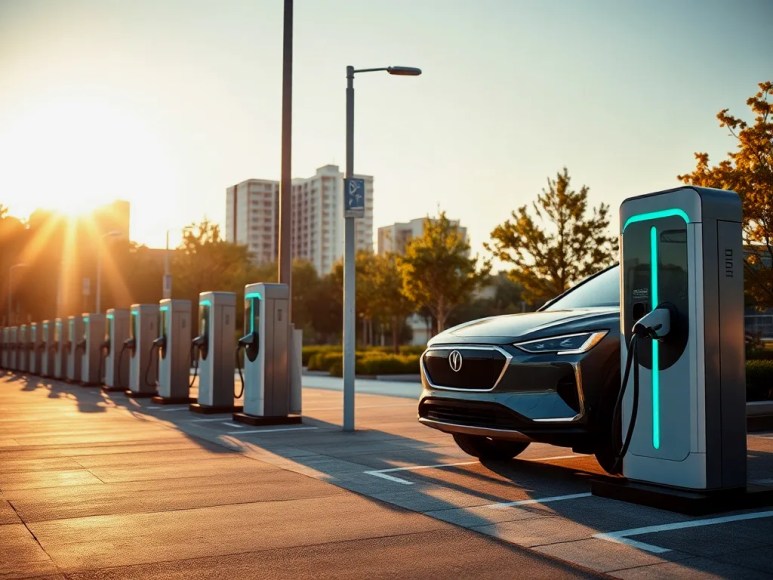
Turkey’s public EV charging sockets near 49,000 as infrastructure expands
Nationwide deployment reached 48,971 sockets by September 2026, up from 38,808 at the end of 2025. That increase of 10,163 sockets in nine months represents a 26.19% growth rate for the public charging network. Rapid regional rollouts and new commercial installations drove most additions, with a mix of AC slow chargers for workplaces and homes and DC fast chargers along intercity corridors.
Elaris scales from 71 to 144 sockets — a 103% capacity increase
Elaris, the subsidiary of ÜÇAY Mühendislik, added 73 sockets between January and September 2026, doubling its operational footprint. The expansion focused on three practical deployment patterns: targeted urban infill to reduce range anxiety in dense districts, fleet-focused stations near logistics hubs, and fast-charge corridors connecting major cities. By prioritizing sites with high dwell time—shopping centers, office parks, and transit hubs—Elaris maximized utilization and customer convenience.
Where and how Elaris prioritized installations
Site selection combined data analysis and field validation: first, mapping vehicle ownership density, electricity grid capacity, and typical parking durations; second, performing on-site grid assessments to confirm transformer capacity or identify necessary upgrades. Installation steps followed a tested sequence: permit acquisition, grid connection design, civil works for foundations and cabling, charger mounting, testing, and commissioning. This approach reduced deployment time and limited costly rework.
Performance metrics that matter for network operators
Key indicators Elaris tracks: socket utilization rate (sessions per socket per day), average session duration, energy delivered per socket (kWh/day), peak-hour congestion, and uptime percentage. For example, Elaris reports utilization climbed steadily after the first three months at each new site as local awareness and routing apps indexed the chargers. Tracking energy delivered per socket helped identify when an AC site needed a DC fast-charge complement to meet local demand.
Practical impacts for EV drivers and fleet operators
Drivers gained more accessible charging options across urban and intercity routes. The concentrated infill deployments reduced average driver detour time in cities by targeting zones with historically high parking dwellings. Fleet managers benefit from predictable overnight charging at logistics hubs and faster turnaround where DC chargers were installed. Elaris’ mixed-portfolio strategy reduces total cost of charging for fleet operators by aligning charger speeds with operational needs.
Scaling constraints and how Elaris addresses them
Common constraints: transformer capacity limits, permitting delays, and inconsistent grid connection timelines. Elaris mitigates these by negotiating shared transformer upgrades with local utilities, pre-assembling modular charge-station components offsite to accelerate installation, and maintaining a dedicated permitting team to streamline municipal approvals. Where grid upgrades lag, Elaris deploys smart load management software and dynamic pricing to prevent overloads while maintaining service.
What to expect next: Elaris’ e‑mobility roadmap
Planned actions for continued growth: expand DC fast-charge corridors along major highways, increase interoperability with roaming platforms and payment systems, and deploy energy-storage paired sites to ease grid strain and enable peak-shaving strategies. Elaris also intends to pilot vehicle-to-grid (V2G) trials at select fleet sites to evaluate bi-directional energy flows and potential revenue streams from ancillary services.
How this expansion affects Turkey’s EV ecosystem
Broader effects include: improved route planning reliability for long-distance travel, greater commercial confidence for businesses installing chargers to attract customers, and stronger incentives for fleets to electrify when reliable, nearby charging exists. The nearly 26% national growth in sockets demonstrates demand momentum and signals further private and public investment into charging infrastructure and grid modernization.