
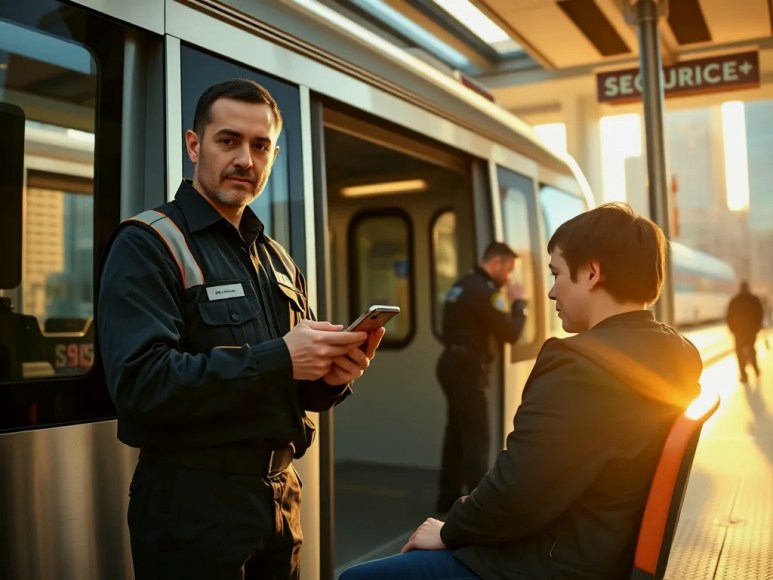
Operation Access launches a 90-day pilot for station-level ticket checks
Dallas Area Rapid Transit (DART) began Operation Access on November 16, 2026, implementing station-level ticket checks and increased uniformed presence to fare evasion and raise visibility. The pilot runs 90 days at two central stations — Pearl/Arts District and West End — where physical verification points and barriers require passengers to show valid fare before boarding. At five additional stations (Bachman, Forest Lane, LBJ/Skillman, MLK Jr., and 8th & Corinth) DART places uniformed police and security staff to reinforce compliance and deter disorder. DART will collect operational metrics, boarding delays, compliance rates and security incident counts to judge whether similar measures should scale across the light rail network.
Why DART chose these stations and what the agency will measure
DART selected the two central stations because weekday ridership numbers are highest there: West End averages 6,081 passengers and Pearl/Arts District 4,235 per weekday according to Q3 2026 figures. Choosing high-volume hubs yields clearer, faster data on passenger flow impacts and administrative cost per passenger for access controls. DART will track:
– Throughput times: minute-by-minute boarding rates during morning and evening peaks to see added dwell time from verification points.
– Fare compliance: percent of riders presenting valid fare at entry points etc. random inspections on trains and platforms.
– Incident and deterrence metrics: counts of fare disputes, confrontations, trespass reports and arrests involving transit police.
– Customer experience measures: rider feedback, complaint categories, and net changes in on-time performance.
How the checkpoint and staffing model operates in practice
At Pearl/Arts District and West End, DART installs visible verification points and temporary barriers configured to keep trains accessible while verifying fares before platform entry during peak hours. Staffing pairs transit security and fare inspectors with uniformed police for immediate escalation if needed. The practical workflow looks like this:
1) Staged entry: passengers line up at clearly marked verification points before accessing platform stairs or elevators.
2) Rapid verification: inspectors visually confirm mobile or paper fares; readers are available for quick validation to avoid bottle‑necks.
3) Secondary screening: staff perform targeted secondary checks (random boarding inspections) to validate the checkpoint’s coverage.
4) Escalation: if a passenger refuses verification or presents a counterfeit fare, a security officer or DART police handles the incident according to established procedures.
DART emphasized layout flexibility: during off-peak hours the barriers retract and verification becomes observational or randomized to limit unnecessary friction.
Expected impacts on passenger flow and examples of mitigation tactics
DART acknowledges short waits may appear during peak times. To minimize delay, they deploy several mitigations:
– Multiple verification lanes: open additional lanes keyed to platform entry points when sensors detect rising queue lengths.
– Advance signage and pre-boarding messaging: digital boards and staff reminders upstream of the station reduce surprises and speed up processing.
– Staff cross-training: quick redeployment of fare inspectors to busiest lanes during compressions to keep throughput steady.
In practice, a comparable system in another US city reduced fare evasion 35% within three months while adding an average of 20–30 seconds to peak boarding times; DART intends to compare its own time-cost tradeoffs against such benchmarks.
Visible security in seven stations: roles and coordination
DART assigns a layered security presence: DART police handle enforcement and arrests, transit security officers focus on deterrence and passenger assistance, and fare inspectors concentrate on compliance checks. In the five secondary stations and the two checkpoint hubs, personnel coordinate through a unified radio channel and a shared incident response protocol. That coordination reduces duplication: for example, fare inspectors request police backup for confrontational refusals while security officers shepherd crowd control during disruptions.
Data collection and decision criteria for scaling the program
DART will evaluate whether to expand or adapt Operation Access based on a set of measurable thresholds rather than subjective impressions. Key decision criteria include:
– Net fare recovery gain: increased revenue from reduced evasion versus additional operating costs for staffing and equipment.
– Passenger delay threshold: average added wait per rider not exceeding a preset tolerance (DART aims to keep it minimal, reporting any peak overrun).
– Safety outcomes: reduction in security incidents or conversely any increase in confrontations tied to checks.
– Public acceptance: survey-based approval ratings and survey trends.
DART explicitly states the pilot does not commit the agency to permanent turnstiles systemwide; it seeks data to inform whether permanent barrier installations would be cost-effective and operationally acceptable.
How this pilot differs from full turnstile conversion and what to expect next
Operation Access uses temporary, adaptive verification and increased staffing rather than installing fixed turnstiles network-wide. That approach offers two advantages: it limits capital expenditure while producing operational data, and it tests human-centered processes (staffing models, signage, queue management) that would persist even with physical turnstiles. If data justify further action, DART could consider phased infrastructure targeted investments at the busiest hubs first, combined with optimized staffing at satellite stations.
Practical guidance for riders during the pilot
Riders can reduce friction and speed their own access by following simple steps:
– Prepare fare in advance: open mobile wallet or have ticket ready before joining the verification queue.
– Follow posted lane guidance: choose lanes with staff assistance for first-time riders or accessible needs.
– Ask for clarification early: if signage is unclear, ask a uniformed employee before joining line to avoid rework.
– Report problems calmly: use official feedback channels for billing or conduct complaints so DART can refine operations during the trial.
What DART will publish after the trial and why it matters
At the end of the 90 days, DART will publish a report summarizing throughput metrics, fare compliance change, incident counts, rider feedback and cost analysis. That transparency helps taxpayers and riders understand whether access controls meaningfully reduce evasion and enhance safety without unacceptable service trade-offs. Cities considering similar measures will use DART’s results as a comparative case when weighing staff-driven checkpoints against capital‑heavy turnstile programs.