
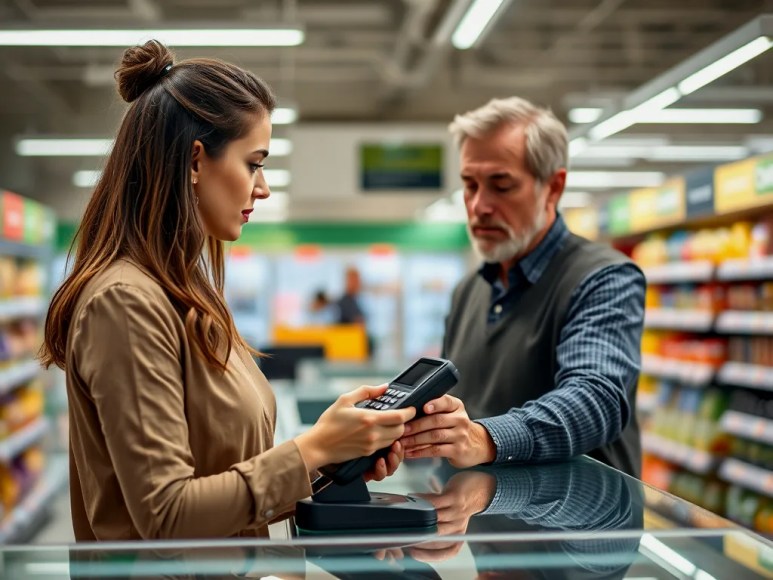
Eurostat-style data from the ECB’s 2026 SPACE survey shows a turning point in retail payments: card payments now outnumber cash at physical point-of-sale terminals, while consumers continue to value cash as an option.
Card payments reach 45% of in-store transactions
The 2026 SPACE survey, which keeps a consistent series of comparable observations since 2016, records that card payments accounted for 45% of transactions at physical shops, edging ahead of cash at 44%. The shift reflects steady growth in card acceptance and consumer familiarity with chip-and-PIN and contactless tap-to-pay interfaces. For example, mid-sized retail chains in Germany and the Netherlands report increases in contactless-enabled terminals and shorter queue times during peak hours, directly correlating with higher card usage.
Mobile payments rise to 9% from 6% in 2024
Mobile wallet and mobile-initiated payments rose to 9% of in-person transactions in 2026, up from 6% in 2024. That rise stems from two measurable drivers: broader merchant integration of QR and NFC acceptance, and promotional campaigns by fintechs that reduced friction for first-time mobile payers. A practical example: cafés that offered one-click loyalty rewards for mobile payers saw mobile share double within six months, illustrating how loyalty mechanics accelerate mobile adoption.
54% of consumers prefer cashless payments in stores
Across the Euro area, 54% of respondents say they prefer cashless methods (cards or other electronic means) for store purchases. Meanwhile 22% still prefer cash and 23% report no strong preference. The distribution varies by demographics: younger cohorts (18–34) show the highest cashless preference, while rural consumers and older cohorts maintain higher cash usage. Retailers serving mixed-age communities can respond by ensuring point-of-sale setups accept both contactless and cash to avoid excluding customers.
Consumers want both digital convenience and cash option preserved
Despite rising digital use, the survey shows that 82% of consumers consider the ability to pay digitally important, while 62% say preserving the option to pay with cash is important. This dual preference highlights that consumer choice—not a unilateral move to digital-only acceptance—remains central. Policy and merchant planning should therefore focus on inclusive designs: keeping a basic cash acceptance process while enhancing digital checkout speed, and training staff to handle both seamlessly.
Practical implications for merchants and payment planners
Merchants can convert these insights into action with three concrete steps:
1) Audit payment flows: Map current transaction times for cash, card, and mobile payments. Identify bottlenecks such as signature steps or PIN delays and remove unnecessary friction (for example, enable contactless limits where regulation allows).
2) Maintain dual access: Keep reliable cash-handling procedures while investing in resilient card and mobile acceptance hardware that supports both NFC and QR fallback to avoid downtime and lost sales.
3) Use targeted incentives: Apply short-term incentives—discounts, loyalty points, or one-click receipts—to nudge customers toward faster payment methods without demeaning cash users. Track the lift to optimize offers and avoid margin erosion.
Policy and consumer-access considerations
Policymakers should treat the transition as a question of access and choice. Measures to monitor include ATM density, merchant cash acceptance coverage in low-income areas, and the interoperability of digital wallets across banks. A stepwise regulatory approach could require minimum cash acceptance standards for essential services while promoting secure digital standards that protect consumer data and transaction continuity during outages.
What the data implies for future trends
Given current trajectories, expect gradual mobile growth, further card consolidation at points of sale, and continued persistence of cash for specific use cases—small-value purchases, certain demographic groups, and contingency scenarios. Retailers and regulators that plan for a mixed ecosystem—optimizing for speed, resilience, and inclusion—will best serve consumers and sustain transaction volumes.
Be the first to comment