
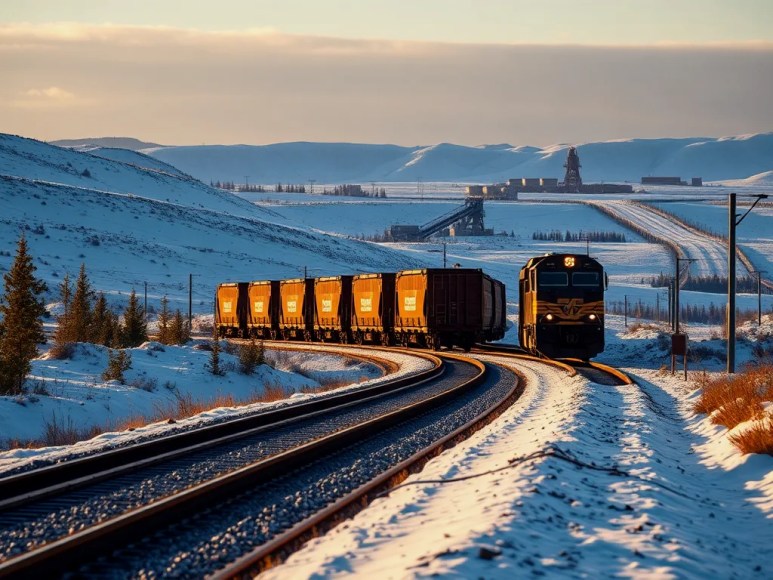
Railcare Group AB signed a SEK 429 million transport contract with Gruvaktiebolaget Viscaria to support the restart of the Kiruna copper mine. Starting April 2028 and lasting eight years, Railcare will operate six weekly round-trip train services, handling both outbound copper concentrate and inbound production inputs. The contract secures rail logistics capacity critical for Viscaria’s ramp-up and ties into recent port and infrastructure agreements that strengthen export routes.
How will copper concentrate flow from Kiruna to export ports?
Railcare will run three weekly round trips dedicated to moving copper concentrate from Kiruna to either Narvik (Norway) or Skelleftehamn (Sweden). Each trainset scheduling plan includes: (1) locomotive and crew provisioning, (2) unit train assembly optimized for concentrate wagons, and (3) timed handoffs at interchange yards to minimize dwell. Example routing: Kiruna → Leväjärvi connection → Malmbanan → Narvik port for transshipment. Using unit trains rather than mixed consists reduces loading/unloading time and improves ship-berth matching at destination ports.
How will inbound supply trains operate and what cargo they will carry?
The other three weekly round trips will transport mine inputs from Luleå or Skelleftehamn to Kiruna. Typical inbound cargo includes grinding media, reagents (flotation chemicals), fuel, and spare parts. Railcare’s responsibilities cover train planning, crew, and locomotive supply. To reduce supply-chain risk, operators will schedule predictable weekly slots and reserve contingency rolling stock for maintenance windows or unexpected inventory needs.
Contract term, value and extension mechanics
The base contract runs through 31 March 2036 with an annual average value of roughly SEK 54 million. Viscaria holds a nine-year extension option; exercising it could add approximately SEK 482 million to the contract’s value. The financial structure gives the mine operator early certainty on transport costs while allowing Railcare to allocate crew rostering, rolling stock investments and maintenance cycles across a longer revenue horizon if the option is triggered.
Why Narvik port deals matter for export capacity
Viscaria signed long-term agreements with Narvik Havn KF and Narvik Bulkterminal AS to handle about 120,000 tons per year of copper concentration. That terminal capacity aligns with projected full-production output (around 26,000 tonnes of copper annually, which converts to concentrate volumes depending on grade and recovery). Securing both rail haulage and port capacity before production reduces the risk of export bottlenecks and helps synchronize train cycles with ship loading windows, lowering demurrage risk.
How Leväjärvi’s connection to Malmbanan changes routing options
Sweden’s Trafficverket completed the Leväjärvi rail connection to the Malmbanan (Iron Ore Line) on 16 June 2026, opening direct routing north to Narvik and south to Bottenviken/Baltic ports. This connection shortens transit times and offers flexible routing when port berths or weather limit one corridor. Final commercial operations await completion of ERTMS testing and operator approvals; once certified, operators can exploit Leväjärvi as a regular interchange node, improving network resilience.
Railcare’s broader mining logistics portfolio and synergies
Railcare already serves large mining customers in northern Sweden: a SEK 740 million contract with Kaunis Iron through 2031 for ~2.3 million tonnes per year of iron ore and an agreement with LKAB Malmtrafik worth about SEK 70 million annually for 2025–2029. Adding Viscaria’s flows increases utilization of locomotives and trained crews across seasonal valleys, enabling economies of scale in maintenance, spare parts inventory, and crew deployment. Operational synergies may include shared staging yards and standardized concentrate wagon configurations to speed turnarounds.
What operational and regulatory steps remain before April 2028?
Key outstanding items include project financing close for Viscaria, ERTMS validation and operating approvals for Leväjärvi, and Trafficverket infrastructure works on Malmbanan that adapt passing loops and some sidings to 750‑metre length trains. Railcare must align its locomotive fleet and crew training to certified ERTMS operations and coordinate slot allocations with Trafficverket and port terminals to meet the planned service launch date.
Estimated volumes, timing and examples of scheduling
Based on the contract and port handling plans, weekly concentrated departures (3 round trips) translate to an annual outbound throughput estimate in the low hundreds of thousands of thousands, consistent with a mine producing ~26,000 t Cu/year. A sample weekly cadence: Monday afternoon load Kiruna → depart evening; Tuesday morning handoff at Narvik → berth scheduling for Wednesday load onto vessel; midweek return with inbound reagents; repeat with staggered timings to match port berths and allow locomotive maintenance windows on weekends.
Risks, mitigations and practical implications for stakeholders
Main risks include delays in ERTMS approval, infrastructure adjustments on Malmbanan, and slower-than-expected project financing. Mitigations: phased service ramp-up, pre-booked contingency slots on alternate ports, and flexible rolling-stock pools. For stakeholders—mine operators gain secured logistics capacity; ports lock predictable tonnages enabling terminal investment; Railcare secures long-term revenue but must invest in ERTMS-ready locomotives and trained personnel.
Bottom line for regional logistics and mining activity
The Railcare–Viscaria agreement ties together rail, port and mine timelines to make a Kiruna copper restart operationally feasible. With Leväjärvi’s new connection and Narvik port agreements, northern Sweden’s export corridors gain capacity and flexibility. Success depends on coordinated completion of ERTMS testing, infrastructure works, and project financing ahead of the planned April 2028 launch.