
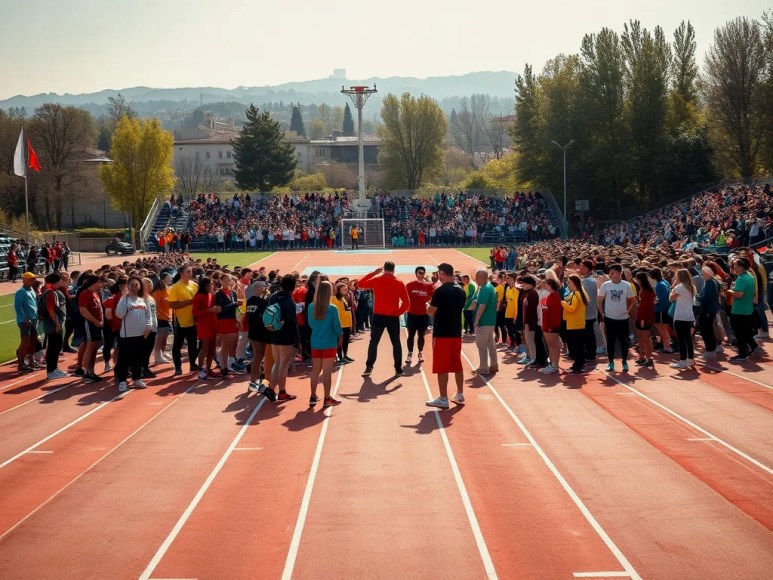
Ankara Metropolitan Municipality ran a nine-day, free sports program for 1,250 children aged 6–16 during the first midterm break of the 2026–2027 school year, concluding with competitive swimming events.
Program overview and goals
The municipality organized the program at Sincan, Altınpark, and Pursaklar sports complexes to give children structured, instructor-led activity throughout the school break. Administrators designed the schedule to balance skill development, competition, and fun: daily two- to three-hour sessions across technical drills, supervised play, and recovery. Primary goals included increasing physical activity levels, exposing children to multiple sports so they could discover preferences, and reducing sedentary screen time during the holiday.
Which sports were taught and how training was structured
Children rotated through nine distinct disciplines: swimming, volleyball, basketball, chess, archery, darts, gymnastics, wrestling, and football. Organizers split participants into age- and skill-based groups to retain safety and accelerate learning. Typical daily flow:
Warm-up (15–20 minutes): dynamic mobility, light jogging, and sport-specific activation.
Skill block (40–60 minutes): technical instruction and station drills focusing on core mechanics (eg, shooting form for basketball; stroke technique and breathing for swimming).
Game/scrimmage (30–45 minutes): small-sided games or simulated contest conditions to reinforce decision-making and teamwork.
Cool-down and reflection (10–15 minutes): stretching and short coach-led feedback to set individual practice targets.
Coaching, safety, and accessibility measures
Certified coaches and trained volunteers led all sessions. Staff-to-child ratios varied by sport and risk level; For example, pools maintained a maximum of one lifeguard-qualified instructor per 8–10 swimmers and a second safety observer. Equipment adaptations ensured accessibility: reduced-size balls and lowered goal heights for younger players, beginner bows for archery with extra supervision, and progressive wrestling mats. First-aid stations and hydration points were available at each venue.
swimming
Competitive finale and awards
The nine-day program culminated in competitions held at Altınpark 100. Yıl and Sincan Atatürk Swimming Pools. Families attended timed heats and podium ceremonies. Organizers awarded a bicycle to each first-place swimmer, packages to second-place winners, and smartwatches to third-place finishers—an approach that combined tangible motivation with local recognition to sustain continued participation.
Scale, outcomes, and ongoing impact
Social Services Department reports that the comprehensive ‘Spor Vakti’ holiday initiative has delivered 25,000 lesson hours to 10,000 children since inception. Measurable short-term outcomes included improved endurance and basic motor skills across cohorts, higher self-reported willingness to continue a sport, and reduced average daily recreational screen during the break compared with baseline surveys. The program also functioned as a feeder mechanism for municipal youth leagues and after-school clubs.
Practical takeaways for parents and organizers
Parents: enroll children in multi-sport holiday programs to accelerate motor learning and help them discover lasting interests; Choose programs that offer age-grouped coaching and strong safety protocols. Organizers: use a modular daily schedule (warm-up, skill block, gameplay, cool-down), maintain conservative staff-to-child ratios for high-risk activities, and include a public event at the end of a program to reinforce motivation and community engagement.
Examples and data points to replicate success
Example schedule for a nine-day camp used in the program: Days 1–3 rotate through fundamental movement and introduction to three sports; Days 4–6 increase technical intensity and introduce competitive elements; Days 7–8 refine chosen disciplines; Day 9 host competitions and awards. Data-driven decisions: track attendance by session, pre/post basic fitness tests (eg, 20m shuttle, sit-and-reach), and participant interest surveys to allocate future slots and coaches.
How the model scales to larger cohorts
To scale from 1,250 to 10,000 participants across a city, replicate hubs at district sports complexes, standardized coach training modules, adopt centralized scheduling and registration, and deploy mobile equipment kits Budget items to prioritize: certified instructors for safety, pool lifeguards, insurance participant, and end-of-program events to maintain retention.