
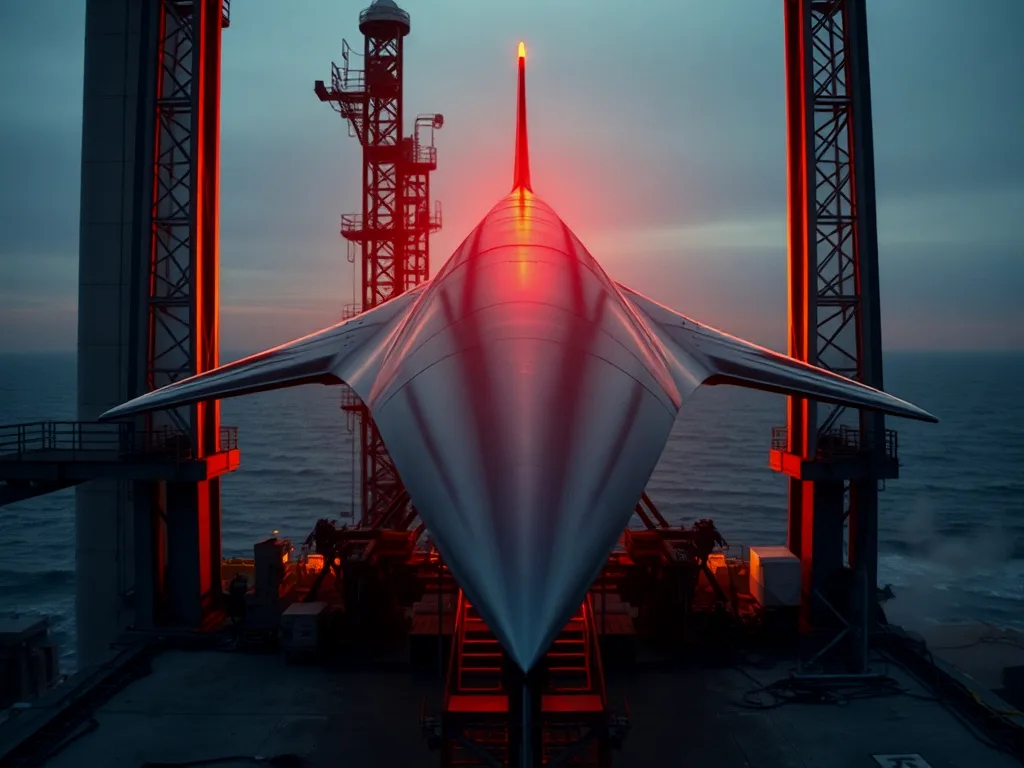
Overview of 2027 Budget Presentation and Strategic Focus
Vice President Cevdet Yilmaz presented the 2027 budget for the defense sector to the Grand National Assembly’s Plan and Budget Commission, outlining concrete targets, funding allocations, and prioritized technology areas. The presentation emphasized measurable growth—project counts, employment, domestic content—and signaled large-scale investments in next-generation capabilities such as hypersonics, quantum-based cyber defense, AI-enabled autonomy, and unmanned submarines. The summary below translates those targets into actionable pillars for industry participants, planners, procurements, and R&D teams.
Current Industry Scale and Measurable Metrics
According to the figures revealed, the defense ecosystem now approaches 1,500 active projects with a combined project portfolio exceeding $150 billion. Domestic content has risen to 83%, supported by over 4,100 firms and more than 130,000 employees. These statistics indicate a maturing supply chain and growing capacity to localize complex subsystems. For companies planning to enter or expand in this market, the clear metrics offer targets for partnership strategies, localization roadmaps, and workforce development plans.
Revenue, Export Goals, and Workforce Targets Through 12th Development Plan
Performance to date: 2025 sector revenue reached $25 billion with exports of $10 billion. Ambitious endpoints: by the close of the 12th Development Plan period the defense and aerospace sector aims for 158,000 employees, $30 billion in revenue, and $12.5 billion in exports. Companies and policymakers can translate these goals into specific actions: scale production lines to meet export quotas, develop targeted international marketing for priority platforms, and investors in vocational pipelines to raise qualified labor by roughly 22% from current employment.
2027 Appropriation and Funding Mechanisms
The draft 2027 appropriation assigns 2,159,000,000 Turkish lira to the Presidency of Defense Industries (SSB). This line-item covers administrative and programmatic activities but does not represent the total envelope for all active projects; many major programs are funded through separate project-specific allocations and the Defense Industry Support Fund. For context, in 2025 the Support Fund received 259 billion lira, demonstrating the presence of parallel capital streams beyond the ministry’s direct appropriation. Project managers should map which funding source covers each contract milestone to avoid cash-flow surprises.
Priority Technologies and Project Examples
Four technology areas received explicit emphasis and should guide R&D prioritization and industrial partnerships:
1) Hypersonic Weapons: Programs are advancing propulsion, thermal protection, and high-speed guidance. Example development tasks include scramjet integration tests, heat-resistant materials qualification, and terminal guidance sensor fusion—each requiring cross-disciplinary teams and test corridors capable of high-Mach flights.
2) Quantum Computing for Cyber Defense: Work centers on quantum-resistant cryptography, quantum key distribution trials, and exploratory quantum-accelerated threat-detection algorithms. Implementation steps: evaluate current cryptographic stack, initiate pilot QKD links for critical nodes, and fund algorithmic research that demonstrates real-world detection improvements.
3) AI-Enabled Autonomous Systems: This covers autonomy software stacks, perception sensors, and secure orchestration for collaborative unmanned platforms. Practical milestones include creating validated simulation environments, running safety-case assessments for neural controllers, and certifying middleware for secure over-the-air updates.
4) Unmanned Submarine Technologies: Efforts combine hull design optimization, battery/energy systems, and autonomous navigation in contested littoral zones. Roadmaps should include staged sea trials, endurance benchmarking, and integration tests for cooperative behaviors with surface assets.
How Companies Should Position Themselves
To win work and scale within this roadmap, firms should pursue three parallel tracks:
1) Localization and Supply Chain Integration — increase local content through joint ventures and tech-transfer clauses; map tier-1 opportunities where the 83% localization target creates preference.
2) R&D Partnerships and Testbed Access — partner with research centers and the SSB to access flight and maritime test ranges; Propose demonstrators that reduce risk and shorten time-to-contract.
3) Export and Certification Pathways — align product development with export-market requirements and international certifications to support the $12.5 billion export target, and prepare export packages that emphasize interoperability and lifecycle support.
Funding and Contracting Practicalities
Understand funding layers: the SSB appropriation, the Defense Industry Support Fund, and project-specific budgets. For contractors, this means structuring bids with clear milestones tied to specific funding streams and including contingency plans for multi-source financing. Use modular contracting where possible to decouple R&D risk from production investment.
Short-Term Actions (0–18 months)
1. Audit internal capabilities against the four priority tech areas and identify gaps to close within 12 months. 2. Establish at least one strategic partnership with a local firm to increase localization percentage. 3. Prepare a funding map that links ongoing programs to specific public funds to inform cash-flow planning.
Medium-Term Actions (18–48 months)
1. Deliver demonstrator(s) that validate critical subsystems (eg, guidance for hypersonics, QKD link for a secure node, autonomy stack in maritime unmanned vessel). 2. Scale manufacturing capabilities with quality systems oriented to export certification. 3. Implement workforce development programs tied to the 158,000 employment target.
Long-Term Actions (48+ months)
1. Achieve sustainable production rates that support the $30 billion revenue target. 2. Institutionalize R&D centers of excellence for quantum, AI autonomy, and hypersonics. 3. Expand international partnerships that convert technology demonstrators into exportable products supporting the $12.5 billion export objective.
Implications for Policymakers and Investors
Policymakers should track localization outcomes, workforce metrics, and the effectiveness of the Support Fund in accelerating demonstrators to production. Investors should prioritize companies with proven access to test ranges, demonstrable local supply partnerships, and clear routes to export certification—these attributes materially reduce program and market risk.
Key Takeaways
Quantified growth targets (projects, workforce, revenue, exports) create measurable milestones. Dedicated funding streams exist but require careful mapping by program. Priority technologies—hypersonics, quantum cyber defense, AI-enabled autonomy, and unmanned submarines—should drive corporate R&D and partnership strategies. Executing the short-, medium-, and long-term actions above will position firms and agencies to meet the 2027 and 12th Plan objectives.