
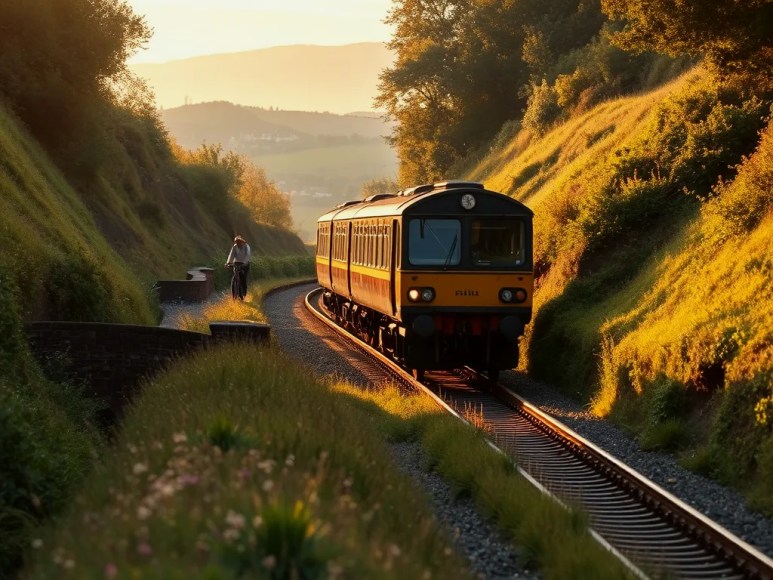
Services resume on Liskeard–Looe line after flooding
Great Western Railway reopened the Liskeard–Looe branch on 26 November 2026 after intense rainfall forced a short closure. Operators restored timetabled trains once trackside water levels dropped and engineers confirmed safe operating conditions. During the two-day interruption, GWR ran replacement minibuses to keep passengers moving between stations.
Why the line closed and what changed
Heavy rain beginning 24 November rapidly raised water across the Looe Valley corridor, causing Network Rail to suspend services as a precaution. Inspectors recorded no structural damage to track or bridges during the event; the closure ended after visible water receded and a targeted inspection proved the route clear. The decision combined measured hydrological readings, on-site ballast and sleeper checks, and a risk assessment of potential scour around supports.
How the reopening was validated step by step
Engineers followed a concise validation sequence before approving trains: 1) measure stream and culvert levels; 2) walk the full 9–12 mile route for visual inspection of embankments and drainage; 3) test signaling and track circuits for water intrusion; 4) confirm bridge bearings and abutments show no movement; 5) run an empty inspection train or traction unit at restricted speed to confirm safe running. Only after these steps did GWR resume normal passenger services.
Service pattern, journey times and capacity details
Approximately the branch serves six stations with hourly departures from Monday to Saturday. Typical one-way journey time on the branch is about 30 minutes. Operators maintain a pattern that balances local commuting demand with summer leisure traffic to the coast. During disruptions, minibuses and rail-replacement coach links are pre-planned to match peak flows and the busiest connection points, limiting overcrowding and long waiting times.
Context: previous long closure and lessons learned
In winter 2025–26 the Looe Valley line experienced a longer interruption of roughly 11 weeks after exceptionally high tides and heavy rain damaged multiple bridge elements and track supports. That episode prompted targeted reinforcement work, improved drainage installations and revised emergency-response protocols. Those upgrades shortened the November 2026 disruption: inspectors found the recent flood water managed by those new measures rather than causing fresh structural harm.
Practical advice for passengers during similar events
Passengers using coastal and valley branch lines can reduce disruption impact by planning: check GWR and National Rail Enquiries for live updates, allow extra travel time, use advance tickets refundable under disruption rules, and register for text or app alerts. At station level, staff usually post diversion maps and provide walking-time estimates between replacement stops. For those traveling with luggage or mobility needs, contacting operators in advance secures assistance and appropriate transfer vehicles.
What this event means for infrastructure resilience
Repeated flooding incidents highlight the need for continuous investment in drainage, bank reinforcement and bridge scour protection on low-lying branch lines. Practical resilience actions include upsizing culverts, adding geotextile reinforcement to embankments, installing remote water-level sensors, and scheduling routine inspections immediately after forecast heavy rainfall. Combining these engineering measures with clear operational protocols reduces closure duration and protects service reliability.
Local impact and outlook
Short-term local impacts were limited because replacement transport maintained connectivity; Businesses and commuters experienced minimal additional delay. Looking ahead, Network Rail and local stakeholders plan to monitor the valley throughout winter high-tide and storm seasons, using the recent event as a calibration point for response times and infrastructure readiness. If heavy storms occur, planned mitigation work from the 2025–26 repair program can be accelerated at critical pinch points.
Be the first to comment