
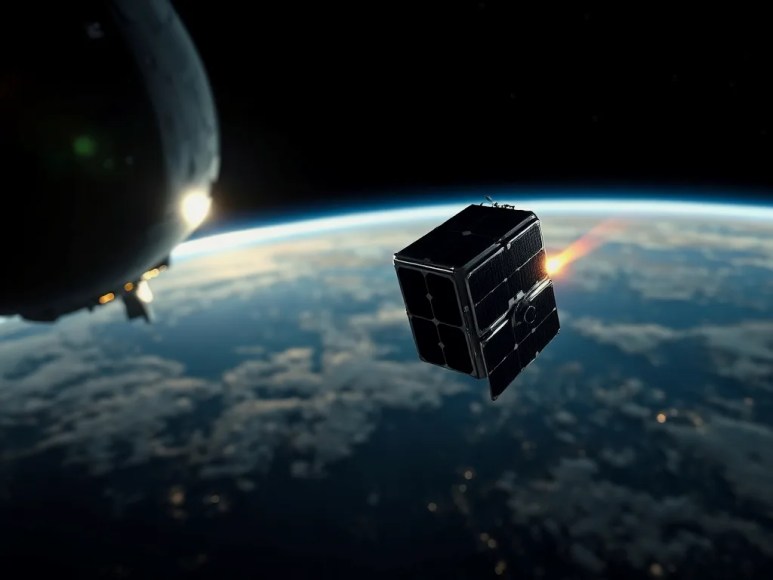
What is 2026 QQ8 and how was it discovered?
2026 QQ8 is a roughly two‑metre natural object that entered a temporary orbit around Earth. Astronomer Krisztián Sárneczky at Konkoly Observatory first imaged it in August, and follow-up observations from multiple facilities confirmed the detection. Teams combined astrometric position measurements from observatories in Hungary, Arizona and Mauna Kea to compute an orbit that matched a short‑lived Earth capture rather than a stable satellite or human debris.
Which observations determined its nature?
Observers collected three complementary data streams: precise astrometry, photometric light curves and spectral/color measurements. Astrometry defined the instantaneous orbit and revealed gravitational perturbations; photometry produced rotation estimates and apparent magnitude that constrained size and albedo; spectroscopy and color indices searched for metallic or manufactured material signatures. The ensemble of measurements produced a consistent picture: a low mass‑to‑area ratio, dusty surface reflectance, and non‑metallic spectral slope—characteristics expected of a small natural asteroid, not a processed spacecraft fragment.
How did analysts rule out space debris?
Analysts compared the inferred mass/area ratio and spectral reflectance with known profiles of artificial objects. Manufactured objects typically show distinct, high‑reflectance coatings, sharp metallic lines in spectra, or orbital perturbations from asymmetric solar radiation pressure on thin panels. 2026 QQ8 showed smooth photometric variations consistent with tumbling rock, lacked metallic spectral features, and exhibited orbital perturbations consistent with Yarkovsky‑like forces acting on a compact, roughly spherical body. Those disagreements with artificial‑object expectations supported the natural‑asteroid interpretation.
Does 2026 QQ8 pose an impact threat?
Impact risk modeling using current orbital solutions places the collision probability with Earth at essentially zero for the capture interval. At ~2 m diameter, 2026 QQ8 would almost certainly break up during atmospheric entry: models and past analogs indicate near‑complete ablation and fragmentation. If fragments reached the ground, they would be small and rare. Historical temporary satellites such as 2006 RH120 and 2020 CD3 followed similar harmless end states: brief captures followed by escape back to heliocentric orbit or disintegration in the upper atmosphere.
Where do these mini‑moons originate and why are they captured?
Most mini‑moons originate from the population of near‑Earth objects (NEOs) — small asteroids perturbed by planetary encounters or thermal forces (Yarkovsky effect). Capture occurs when a body’s heliocentric orbital energy drops relative to Earth, often through a sequence of close planetary encounters or temporary resonances. The three-body dynamics among the Sun, Earth and the small body create transient zones where gravitational potential allows short-term captures. The Moon can assist captures by exchanging energy during close approaches, lengthening a fragment’s residence time in Earth orbit from weeks to months.
Which observation tools and networks made the detection possible?
Detection depends on wide‑field, frequent surveys and rapid follow‑up. Survey telescopes detect moving points near the limiting magnitude; robotic follow‑up instruments obtain multi‑epoch astrometry and photometry to fix the orbit. Facilities involved in this case included Konkoly Observatory (discovery), Lowell Discovery Telescope and Keck/other Mauna Kea telescopes for characterization. Upcoming systems such as the Vera C. Rubin Observatory will multiply discovery rates by scanning vast sky areas nightly with deep exposures, enabling routine discovery of sub‑10‑metre NEOs and transient captures.
How do scientists model orbital evolution and short‑term fate?
Scientists integrate the object’s state vector forward and backward in time using n‑body simulations that include perturbations from the Sun, planets and the Moon, plus non-gravitational forces like solar radiation pressure and thermal recoil (Yarkovsky/YORP). They run Monte Carlo ensembles that vary initial measurement uncertainties to produce probability distributions for future states. For 2026 QQ8, ensembles converge on escape from Earth’s Hill sphere in early December, with negligible collision probability. Sensitivity analyzes test how changes in assumed density and surface properties shift outcomes; for 2026 QQ8 reasonable physical ranges do not produce hazardous scenarios.
What measurements refine physical properties (size, mass, rotation)?
Photometric amplitude and period analyzes yield rotation rate and shape hints: a large lightcurve amplitude implies an elongated shape, while short-period variations indicate rapid spin. Combining observed brightness with assumed or constrained albedo gives diameter estimates; radar (if attainable) provides size and surface roughness directly. For mass, estimators use mass‑to‑area inferred from observed non‑gravitational accelerations and assumed densities from comparable meteorite classes. For 2026 QQ8, photometry implies ~2 m diameter and mass on the order of a few tons, depending on assumed density (2–3 g/cm³ typical for stony material).
How will observers track 2026 QQ8 in the coming weeks?
Teams will prioritize high‑cadence astrometry to reduce orbital uncertainties as the object approaches the point of escape. Short exposures, careful timing, and networked coverage across longitude reduce gaps in the orbital arc. Photometric monitoring will continue to detect brightness changes that indicate fragmentation or rapid spin alteration. If atmospheric entry signatures become possible, coordinated optical and infrasound monitoring would look for meteor‑like traces. Authorities will issue public notices only if models indicate a credible surface impact risk; current trajectories do not warrant public alerts.
What does this detection teach planetary defense and science?
Every confirmed mini‑moon improves population estimates for small NEOs and validates capture dynamics in the Earth‑Moon system. Rapid multi‑observatory characterization exercises operational readiness for real threats and sharpens follow‑up protocols. Scientifically, retrieving physical data from temporarily captured NEOs tests formation and evolution models for small bodies and yields ground‑truth for meteorite‑asteroid links. Operationally, these events function as low‑risk drills for observation coordination, orbit refinement and public communication practices.
Examples and numbers to illustrate outcomes
Example calculation: a 2 m, 2.5 g/cm³ sphere has mass ≈ 10–12 tonnes (volume ≈ 4.19 m³; mass ≈ 10.5 tonnes). Atmospheric entry models for such an object predict breakup at high altitude; kinetic energy upon entry corresponds to a small fraction of large meteor events and distributes as light and acoustic energy. Past mini‑moons (2006 RH120, 2020 CD3) each remained bound for months at most before reescaping or disintegrating, demonstrating typical transient lifetimes and negligible damage potential.
Short FAQs people ask
Will 2026 QQ8 hit my city? No — modeled impact probability is effectively zero and the object is too small to cause ground damage.
How long will it stay around Earth? Current integrations indicate escape from Earth’s influence in early December.
Could we capture such an object for study? In principle, yes: small bodies in temporary capture offer low‑delta‑v rendezvous opportunities. Operationally, short lead times and rapid planning present challenges but provide attractive targets for technology demonstrations.
What to watch next
Expect more frequent detections as survey capability grows. Rubin Observatory will expand discovery completeness for metre-scale objects and increase the rate of temporary captures detected. For the public, follow alerts from professional observatories and the Minor Planet Center for the latest orbital updates; scientific teams will post refined ephemerides and characterization results as they finalize analyses.
Bottom line
2026 QQ8 is a short‑lived, natural mini‑moon confirmed by astrometry, photometry and spectral analysis. It presents no credible threat, offers a practical test of observation and modeling workflows, and adds to the sample of tiny NEOs that inform planetary defense, dynamics and small‑body science.