
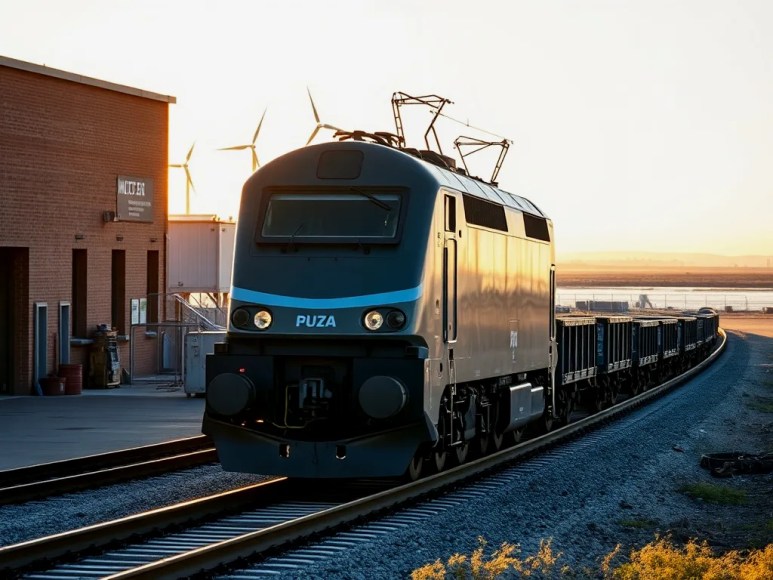
Austria-based construction and infrastructure group Swietelsky AG has completed the acquisition of Danish rail operator VIKING-Rail ApS, announced on 19 November 2026. The deal aims to expand Swietelsky’s rail logistics, rolling stock maintenance and infrastructure capabilities across Northern Europe. Financial terms were not disclosed.
Scalable rail logistics and heavy-rail transport across Scandinavia
VIKING-Rail brings more than two decades of experience moving large maintenance machines, locomotives and track materials. Swietelsky will deploy that expertise to transport heavy track-renewal equipment from Germany into Denmark and Sweden, shorten project mobilization timelines and reduce subcontractor complexity. For example, moving a track tamping and ballast-regulating train by rail rather than road can cut transit time by several days and eliminate multi-crane lifts at border crossings.
In practice, Swietelsky will integrate VIKING-Rail’s freight locomotives and wagons into cross-border logistics plans, schedule rolling-stock rotations to match maintenance windows, and consolidate supply chains for sleepers, rails and ballast. This reduces idle time for machinery on site and lowers overall project cost per kilometer of renewed track.
Workshop capacity and ETCS retrofits: an operational advantage
VIKING-Rail’s Padborg workshop covers maintenance, repairs and upgrades and functions as a certified Entity in Charge of Maintenance (ECM). Swietelsky will use this facility to accelerate ETCS—European Train Control System—retrofits, a growing market as Denmark upgrades to ERTMS Level 2. A step-by-step retrofit workflow will likely include: detailed vehicle inventory and compatibility assessment; wiring and interface preparation; installation of onboard ETCS balises and antennas; software integration and testing; and final ECM documentation and acceptance.
Because Banedanmark plans to complete its 24.6-billion-DKK signaling program by 2033, demand for ETCS-fitted vehicles will rise steadily. Owning a staffed workshop near the Danish–German border gives Swietelsky strategic proximity to requiring conversion and reduces ferry or long-haul transport costs to remote fleet facilities.
How the acquisition supports infrastructure renewal projects
Swietelsky’s existing operations in Denmark already include turnout and track maintenance, alignment correction and full renewal works. VIKING-Rail’s transport and workshop capabilities create an integrated service offering: project planning, delivery of renewal trains to site, on-site assembly and post-work removal of machines. That integrated model shortens project timelines and increases predictability for clients and funding agencies.
Concrete example: on a 23 km renewal project between Skjern and Holstebro in 2025, Swietelsky replaced rails, sleepers and ballast. With VIKING-Rail under its umbrella, similar projects can be executed with fewer third-party contractors, faster equipment swaps between sites and simplified invoicing for clients.
Market position and fleet management implications
VIKING-Rail, formerly operating as CFL Cargo Danmark, employs 34 staff who will continue current operations during the ownership transition. Retaining experienced personnel ensures institutional knowledge stays with ongoing fleet maintenance schedules, driver qualifications and ECM responsibilities. Swietelsky has already expanded rolling-stock maintenance capabilities through its 2025 acquisition of the UK-based Harry Needle Railroad Company; adding VIKING-Rail scales that capacity into the Nordic market.
Operationally, Swietelsky can now optimize fleet allocation across Europe: move locomotives where demand peaks, centralize spare-part inventories in key workshops such as Padborg and the UK facility, and apply consistent maintenance standards across subsidiaries to lower lifecycle costs per vehicle.
Financial and strategic context
In the 2025/26 financial year Swietelsky reported construction output of €4.01 billion, with rail construction representing approximately €1.06 billion—or 27%—of total output. This acquisition strengthens the group’s position in the European rail market by aligning on-site infrastructure works with in-house logistics and vehicle services, increasing cross-selling opportunities and improving margin capture across the value chain.
Swietelsky’s approach is tactical: acquire targeted regional operators that supply missing capabilities (workshops, cross-border transport) rather than large, diversified firms. That lowers integration risk, preserves local customer relationships and accelerates return on investment through operational synergies.
What clients and contractors can expect next
Clients should expect more integrated tenders combining track renewal, signaling preparation and rolling-stock availability. Contractors will see opportunities for subcontracting specialized tasks but may face higher competition from the combined Swietelsky–VIKING-Rail offering. For regional authorities planning ERTMS conversions, the integrated model simplifies coordination: one contractor can deliver track work, provide ETCS-ready vehicles and perform post-installation testing under ECM oversight.
Overall, the acquisition positions Swietelsky to execute cross-border rail projects faster, retrofit fleets for the ERTMS transition more efficiently and offer bundled services that reduce procurement complexity for infrastructure owners.
Source data points: Padborg maintenance capability, Banedanmark’s 24.6-billion-DKK signalling program to 2033, Swietelsky’s 2025 UK acquisition, Skjern–Holstebro 23 km renewal in 2025, Swietelsky 2025/26 construction output €4.01 billion with rail at €1.06 billion.