
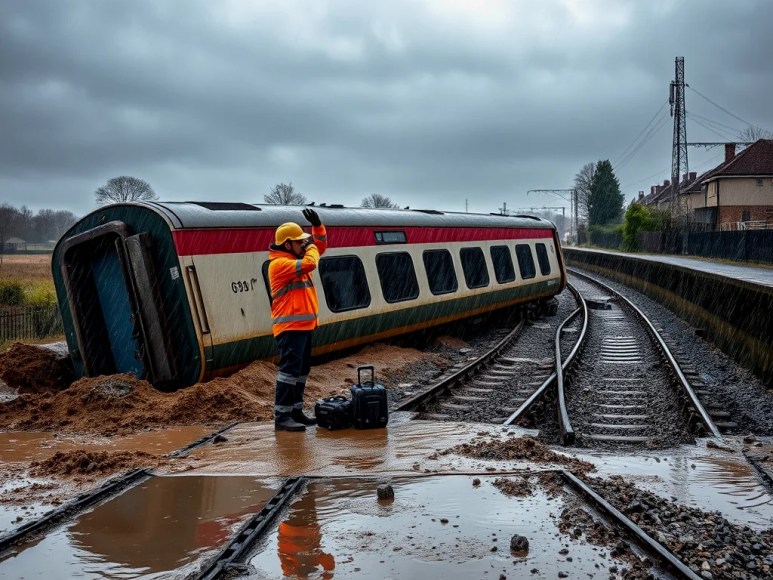
Severe storm on 25 November 2026 forced immediate operational changes across Gauteng’s Metrorail network. PRASA implemented temporary timetables and route restrictions on 26 November after crews found infrastructure damage and localized flooding. The adjustments aim to keep passengers moving on safe tracks while technicians assess and repair affected sections.
Johannesburg and Pretoria lines: exact route changes and alternatives
On the Naledi–Johannesburg corridor, trains now run on a single track where damage allowed only one clear route. A collapsed wall at Mayfair prevents Roodepoort services from completing their full journey; those trains currently terminate and reverse at Langlaagte Station. Passengers who normally use Roodepoort services for a Johannesburg connection should instead board Naledi or Lenz services at the nearest interchange to maintain their planned journeys.
Between Pretoria and Pienaarspoort, PRASA suspended through-services beyond Koedoespoort: trains operate only as far as Koedoespoort while the Koedoespoort–Pienaarspoort–Mamelodi Gardens section remains out of service until engineers confirm track integrity. If your commute relies on that stretch, expect to use replacement road transport or altered rail-to-bus connections while repairs continue.
Practical steps for affected passengers
Follow these immediate, practical actions to reduce travel disruption:
Before leaving: check PRASA live service updates and station notices — these list revised termini, platform changes, and bus replacements. Download or refresh the operator’s timetable PDF to view temporary patterns for Naledi, Lenz and Roodepoort corridors.
At the station: arrive earlier than usual (allow an extra 20–40 minutes depending on your route), watch for staff announcements and directional signage, and use station staff or help points to confirm the quickest interchange for your destination.
If you need alternatives: confirm official replacement bus stops (these are usually adjacent to the affected station entrances), and consider combining partial rail travel with scheduled minibus taxis for the final leg where permitted and safe. When choosing taxis, prefer metered or registered operators and agree the fare before departure.
Safety precautions and what PRASA crews are doing
PRASA advised passengers to stay away from waterlogged track beds and to obey staff instructions at all times. Technical teams are performing a layered inspection: visual scans for washed-out subgrade and ballast displacement, ultrasonic and rail flaw testing for hidden railhead cracks, and structural checks for platform edges and retaining walls. Crews also assess signaling and overhead line equipment that can be damaged by flooding or falling debris.
Repairs proceed in prioritized phases: first, make temporary safe points for single-line working; second, stabilize and rebuild affected retaining walls and drainage; third, reinstate full track wiring and signaling. That approach restores limited service quickly while minimizing the risk of further failures.
Data and context: why Gauteng impact matters
Gauteng handled 40.7 million Metrorail passenger trips in the 2024/25 fiscal year, the highest volume nationally. That density means disruptions cascade rapidly across connecting bus, taxi and intercity rail links. During periods of concentrated damage, focused single-line operations or targeted suspensions reduce systemic risk but increase individual journey times. Expect peak-period crowding until full two-track operations resume.
How long repairs typically take and what determines reopening
Repair time depends on damage type and weather: minor ballast washouts and signal resets can be resolved in 24–72 hours; structural failures such as collapsed retaining walls or severely scour under a formation commonly take several days to weeks because they require heavy earthworks and engineered rebuilding. PRASA will reopen segments only after civil and electrical teams certify them safe and signaling passes operational tests at line speed. Track reopening follows a stepped approach: restricted low-speed operations, then progressive speed increases, then full timetable restoration.
What passengers should expect next and how to plan
Monitor PRASA channels for rolling updates; expect bulletins each morning and after storm-clearance shifts. If you commute daily on affected corridors, plan a conservative schedule for the next 48–72 hours and identify two alternative routes (rail + bus or rail + taxi) in advance. Keep essential items (water, charged mobile power bank, printed or offline copies of timetables) with you in case digital updates are intermittent.
For employers and service planners: staggered work hours, remote-work options where feasible, and employer-arranged shuttle services can greatly reduce peak congestion and help maintain productivity during the restoration window.
Key takeaways
Service pattern: single-line operation on Naledi–Johannesburg; Roodepoort services terminating at Langlaagte; Pretoria–Pienaarspoort truncated at Koedoespoort.
Passenger actions: check updates, allow extra travel time, use recommended alternative services, and avoid flooded track areas.
Restoration timeline: varies from days (minor repairs) to weeks (structural rebuilds); reopening follows staged safety testing.