
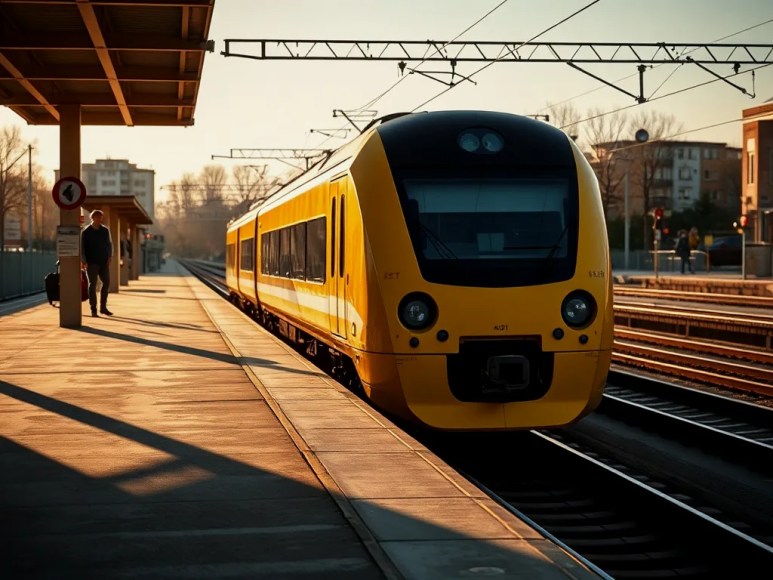
Overview of the R9 launch delay and interim operating plan
RegioJet will take over the R9 express route from České dráhy on 13 December 2026, but none of the 18 ordered PESA electric multiple units (EMUs) will be ready by that date. To maintain service from Prague to Havlíčkův Brod with onward splits to Jihlava and Brno, RegioJet will initially operate locomotive-hauled conventional train sets made from its existing rolling stock. The company intends to introduce PESA EMUs progressively through 2027 as manufacturing, testing and conclusion certification.
What exactly is delayed and why
RegioJet ordered 11 four-car and 7 three-car PESA EMUs designed to carry roughly 300 and 200 passengers respectively and to reach 200 km/h. Production, system integration, safety verification and vehicle acceptance testing remain ongoing; These are technically complex activities that cannot be expediently compressed without risking regulatory noncompliance. The owner, Radim Jančura, has explained that acceleration of certification is not feasible, and that initial trial runs for the first PESA units may occur in February 2027 subject to authority approvals.
How RegioJet will run services from day one
From the new timetable start on 13 December, RegioJet will operate an hourly service between Prague and Havlíčkův Brod. After Havlíčkův Brod trains split into two branches, one branch will continue to Jihlava and the other to Brno. Typical frequency will be roughly every two hours on each branch, with additional weekday sections toward Brno where demand requires. The interim locomotive-hauled sets will be configured with Economy, Standard and Business classes, onboard climate control, Wi‑Fi and power sockets, and trolley or onboard sales for food and drink. Standard and Business passengers will receive complimentary coffee.
Operational consequences for RegioJet’s wider network
Using existing locomotive-hauled stock to cover R9 will reallocate vehicles from other routes. Reported adjustments include temporary reduction of carriage counts on some Prague–Pardubice–Brno and Prague–Ostrava/Silesia commercial services; trains that normally run with seven coaches may appear as five-coach formations in the reservation system until the PESA sets arrive. RegioJet plans to restore full capacity on those corridors as EMUs enter service and the temporary allocation ends.
Passenger ticketing, reservations and integrated fares
RegioJet will open R9 ticket sales no later than 1 December 2026 through its website and mobile app, and will also use station sales points and ticket machines. The operator will accept integrated-network mice under systems such as PID, VDV and IDS JMK and will include OneTicket-compatible tickets where applicable. RegioJet has stated that compulsive seat reservation will not apply on R9, maintaining passenger flexibility while managing load through standard class differentiation.
Contractual and regulatory risks from the delay
The R9 public-service contract signed in May 2023 between the Czech Transport Ministry and RegioJet is valued at about CZK 5.68 billion excluding VAT. The contract requires at least 98% of services to operate with the specified vehicle types; falling below that threshold can trigger penalties defined in the contract’s calculation rules. As of the announcement, authorities have not published any penalty assessment tied to the PESA delivery delay. How quickly EMUs enter revenue service will shape both passenger experience and RegioJet’s exposure under the agreement.
Practical differences passengers should expect during the transition
Passengers will experience modern onboard amenities even in the temporary locomotive-hauled trains: climate control, Wi‑Fi and power outlets. Service classes remain available, and catering continues onboard. However, differences versus the planned new EMUs will include potential variations in seat ergonomics, interior layout, acceleration and top speed on some sections. Journey times should remain largely unchanged in the short term because timetable slotting and infrastructure constraints, rather than vehicle top speed alone, govern end-to-end runtimes on the R9 corridor.
Timeline and milestones to watch
Key dates and indicators for passengers and stakeholders:
By 1 December 2026 — R9 ticket sales open across channels.
13 December 2026 — RegioJet assumes operational control of R9 using locomotive-hauled sets.
February 2027 (potential) — Possible trial runs for first PESA EMUs, subject to authority approval.
Throughout 2027 — Staged introduction of additional PESA EMUs into daily service, allowing progressive withdrawal of temporary sets and restoration of capacity on affected lines.
Examples of mitigations RegioJet can employ while awaiting EMUs
– Prioritise higher-capacity locomotive formations during peak periods on affected routes;
– Deploy dynamic coach allocation and monitoring to minimize instances of oversubscription;
– Offer targeted sales incentives and transparent load information so passengers can plan travel times;
– Coordinate closely with infrastructure manager and certification bodies to accelerate safe handovers of each delivered EMU without compromising compliance.
What this means for long-term service quality
When the 18 PESA EMUs enter service, passengers will likely see improvements in onboard comfort, consistent train performance and simplified operations because EMUs reduce locomotive change complexity and can recover quicker from delays. RegioJet’s phased approach allows it to maintain continuity while protecting safety and certification standards; Success will depend on steady deliveries, efficient acceptance testing and timely authority approvals.