
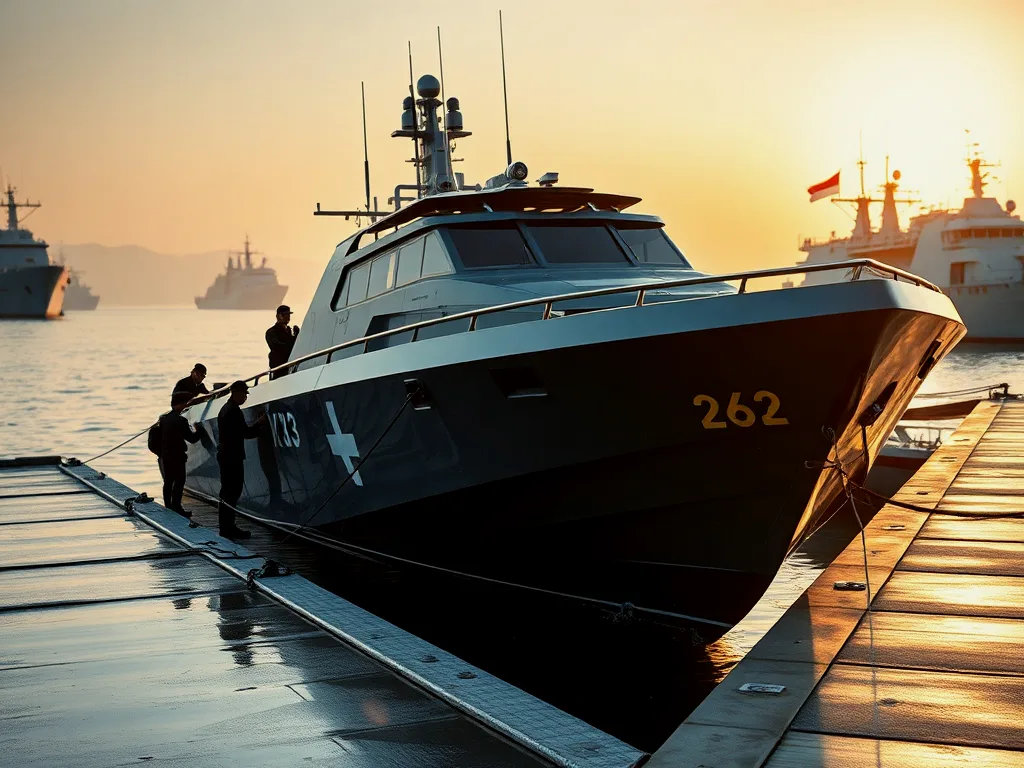
Overview of the KSR The design supports both manned and unmanned operation profiles, allowing rapid transition between crewed patrols and remote missions without major hardware changes. The hull materials and weight distribution prioritize high speed, low radar cross section and endurance for littoral and archipelagic waters.
Design Features That Enable Manned and Unmanned Roles
The KSR X33 combines structural and systems choices that permit dual operation. Key elements include a modular mission bay for payload swaps, an integrated autopilot and remote‑control suite, and redundant propulsion controls accessible from exposed console stations or a remote command link. Carbon‑fiber composite lowers topweight and increases payload fraction, enabling additional sensors or weapons without sacrificing speed. The open architecture electronics allow switching between local human inputs and remote commands with defined handover procedures to preserve safety and continuity during a mission.
Mission Profiles and Practical Employment
The platform fits a range of coastal missions: harbor security, interdiction, boarding support, reconnaissance and force protection. In manned configuration, two to six operators can conduct boarding and search operations with rapid launch and recovery of small boarding craft. In unmanned mode, persistent surveillance runs and high‑risk interdiction standoffs are possible: the boat can maintain station-keeping for extended sensor collection while command elements stay ashore or on a mother ship. Example use case: a manned intercept launches from a base, transfers situational control to a remote operator to track a target across a choke point, then reclaims control to conduct a contested boarding once threat assessments change.
Systems Integration: Sensors, Comms and Weapons
Sensor integration on the X33 includes electro-optical/IR turrets, short-range radar and acoustic passive detection options. Comms suites provide line‑of‑sight links, SATCOM gateway options and encrypted tactical data links for cooperative engagement with other naval assets. Weaponization can be tailored: non‑kinetic options for crowd control and warning, small‑caliber remote weapon stations for interdiction, or modular loitering‑munition launchers for precision strikes in asymmetric scenarios. The platform’s modular payload bay simplifies swapping mission packages in a single sortie cycle.
Collaboration Prospects with Turkish Defense Industry
North Sea Boats has discussed future integration of Turkish systems such as those from ROKETSAN and ASELSAN. Potential upgrades include electro‑optical suites, electronic warfare packages, and compact missile or rocket systems optimized for small combatants. While no firm commitments have been declared, such integrations would focus on interoperability, command‑and‑control compatibility and minimizing additional topweight. For procurement planners, clear interface specifications and rigorous sea trials would be necessary milestones before operational adoption.
Production Plans and Export Strategy
North Sea Boats reported three additional units on order and aims to deliver those by 2027. The company also plans to expand international sales, positioning the X33 as a solution for navies needing a flexible, low-logistics coastal combatant. Competitive advantages include fast construction time from composite techniques, relatively low crew requirements and the built‑in option to operate unmanned—features attractive to archipelagic states and littoral defense forces with constrained budgets.
Operational Considerations: Training, Maintenance and Rules of Engagement
Effective use of mixed manned/unmanned boats requires doctrine updates: clear handover rules for control, contingency plans for comms denial, and training pipelines that combine seamanship with remote‑systems operation. Maintenance shifts with composite hulls: repair skills and materials differ from steel or aluminum hulls, and spare‑parts logistics must account for modular electronic payloads. Rules of engagement must also reflect the vessel’s dual nature, delineating when remote operators may employ force and how evidence and accountability are preserved for post‑incident review.
What This Means Regionally