
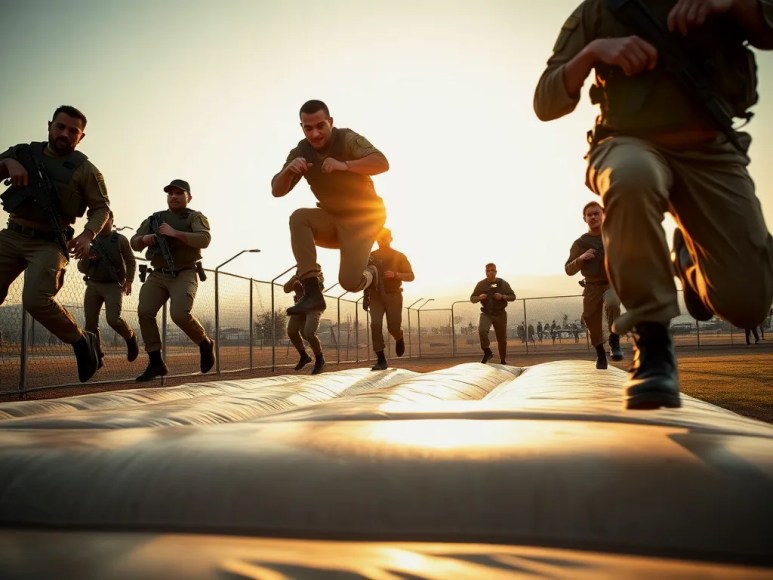
Weekly structured parcours training at Journalist Ali Öcal Sports Hall
Ankara Metropolitan Municipality organizes focused, no-cost physical parcours sessions for young people preparing for Police Academy (POMEM/PMYO) and National Defense University (MSÜ) entrance physical tests. Sessions run four days a week in Sincan Fatih’s Journalist Ali Öcal Sports Hall under certified coaches who replicate the exact movement patterns and timing demands candidates will face on exam day.
Who attends and how the program is scheduled
About 150 candidates participate in two daily groups, each capped at 25 trainees. Coaches group participants by current ability and target exam—for example, a high-intensity group for challenging needing faster obstacle times and a technique-focused group for those refining vaulting and balance elements. Weekly schedules include specific sessions for agility, sprint mechanics, upper-body power, and recovery mobility so candidates progress consistently without overtraining.
Core components of the parcours curriculum
The training plan centers on four measurable components: agility, coordination, speed, and endurance. Each session includes a warm-up, technical practice (eg, how to take off for the hurdle vault), timed parcours repetitions, and targeted conditioning. Example practices:
– Agility drills: ladder runs linked to immediate direction-change sprints.
– Coordination drills: multi-obstacle sequences combining balance beams and low walls to build rhythm.
– Speed work: 30–80 m flying starts and resisted sprints for acceleration.
– Endurance: interval runs that mimic the repeated effort pattern of a competition parcours.
How progress is measured and adjusted
Trainers record baseline metrics (obstacle completion time, sprint splits, and repetition quality). They retest every two weeks and adjust each candidate’s load and drill focus. For example, a trainee who improves vault clearance but stalls on transition speed receives sessions that emphasize rapid re-acceleration after obstacles and reactive step drills to reduce wasted time.
Logistics and accessibility: service and scheduling details
To remove transport barriers, free shuttle service runs from Ulus Genç Akademi to the sports hall. Sessions are held Monday through Thursday with morning and evening groups to suit different daily schedules. The municipality also ensures equipment availability—portable hurdles, balance beams, and low-wall modules—so candidates train on the same obstacle types they will face in exams.
Real examples and short-case practice plans
Example 4-week block for a candidate starting at intermediate level:
Week 1: technique and baseline testing—focus on vault mechanics and beam balance.
Week 2: add acceleration drills and two full parcours attempts under timed conditions.
Week 3: increase intensity with shorter rests, include resisted sprints and transition drills.
Week 4: simulate exam conditions: dress rehearsal with full obstacle sequence, exact test timing, and recovery routine. Coaches annotate errors and supply corrective drills for the following cycle.
Why municipal support matters for candidates
Free, coach-led access reduces inequity for bidding who cannot afford private trainers or facilities. The program provides structured progression, real-equipment practice, and transport—elements that directly improve exam readiness. Candidates receive both performance data and practical habits (warm-up routines, pacing, and post-exertion recovery) that translate into more reliable test-day outcomes.
How to join and what to bring
Candidates register through the municipality program portal or at Ulus Genç Akademi. Bring sport shoes, comfortable training clothes, a water bottle, and any medical notes. Arrive 15 minutes early for warm-up and briefing; follow coach guidance on incremental load increases to avoid injury.
Common questions answered
Q: Will the program guarantee passing the physical test? No program can guarantee results, but targeted, consistent training with timed rehearsals significantly raises the likelihood of meeting official cut-offs.
Q: Can someone with no prior singular experience join? Yes. Coaches place beginners into technique-first groups and scale exercises to build safe strength and movement patterns.
Q: Are there medical checks? Trainers recommend candidates to obtain a physician’s clearance if they have preexisting conditions; urgent concerns are referred before high-intensity participation.