
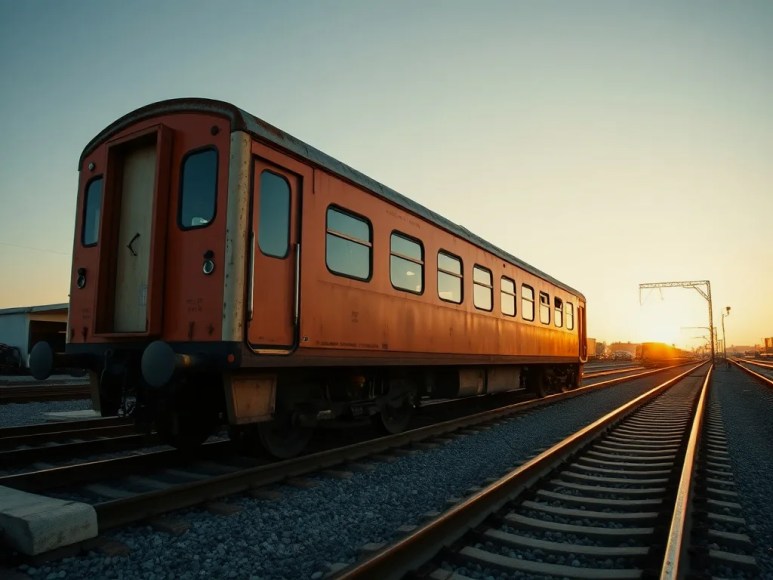
France shifts from new-car purchases to full Corail refurbishment and locomotive leasing
France will not buy newly built night-train passenger cars; Instead, the Ministry of Transport will fully refurbish 180 Corail coaches and lease 27 dual-mode locomotives from Alpha Trains. The ministry announced a plan that accelerates dependable traction upgrades while extending the service life of existing rolling stock. The locomotive lease totals €400 million and the renovated Corail stock will re-enter service in phases, with locomotives arriving from 2030 and refurbished cars beginning service from 2032.
Why France canceled the new-car procurement and why refurbishment was chosen
The procurement started in February 2025 but produced insufficiently robust offers on cost and delivery timelines. Officials determined that new-build options could not guarantee affordable, timely deployment. Refurbishing Corail cars keeps structural shells and replaces interiors and systems, which reduces lead time, leverages existing assets, and lowers technical risk. SNCF Voyageurs will execute the modernization, standardizing interiors to contemporary night-train expectations (privacy partitions, modern sleepers, updated HVAC and accessibility features).
What the Corail refurbishment entails: scope, timeline, and technical changes
The refurbishment program for 180 Corail cars preserves the structural car bodies but replaces or upgrades every customer-facing and technical subsystem:
Interior and passenger systems: complete redesign of sleeping and seating modules, new lighting (LED), upgraded heating/ventilation/air conditioning, improved onboard toilets, and modern insulation for noise reduction.
Accessibility and safety: accessibility upgrades to meet current standards, improved emergency systems, and refurbished gangways and doors.
Technical, electrical, and digital: rewiring for modern power distribution, installation of passenger Wi-Fi and charging points, and retrofits for energy efficiency (improved bearings, brakes, and traction compatibility).
Timeline: refurbishment planning and contract execution are underway with SNCF Voyageurs; the program aims to introduce the first renovated cars into service beginning in 2032 and complete fleet work in subsequent years in phased blocks to preserve service continuity.
Details of the Alpha Trains lease: capabilities, deployment, and benefits
Alpha Trains secured the tender to provide 27 dual-mode locomotives under a leasing contract valued at €400 million. Dual-mode capability means each locomotive can operate under electric supply on electrified lines and switch to diesel motivated power where overhead wiring is absent. Key operational advantages:
– Flexibility across mixed-electrification routes, reducing the need for mid-journey locomotive changes.
– Improved reliability and timetable resilience for night services.
– Faster rollout (leasing shortens delivery and capital procurement cycles compared with new-build purchases).
Deployment is scheduled to start in 2030, aligning with broader network plans to ensure night trains run on the five prioritized corridors without traction gaps.
Which night-train routes will use the refurbished cars and new locomotives
The ministry plans to deploy the updated fleet on five night lines where demand has risen sharply: Paris–Briançon, Paris–Nice, Paris–Aurillac, Paris–Tarbes/Lourdes, and Paris–Rodez/Toulouse/Latour‑de‑Carol/Cerbère. Between 2022 and 2025, demand for these night services increased by about 30% nationwide, prompting the government to secure capacity and reliability through a combined refurbishment and traction lease program.
Cost structure and outstanding financial questions
The locomotive lease is contractually fixed at about €400 million for 27 units. The exact cost of refurbishing 180 Corail coaches has not been published; the government and SNCF Voyageurs are finalizing funding and implementation plans. Refurbishment cost elements will include component replacement, compliance upgrades, labor, and staging to keep trains running during the program. Leasing locomotives spreads capital expenditure and reduces short-term budget pressure while guaranteeing traction availability.
Operational implications and examples of how the plan improves service
Operational gains are concrete and measurable:
– Reduced disruptions: dual-mode locomotives eliminate many locomotive exchanges on partially electrified routes, reducing delay risk.
– Faster fleet renewal: refurbishing existing cars can be completed and rolled into service sooner than building entirely new vehicles.
– Passenger experience uplift: modernized sleeping compartments, better insulation, and digital amenities increase attractiveness relative to competing modes.
Example scenario: a Paris–Nice overnight service that once required diesel traction on non-electrified final segments will run end-to-end under electric traction where possible and automatically switch to diesel where necessary, avoiding a terminal locomotive change that previously added 30–60 minutes of schedule buffer.
Program milestones to watch (step-by-step indicators)
Track these indicators to assess progress:
1) Contract finalization between SNCF Voyageurs and refurbishment contractors (procurement awards and scope definitions).
2) Delivery schedule and certification timeline for the 27 dual-mode locomotives from Alpha Trains (tests, type approvals).
3) Start of phased Corail workshop conversions and initial rollout dates (first set of cars cleared for service circa 2032).
4) Entry-in-service performance data (punctuality and customer satisfaction metrics for converted trains).
5) Budget disclosures from the ministry detailing final refurbishment costs and lifecycle projections.
How this approach compares with new-build night coaches in other European programs
Several European operators have taken different approaches: some ordered new-build night coaches with bespoke interiors and modern bogies, while others extended life through heavy overhaul programs. France’s hybrid approach — leasing new traction and refurbishing bodies — combines quick traction modernization with cost-containment on car procurement. This model reduces lead time risk and spreads capital needs, though it limits opportunities for radical technical redesign that a new-build program could provide.
What passengers can expect and when to see changes
Passengers should expect incremental improvements rather than an immediate fleet-wide transformation. From 2030, expect improved reliability due to new locomotives on targeted routes. From 2032, early refurbished Corail cars will offer markedly better comfort: updated sleeping modules, quieter interiors, modern HVAC, improved toilets, and added digital services (charging points, Wi‑Fi). The government intends to preserve night-train coverage while improving the overall service proposition.