
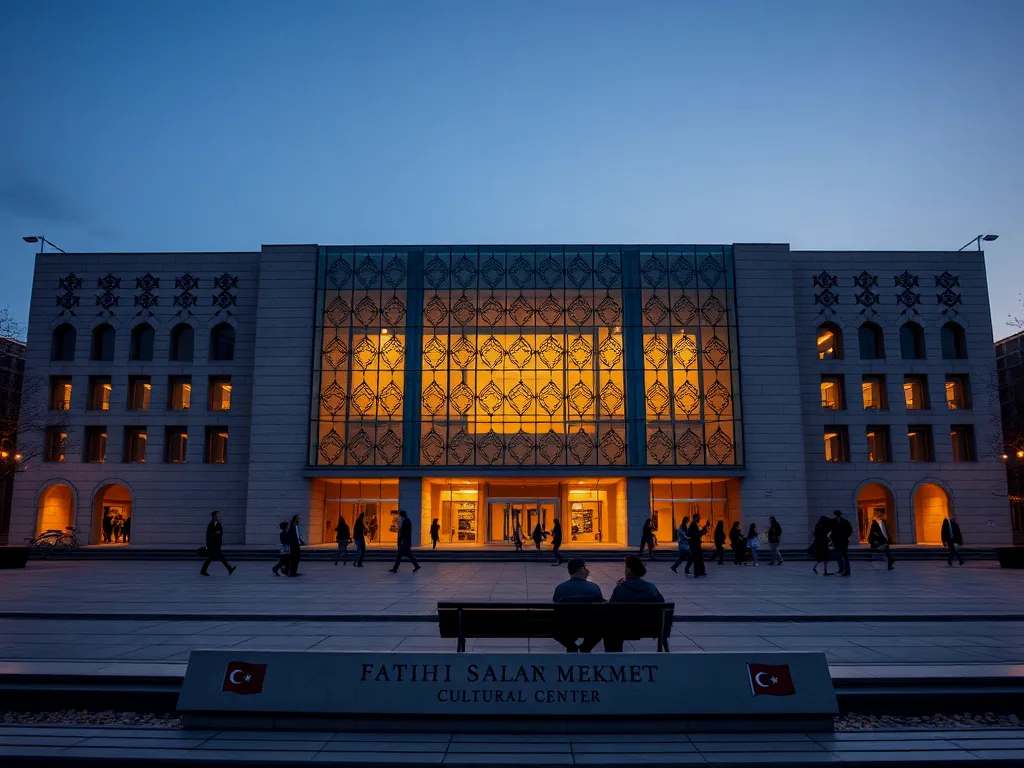
Opening ceremony highlights and key attendees
Ankara Metropolitan Mayor Mansur Yavaş inaugurated the Fatih Sultan Mehmet Cultural Center in Polatlı alongside Polatlı Mayor Mürsel Yıldızkaya and former Mayor Yakup Çelik. The ceremony featured a traditional seğmen performance and FOMGET’s theatrical dance piece “The Dance of History, Kurtuluş,” emphasizing local history and collective memory.
Project scale, cost and municipal investment strategy
The Center sits on a 6,600 square meter site and was built at a declared cost of 171 million Turkish lira. Mayor Yavaş described the broader municipal investment in Polatlı as 12 billion lira, underscoring a policy of treating Ankara as an integrated whole — distributing resources from the city center to outlying neighborhoods with the same responsibility.
Design purpose: who will use the center and for what
The facility is designed as a multi-generational community hub. Children will gain access to structured learning and discovery spaces; youth will find training and development programs; women will have areas for production and entrepreneurship; and the wider community will be able to participate in cultural and artistic events. The center aims to combine education, culture, art and sport under one roof to increase local participation and skill-building.
Programs and activities to expect
The Center’s programming will include: early childhood workshops that teach foundational STEM and creative skills through hands-on projects; youth development courses such as public speaking, coding and visual arts; women’s vocational labs for small-scale manufacturing and digital entrepreneurship; and community cultural events like exhibitions, theater productions and traditional dance showcases. Seasonal festivals and collaborative events with local schools are planned to maximize usage.
How the center supports local economy and social outcomes
By providing vocational training and production spaces for women and youth, the center reduces barriers to entry for micro-entrepreneurs. Practical outcomes include product prototyping, portfolio development for creative professionals, and local job-readiness training. On the social side, regular cultural programming and shared public spaces strengthen social cohesion, preserve local traditions and create safe after-school environments that lower idle time for adolescents.
Operational model and partnerships
The center operates through a municipal partnership between Ankara Metropolitan Municipality and Polatlı Municipality. That structure enables shared funding, programming coordination with local schools and civic organizations, and joint promotion of events. Partnerships with NGOs, cultural associations and vocational institutes are expected to supply trainers, curators and program managers for specialized courses.
Measuring impact: indicators and short-term targets
Success metrics for the first 12–24 months include: utilization rate (percentage of available hours booked for programs), participant outcomes (completion rates for vocational courses and measurable skill gains), local business creation (number of micro-enterprises launched by program). alumni), and community engagement (attendance at cultural events and volunteer-run initiatives). Collecting baseline data in the opening quarter allows tracking against these targets.
Examples and practical steps for prospective users
Families: enroll children in weekly discovery workshops that mix science experiments and creative play, typically starting with a two-month block to build continuity. Youth: join modular courses (4–8 week modules) that culminate in a public showcase or portfolio review. Women entrepreneurs: apply for bench space in vocational labs for a trial month, then scale to a quarterly incubator cohort with mentorship and micro-grant opportunities. Community groups: reserve performance or exhibition space through a straightforward municipal booking system designed to prioritize educational and non-profit activities.
How this center fits into Ankara’s broader cultural infrastructure
The Fatih Sultan Mehmet Cultural Center complements larger municipal institutions by focusing on community-driven, grassroots cultural production. Instead of duplicating major venues, it fills a gap for mid-sized programming and everyday creative practice — the kind of steady, neighborhood-level cultural activity that feeds larger festivals and citywide showcases.
Immediate next steps and how residents can get involved
Residents should monitor the municipal announcements for program registration dates and volunteer opportunities. Schools and local associations can propose collaborative projects by contacting the Polatlı municipal cultural affairs office. Early engagement—signing up for introductory workshops or attending opening-season events—helps shape the center’s first year of programming and ensures offerings reflect local needs.