
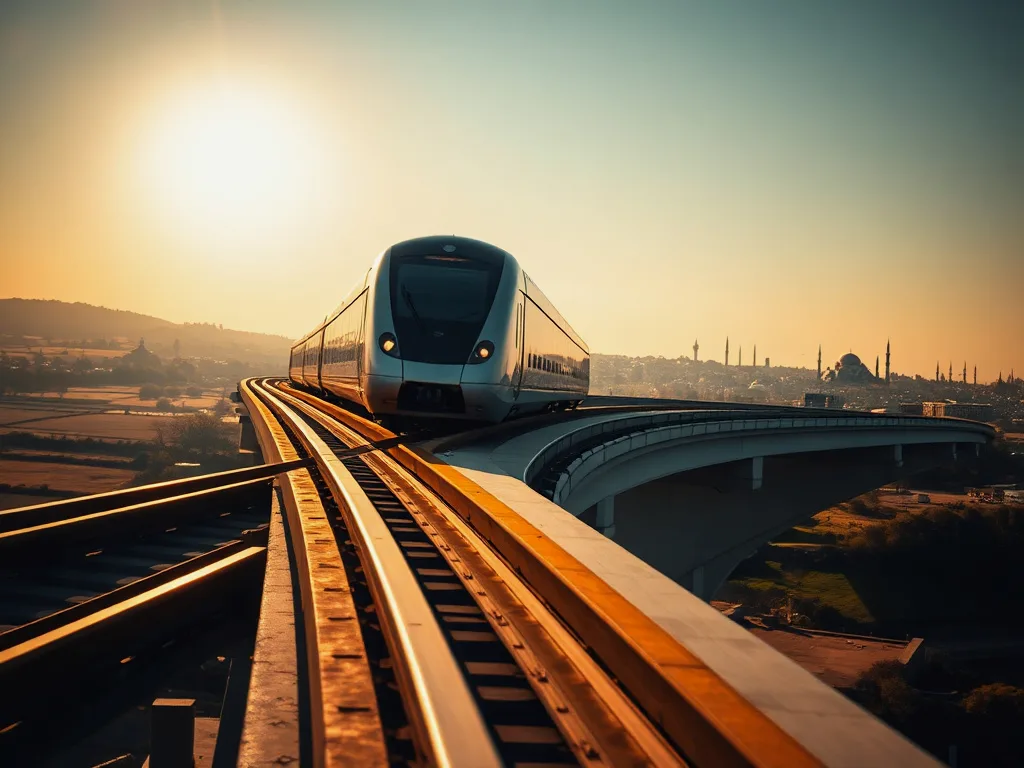
Project Overview and Expected Travel Time
The Ankara–Istanbul Super High-Speed Rail (SHSR) aims to shorten current rail travel dramatically: the government projects an 80-minute end-to-end journey once the line is complete. This target contrasts with the traditional 8.5-hour conventional rail transit and the roughly four-hour duration offered by today’s high-speed services. The SHSR seeks to reduce travel time by about 2 hours 40 minutes compared with existing fast trains by using straighter alignments, higher design speeds, and minimized dwell time at intermediate stops.
Why 80 Minutes Is Technically Achievable
Designing a line capable of an 80-minute trip requires coordinated upgrades across route geometry, rolling stock, and operations. Key technical elements include:
Alignment and gradient: New, largely dedicated track with larger curve radii and gentler gradients allows sustained higher speeds without speed restrictions through curves.
Design speed and rolling stock: Trains designed for 300–350 km/h operational speeds — with rapid acceleration and regenerative braking — close gaps between scheduled and achievable trip times.
Minimized stops and optimized timetables: Limiting intermediate stops and using skip-stop patterns where appropriate reduces average trip time. Integrated timetable planning reduces conflicts with freight and regional services.
Current Project Status and Next Steps
Project teams have completed preliminary route studies and moved into detailed engineering for major segments. Current milestones and next steps include:
Route optimization: Environmental and land acquisition studies continue to refine the alignment to balance construction cost and travel-time performance.
Geotechnical and structural design: Viaducts, tunnels, and earthworks designs address seismic risk and local geology to ensure long-term reliability.
Rolling stock procurement: Tendering and specification work target high-speed trainsets compatible with the line’s signaling and power systems.
Operational Changes That Enable Faster Journeys
Faster end-to-end travel results from systems-level operational changes, not only from speed-capable track and trains. Examples of planned operational changes:
Advanced signaling: Continuous in-cab train control (eg, ETCS Level 2/3 or equivalent) enables shorter headways without compromising safety.
Turnaround optimization: Station processes reduce dwell time: through dedicated boarding zones, faster passenger flow, and pre-boarding carriage assignment.
Integrated timetable management: Real-time traffic management will prioritize express SHSR services over slower services during key windows to protect schedule integrity.
Estimated Travel-Time Breakdown
Translating 80 minutes into operational segments clarifies where savings occur:
Acceleration and deceleration phases (combined): 15–20 minutes with high-performance trainsets.
Cruise time at top speed: 50–55 minutes achieved by sustained operation near design speed on dedicated alignment.
Intermediate station time and buffers: 5–10 minutes total, assuming a small number of carefully chosen stops.
Economic and Mobility Impacts
Shaving several hours from the route alters modal choices and regional economics. Direct impacts include increased day-trip feasibility between capitals, stronger business and commuter links, and potential aviation demand reduction on the same corridor. Examples from similar corridors show rail market share rises when travel time falls below 2–2.5 hours; targeting 80 minutes places the route among global regional leaders and would likely capture a substantial share of intercity passengers.
Risks, Constraints, and Mitigations
Major risks that could affect achieving the 80-minute target include land acquisition delays, complex geology, cost overruns, and integration with existing networks. Mitigation measures in planning include phased construction to prioritize the fastest segments, contingency budgeting for critical structures, and proactive stakeholder engagement to accelerate right-of-way clearances.
What to Expect During Construction
Construction will proceed in parallel work packages: tunneling and viaducts in challenging terrain, embankment and trackbed in plains, and station upgrades in urban areas. Expect rolling traffic management changes during key periods and phased service introductions that progressively shorten travel time as each segment is commissioned.
How Travelers Will Benefit
Passengers will gain predictable, frequent, and comfortable services that support same-day business trips, leisure connections, and wider labor-market access. The SHSR’s time savings also enable better use of rolling stock by allowing more daily rotations per trainset, improving operational efficiency and service frequency.
Common Questions Answered
Will the SHSR replace existing high-speed services? No — it will complement current services by offering a faster express corridor while existing services continue to serve intermediate communities.
When will the line open? Timelines depend on funding and clearances; phased openings are likely, with travel time reductions occurring progressively as segments enter service.
Will tickets be more expensive? Pricing strategies typically include premium fares for express services alongside lower-fare options for slower trains; competition with air travel often keeps prices competitive.