
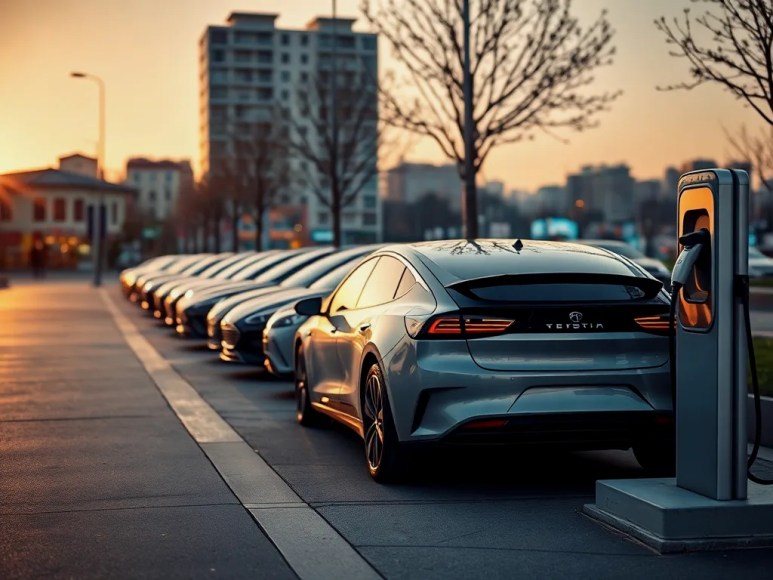
Electric car registrations jumped 50.9% in one year
Turkey added 168,995 battery-electric cars between October 2025 and October 2026, raising the electric fleet to 501,005 vehicles. This rapid increase reflects more new model introductions, faster buildout of charging infrastructure and accelerating consumer purchases. The electric share of the country’s total car stock reached 2.75% as of October 2026.
Long-term trajectory: exponential growth since 2015
The transformation started from a very small base: only 565 electric cars were registered in 2015. After steady annual gains, the fleet climbed to 183,776 by the end of 2024 and to 370,591 by the end of 2025. Hitting the 500,000 mark in October 2026 signals a sustained adoption curve driven by price declines, broader model availability and localized manufacturing efforts such as Togg’s market entry.
How charging infrastructure and models changed adoption dynamics
Expanded public and private charging networks shortened range anxiety and reduced operating friction. Charging point growth followed three patterns: motorway fast chargers deployed along major corridors, urban destination chargers at workplaces and retail locations, and residential solutions in apartment retrofits and new developments. Automakers responded with longer-range, lower-cost models and improved warranty and battery-leasing options, which together lowered total cost of ownership and accelerated purchases.
Hybrid vehicle fleet nears 1 million
Hybrid registrations rose consistently over the past decade. From just 23 hybrids in 2011, the fleet expanded to 13,877 in 2019 and to 222,328 by the end of 2023. By December 2024 it reached 391,296 and climbed to 697,027 by the end of 2025. As of October 2026 the hybrid fleet stood at 938,008, representing about 5.16% of the total automobile stock. The vast majority of these vehicles are full hybrids and mild hybrids popular among fleet buyers and urban drivers for their fuel savings without range compromises.
Combined impact: electrified vehicles account for 7.9% of all cars
Adding electric and hybrid totals yields 1,439,013 electrified cars on Turkish roads by October 2026 — roughly 7.9% of the 18,191,090 registered cars. This combined share illustrates how electrified powertrains already influence vehicle purchasing, fleet renewal and secondary market values.
What this means for buyers, fleets and policymakers
Buyers: consider total cost of ownership over typical ownership horizons. Savings from lower fuel and maintenance costs frequently offset higher purchase prices for many mid-sized models; Incentives, resale trends and available charging at home or work are decisive.
Fleets: deploying hybrids and EVs reduces fuel spend and exposure to fuel price volatility. Fleet managers should map duty cycles to vehicle types, install depot charging where possible and use telematics to optimize charging schedules and route planning.
Policymakers: prioritize fast-charging corridors, streamlined permitting for urban chargers, incentives tied to second-life battery programs and training for maintenance centers. Coordinated policies accelerate private investment and reduce bottlenecks in deployment.
Regional differences and likely near-term developments
Major urban centers lead adoption due to shorter daily travel distances, better charging availability and higher new-car turnover. Provinces with strong industrial activity also show faster uptake driven by company fleets. Near-term growth will depend on three levers: faster roll-out of public high-power chargers, availability of competitively priced long-range models and programs to simplify multi-unit dwelling charging.
Practical steps for prospective electric car buyers
1. Compare total cost of ownership: include purchase price, expected electricity costs, maintenance, incentives and projected resale value.
2. Assess charging options: verify home installation feasibility, employer charging and public infrastructure along common routes.
3. Match range to use: pick a model whose real-world range exceeds daily needs with headroom for longer trips.
4. Check warranty and battery health policies: understand degradation expectations and any battery replacement or leasing schemes.
5. Consider charging speed and connector compatibility for future interoperability.
Data-driven outlook and scenarios to watch
Scenario analysis suggests that with continued infrastructure investment and expanding model choice, electrified vehicle share could cross 15–20% of the fleet within five years. Key indicators to monitor are monthly registration growth rates, new public charging points per 100 km of roadway and entry of lower-cost long-range models. A slower scenario would result from supply constraints, stalled charger deployment or policy reversals.
Takeaway
Turkey has moved from negligible electric uptake in 2015 to over half a million battery-electric cars and nearly a million hybrids by October 2026. The combined electrified fleet now accounts for 7.9% of all cars, reshaping buying decisions, fleet and infrastructure planning across the country.