
Dana and Lamb Carcass Prices: monthly averages and what they mean
Data overview: From January to October 2026 the average carcass price for beef (veal) stood at 590.65 TL/kg while lamb (lamb) averaged 600.49 TL/kg. These figures reflect prices recorded at slaughterhouses and processing plants, not retail shelf prices. Monthly beef carcass averages in 2026 ranged roughly between 577.73 TL and 607.95 TL, showing a narrow band of volatility driven by supply flows and institutional market interventions.
Why carcass prices differ from retail prices and why it matters
Carcass prices represent the wholesale transaction between producers, slaughterhouses and processors. Retail prices include additional costs—cutting, packaging, transport, profit margins and VAT—so a 590 TL/kg carcass does not mean consumers pay the same per kilogram at the supermarket. Monitoring carcass prices gives an early signal of cost pressure on the supply chain and helps policymakers target interventions more precisely.
Seasonal movement in lamb prices and the drivers
Lamb carcass prices rose to 612.78 TL/kg in May 2026, fell to 602.22 TL/kg in July, and climbed again to 621.14 TL/kg in September before leveling off in October. These swings reflect seasonal birth and slaughter patterns, festival demand spikes, and feed availability. Producers who time finishing to pre-peak demand windows capture substantially higher margins; conversely, off-peak supply gluts depress prices at slaughterhouses.
2027 plan: 480,000 head of feeder bulls approved for import
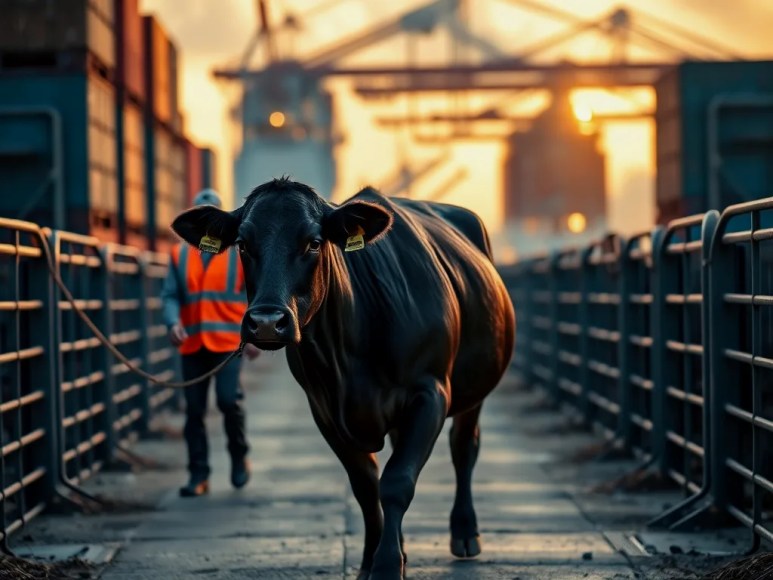
The Ministry of Agriculture and Forestry’s 2027 plan envisions allowing imports of 480,000 head of feeder male cattle, excluding purchases by public institutions. The allocation splits into 380,000 head for farms with capacities of 200 head and above and 100,000 head for smaller operations. The State Meat and Milk Institution will oversee the physical import operations, which aims to improve predictability by announcing a timetable and quotas in advance.
How controlled imports affect producers and prices
Staggered, announced import quotas reduce market uncertainty: large-scale finishing operations can plan feed purchases and cash-flow, while smaller producers get a dedicated share. Properly timed imports increase liveweight supply during high-demand months and help dampen carcass price spikes, but they must be accompanied by biosecurity checks and traceability to prevent disease risk and protect domestic genetics.
Livestock numbers: growth in bovine and small ruminant herds
TURKSTAT data for June 2026 show Turkey’s bovine population near 17.8 million and small ruminants at approximately 60.8 million. These herd increases provide capacity to raise domestic meat output, but converting animals into additional marketable kilograms requires improvements in feed efficiency, finishing systems, and genetics. Final 2026 red meat production figures remain pending; herd growth alone does not immediately translate into higher slaughter or better carcass yields without concurrent management changes.
Practical measures to reduce import dependence and raise domestic output
UKON recommends targeted, implementable actions that producers and policymakers can follow:
1) Increase feeder supply: Scale contract-rearing and conditional purchase agreements between breeders and finishers so more male calves enter structured fattening chains rather than dispersed, low-efficiency systems.
2) Strengthen animal health and biosecurity: Prioritise vaccination campaigns, on-farm quarantine protocols, and centralized disease surveillance to lower mortality and avoid production shocks that force emergency imports.
3) Improve carcass classification and pricing transparency: Adopt clearer carcass grading so processors and retailers pay premiums for desirable traits—this aligns incentives for farmers to breed and finish for market-preferred yields.
4) Spread contract-based crossbreeding: Use controlled sire lines for meat hybrids, with incentivized contractual supply of sexed semen for beef production to increase the share of male beef calves and improve feed conversion ratios.
5) Supportive finance and input supply: Offer forward-pricing for feed, seasonal credit lines and voucher schemes for high-cost inputs so finishers can maintain margins during price volatility.
Examples and step-by-step for a small finisher to capture value
Step 1: Secure a batch of imported or high-genetic-value feeder bulls during an announced quota window to benefit from available supply.
Step 2: Implement a 120–150 day finishing program with optimized ration (high-energy starter for 30 days, maintenance blend next 60 days, finishing ration final 30–60 days) and monitor average daily gain weekly.
Step 3: Use carcass grading benchmarks to decide slaughter timing—stop finishing when expected carcass class moves from premium to standard to avoid margin erosion.
Step 4: Sell via cooperative contracts or to processors who offer carcass-based premiums, ensuring better price capture than spot-market sales.
Global context: FAO projections and external risks
FAO-based projections cited by UKON predicts world meat production rising about 1% in 2026 to 391.3 million tonnes, with international meat trade growing roughly 1.1% to 43.9 million tons This marginal growth coexists with persistent risks—animal disease outbreaks, adverse climate events and geopolitical disruptions—which can tighten export flows or force emergency policy shifts. Turkey’s policy mix needs to remain flexible to respond to sudden global supply shocks.
What market participants should watch next
– The Ministry’s detailed import schedule and whether quotas are front-loaded into specific months.
– Official 2026 red meat production release, which will reveal conversion of herd increases into slaughter throughput.
– Any changes to carcass classification rules or premium structures.
– Feed price trends and availability, since feed cost drives finishing economics and slaughter timing.
Concluding operational takeaway
Strengthening domestic finishing capacity, improving health and genetics, and using predictable, quota-based imports together create a pathway to more stable carcass prices and reduced external dependence. Producers who align production timing with announced import flows, adopt carcass-oriented finishing, and access contract channels will be best positioned to capture improved margins as Turkey phases toward a more resilient red meat supply chain.