
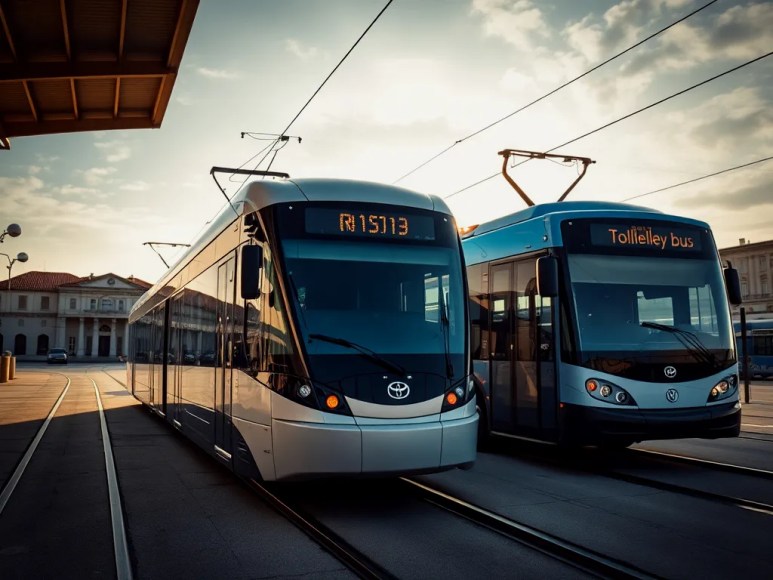
EIB approves framework loan to modernize Sofia’s public transport
On 16 November 2026 the European Investment Bank approved a €184 million framework loan to support Sofia’s €374 million urban mobility program. The loan covers roughly half of the program cost and will finance a combination of vehicle procurement and infrastructure rehabilitation. The agreement remains subject to signature and to project-level approvals by the bank before disbursements begin.
Which vehicles and how many: a precise procurement plan
The program specifies vehicle deliveries and allocations: 20 low-floor articulated trams built to 1,009 mm gauge (allocated €28.7 million), 75 trolleybuses split into 40 articulated 18-m units and 35 rigid 12-m units (battery-equipped to run off-wire), 50 fast-charging electric buses, and 200 conventional buses. The total budget line for the 345 vehicles is approximately €176.07 million. These figures reflect planned purchase values and not confirmed deliveries; production and delivery timetables will depend on finalized financing tranches and contracting milestones.
How the bank evaluates subprojects and compliance requirements
The EIB framework loan operations as a programmatic facility rather than a single-purpose payment for one vehicle type. Sofia will submit subprojects (vehicle lots, track rehabilitation packages, pedestrian and cycling schemes) for separate appraisal. Each subproject will be reviewed against EIB procurement rules, environmental and social standards, and technical eligibility criteria. That stepwise appraisal means project sponsors must prepare: detailed technical specifications, environmental impact assessments where required, procurement documents aligned with EU rules, and a clear implementation timetable linking payments to milestones.
Infrastructure scope: tramways, tracks, pavements and cycling
The program includes rail renewal and corridor upgrades such as the Hristo Botev Boulevard package, with roughly €25 million earmarked for track renewal, road surfacing and sidewalk reconstruction along tram corridors. Complementary works target junction modernization, improved pedestrian crossings, disabled-access ramps and an expanded network of protected bike lanes. These interventions aim to increase average tram speeds, cut dwell times at stops, and reduce conflict points between cyclists and motor traffic.
Why battery-equipped trolleybuses matter for network resilience
Battery-equipped trolleybuses can run on sections without overhead wiring, which reduces infrastructure costs for route extensions and enables emergency diversions. The procurement’s specification for off-wire range (manufacturers target at least 15 km) allows route-level flexibility: operators can temporarily reroute vehicles during roadworks without changing power infrastructure, and the fleet can cover suburban branches where installing catenary would be costly. That technical choice also smooths integration between trolley and electric bus operations and reduces single-point dependence on continuous overhead contact lines.
Two-credit strategy and municipal debt authorization
Sofia City Council authorized borrowing up to €367 million on 10 September 2026 through two loans of up to €183.5 million each. The intent is to combine an EIB tranche with a commercial loan or consortium facility. On 19 November the council approved United Bulgarian Bank as the lender for the commercial tranche; The draft contract foresees a 20-year tenor with a three-year repayment holiday. Final signature and disbursement conditions remain distinct processes for each lender.
How financing timing affects procurement and delivery
Municipal documents flag that delayed advance payments or stalled credit approvals can push back procurement award milestones and production start dates. Rolling production schedules at vehicle manufacturers mean a funding delay of months can shift delivery windows by a season or more. To avoid bottlenecks, the municipality must synchronize contract milestones, down payments, and manufacturing lead times: include binding delivery windows in award contracts, require supplier updates on subcomponent supply chains, and hold suppliers to liquidated damages for late deliveries tied to clearly defined acceptance criteria.
Škoda orders hinge on confirmed financing
Škoda Group previously won contracts to supply 35 of its 32Tr 12-m trolleybuses and 40 of its 27Tr 18-m articulated trolleybuses for Sofia, a package valued at about €56.19 million. Those tenders will become binding only if the municipality secures the financing required to make contractual down-payments and meet milestone payments. The supplier’s battery-equipped variants are specified to travel at least 15 km off-wire, enabling the operational benefits described above. The municipality and suppliers must coordinate warranty start dates and acceptance tests before financing triggers advance payments.
Practical steps for project managers to keep the program on track
Municipal program managers can reduce schedule and financial risks by taking practical steps: prepare complete procurement documentation ahead of loan signature so awards can follow quickly; finalize environmental and social documentation for each subproject; structure payment schedules that align with manufacturers’ production cycles; set clear contractual remedies for delays; and create an integrated delivery plan that sequences vehicle deliveries with infrastructure readiness (stops, power supply, depot fit-out).
Expected outcomes: capacity, comfort and environmental gains
If implemented as planned, the combined vehicle and infrastructure investment will raise public-transport capacity, reduce fleet average age, increase service reliability, and cut local transport emissions through electrification. Faster, smoother tram corridors and more accessible stops will shorten journey times and improve door-to-platform accessibility for passengers with reduced mobility. The municipal program also leverages EIB climate-focused lending to align a portion of Sofia’s transport stock with EU decarbonization objectives.
Be the first to comment