
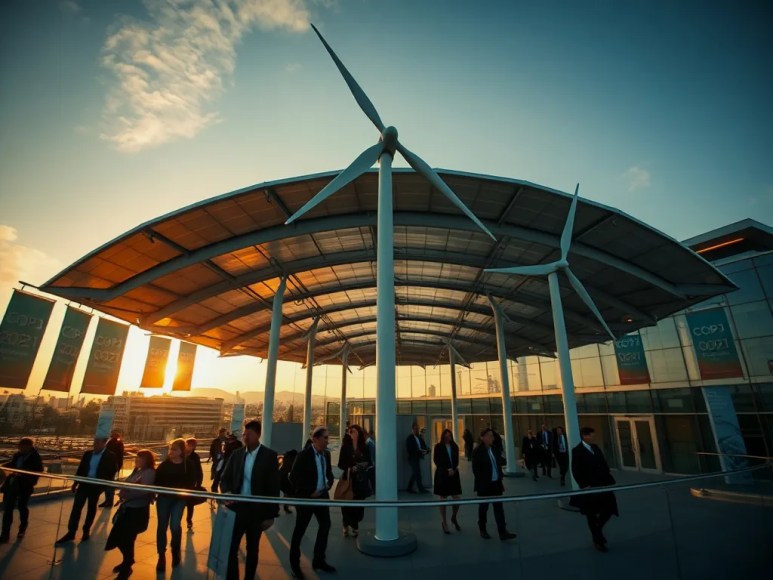
Turkcell reported significant advances in renewable energy capacity, 5G energy savings, and emissions reduction during COP31 in Antalya. The company announced a total active renewable production capacity of 115.5 MW and said it reached its 2030 emissions reduction milestones four years early.
2030 emissions reduction targets met early
What happened: Turkcell exceeded its Science Based Targets initiative (SBTi)-approved goals ahead of schedule. The company’s targets called for a 50.47% reduction in Scope 1 and 2 emissions and a 25% reduction in Scope 3 emissions versus a 2020 baseline. Turkcell now plans to pursue a net-zero pathway to 2050.
Why it matters: Hitting both near-term Scope 1–3 reductions early indicates operational and procurement changes that lowered emissions across direct operations, purchased energy and the value chain. This does not mean Turkcell is net zero today; Rather, the company has delivered the interim cuts earlier than planned and will continue actions to decarbonize fully by mid-century.
Ankara solar plant brings field capacity to 175.4 MW
Overview: In Q3 2026, Turkcell commissioned a 16.3 MW ground-mounted solar plant in Ankara. That addition raised total field solar capacity to 175.4 MW, with 90.8 MW actively producing electricity. Combined with wind generation, the company’s active renewable capacity reached 115.5 MW.
Portfolio and deployment examples: The portfolio includes an 18 MW wind farm and 10 field solar projects across seven provinces. Turkcell installs panels on data center roofs, parking canopies and field infrastructure; over 2,400 “green sites” support base station power with solar, reducing reliance on grid or diesel generation where possible.
5G energy savings: up to 85% per gigabyte
Energy efficiency measures: Turkcell deployed smart sleep modes and AI-driven traffic management across 5G sites. These measures dynamically reduce active radio capacity during low-traffic periods and allow cells to enter low-power states, producing energy-per-gigabyte improvements of up to 85% compared with legacy operation.
Independent-site battery impacts: In off-grid sites that use energy storage, Turkcell reported a 65% reduction in fossil fuel consumption by switching from diesel gensets to battery-backed systems charged by renewables.
2025 energy consumption fell 7.3% while traffic efficiency improved 23%
Measured outcomes: In 2025 Turkcell reduced total group energy consumption by 7.3% and improved energy per unit of data carried by about 23%. Network optimization and equipment refresh programs delivered approximately 25.31 GWh in annual energy savings.
How they did it: Steps included replacing old base-station electronics with more efficient radios, virtualizing network functions to consolidate server load, shifting procurement to certified renewable electricity, and signing renewable energy certificate contracts to match purchased power.
Four data centers achieve LEED Gold
Certification and generation: New-generation data centers in Ankara, Gebze, Izmir and Tekirdağ earned LEED Gold for sustainable design and operations. Solar arrays at Ankara and Tekirdağ produced roughly 2.2 GWh in 2025, offsetting a portion of data center electricity demand and cooling-related loads.
Operational practices that helped: Turckcell optimized airflow management, moved to high-efficiency chillers, increased free-cooling hours where climate allowed, and used advanced monitoring to right-size power provision for rack loads, lowering PUE and carbon intensity.
Support for ’35 by 35′ and broader climate initiatives
National and international engagement: Turkcell backed Turkey’s COP31-hosted “35 by 35” initiative to raise electricity’s share of final global energy consumption to 35% by 2035. Company leadership emphasized the interplay of clean generation, energy efficiency and digital infrastructure as complementary levers to meet that goal.
Reporting and scores: Turkcell retained A scores in CDP climate reporting and earned an A for water security in 2026. The company also participates in the UN Global Compact CFO Coalition for the SDGs and pursues sustainable finance partnerships to support clean-energy projects.
Practical examples and replication steps for other operators
Step-by-step approach other operators can follow:
1) Baseline and targets: Establish a 2020-equivalent baseline, set SBTi-aligned targets for Scope 1–3 and publish a clear timeline.
2) Field renewables: Prioritize rooftop, canopy and ground-mounted solar at sites with high daytime load; combine with small wind where resource data supports it.
3) Storage and hybridization: Deploy batteries at off-grid or weak-grid sites to reduce diesel run-time; Integrate smart charge/discharge tied to forecasted solar output.
4) Radio and core optimization: Implement sleep modes, cell consolidation, and AI traffic prediction to reduce active radio time during low demand, and virtualize core functions to consolidate compute loads.
5) Data center efficiency: Pursue LEED or equivalent certification, improve PUE through free-cooling and efficient chillers, and match purchases with renewable certificates.
6) Measurement and procurement: Track energy per GB, publish progress, and use power purchase agreements or renewable certificates to green purchased electricity.
Key takeaways and implications for the telecom sector
Turkcell’s results illustrate that combining on-site renewables, storage, network-level power-saving features and efficient data center operations can yield rapid, measurable emissions reductions and energy-use improvements. For operators, the evidence shows a multidimensional approach — hardware upgrades, software-driven traffic management and renewable procurement — produces both carbon and operational cost benefits while enabling future digital growth.