
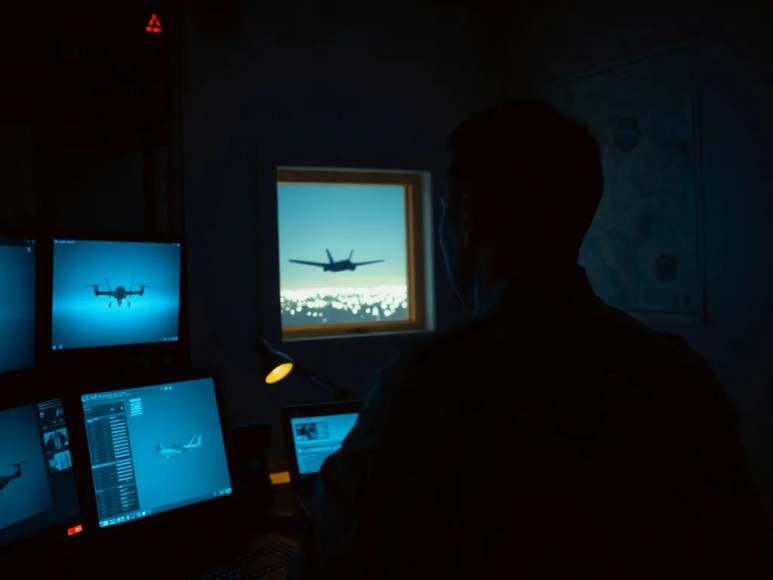
Iran strikes US military assets at Ali al-Salem Air Base, Kuwait
Iran’s military announced a targeted strike on American air-defense and launch platforms at Ali al-Salem Air Base using armed unmanned aerial vehicles. Kuwaiti authorities reported air-defense systems engaged incoming aerial threats and attributed loud explosions to intercept activity. Independent, on-the-ground verification that Patriot batteries or launch platforms were destroyed or damaged is not yet available.
Bahrain’s air defenses intercept simultaneous threats
Bahrein’s Defense Forces said they intercepted air attacks originating from Iran around the same time as the Kuwait incident. Bahrain asked civilians to shelter and follow official security guidance. The island state hosts the US Navy’s Fifth Fleet, making it a strategic fulcrum for operations across the northern Gulf and elevating the operational risk when regional air defenses and counterstrikes engage.
Sequence: US strike on Qeshm preceded regional escalation
Timeline matters: On 17 November, US forces struck a military target on Iran’s Qeshm Island near the Strait of Hormuz. Iranian forces reported retaliatory operations the next morning that included targeting US systems in Kuwait and reported earlier drone strikes at Bahrain’s Sheikh Isa Air Base on 17 November. The close temporal linkage indicates a tit-for-tat dynamic where kinetic actions on one side produce rapid counter-actions by the other.
Operational tactics and likely weapons used
What the incidents reveal tactically: Iran’s pattern of using armed unmanned aerial vehicles to attack fixed air-defense sites and radar assets matches doctrine Tehran has refined over recent years—attriting advanced systems through saturation or standoff drone fires. Defenders responded with layered air defenses: short- and medium-range interceptors, electronic surveillance to cue guns/missiles, and procedural hardening of high-value assets. If Patriot-class systems were targeted, attackers likely sought to gradient integrated air defense command nodes rather than simply physically destroy launchers.
Immediate implications for maritime trade and energy flows
Why the Strait of Hormuz matters: Roughly one-fifth of global seaborne oil transits the Strait of Hormuz; any prolonged military escalation near its approaches raises insurance costs for tankers, rerouting risks, and short-term price volatility. Shipping companies often respond to such incidents by rerouting around the Arabian Sea or delaying transit, which increases voyage time, bunker fuel consumption, and freight rates. So far, officials have not confirmed a lasting interruption to tanker traffic or major production cuts tied directly to the 18 November strikes.
Political and military options facing Washington and Tehran
US decision set: Washington must weigh proportional kinetic responses, expanded defensive deployments, diplomatic leverage via partners, and economic targeted measures. Options include increasing naval escort patrols for commercial traffic, moving additional air-defense assets to Gulf partners, or conducting precise strikes on C2 nodes if the US determines significant damage occurred. Tehran can escalate with asymmetric tools—drones, anti-ship missiles, mine deployments—or pursue calibrated signaling through proxies to raise costs without triggering full-scale war.
Regional security ripple effects and partner responses
Gulf states face hardened choices: Kuwait and Bahrain must balance domestic safety, alliance obligations, and diplomatic backlash. Expect greater air-defense posturing across Gulf Cooperation Council states, increased intelligence-sharing with Western partners, and contingency planning for commercial port and energy infrastructure protection. Neighboring states may also accelerate procurement of layered defenses, ranging from short-range systems to longer-range interceptors and electronic warfare suites.
How commercial actors and insurers will likely react
Practical market responses: Ship operators will consider: 1) temporary route deviations to reduce exposure around the Strait of Hormuz; 2) sailing with armed security teams or naval escorts where permissible; 3) negotiating voyage charters that allocate wartime risk premiums. Insurers and P&I clubs typically rise war-risk surcharges within hours of serious military incidents, increasing carrier costs downstream and potentially raising retail fuel prices in dependent markets.
Signs to watch in the next 72 hours
Critical indicators of escalation or de-escalation include: 1) official battle damage assessments from Kuwait or Bahrain corroborating losses; 2) movement of additional US or allied warships and air-defense batteries into the northern Gulf; 3) Iranian public messaging and Revolutionary Guard operational notices; 4) attacks on commercial shipping, mine-laying reports, or disruptions to port operations; 5) emergency diplomatic contacts between Washington, Riyadh, Abu Dhabi, and regional capitals. A steady stream of such signals will determine whether the episode remains localized or expands.
How the public and businesses should prepare
Short checklist for noncombatants: 1) Follow official civil-defense instructions in affected countries; 2) Corporations with Gulf exposure should review crisis plans, reroute non-essential shipments, and check insurance covers for war-risk clauses; 3) Energy traders should model short-term supply constraints and hedging for price spikes; 4) Maritime operators should coordinate with flag states and vessel operators on secure transit corridors.
Conclusion: A fragile balance with swift consequences
The 18 November strikes illustrate how localized military actions can rapidly shift regional risk for energy, shipping, and allied security. Short of definitive independent damage assessments, the incident raises the probability of further limited confrontations and underscores an operational environment where drones, layered air defenses, and sea-lanes intersect to produce outsized economic and strategic effects.