
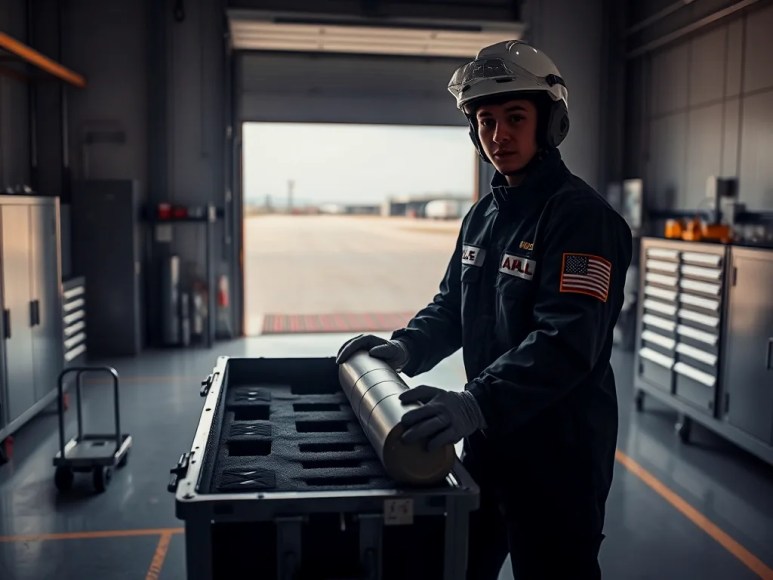
Bolu Abant İzzet Baysal University students formed the Volans Rocket Team and qualified to compete at the International Rocket Engineering Competition (IREC) with their Atlas project. The competition will take place in Midland, Texas, from June 14 to 19, 2027.
Atlas project goals and flight profile
The Atlas rocket targets a specified apogee with repeatable accuracy: the team optimizes mass distribution, motor impulse selection, and aerodynamic stability to reach the target altitude while minimizing dispersion. They select propulsion based on impulse class, calculate center of pressure etc. center of gravity using validated software, and iterate fin geometry to ensure a static margin between 1.5 and 3.0 calibers. Flight profile includes planning lift-off thrust-to-weight ratio above 5, a stable ascent with active recovery deployment sequencing, and contingencies for off-nominal engine performance.
Engineering approach and subsystem responsibilities
The project divides work across mechanical, propulsion, avionics, and software subsystems with clear deliverables and verification steps. Mechanical engineers design and test the airframe for buckling and shear loads, certify recovery system attachments to tensile loads exceeding 1.5× predicted worst-case, and validate separation mechanisms through cycle tests. Propulsion selection balances impulse, grain geometry, and burn-time to meet acceleration constraints. Avionics engineers integrate redundant flight computers and dual altimeter paths; they implement fall-back state machines for recovery deployment. Software engineers build robust telemetry framing and real-time health checks, using watchdog timers and cross-checks between baro and IMU-derived altitude.
Testing protocol: component to full-scale flight tests
Testing proceeds in staged milestones: component bench tests, subsystem integration, captive-carry shakedown, and full-scale static and flight tests. Bench tests include vibration profiles per MIL-STD-810G, connector retention cyclic loads, and battery discharge curves at low temperature. Subsystem integration includes end-to-end telemetry verification and recovery sequencing dry-runs. Captive-carry tests validate power budgets and EM interference with motors energized but restrained. Static engine firings measure thrust curves and confirm ISP and total impulse versus engine certification data. Each stage uses a test checklist with go/no-go criteria and documented anomaly reports that feed design changes into a controlled engineering change board process.
Telemetry, data analysis, and performance validation
The team collects multi-sensor telemetry: high-rate IMU (1 kHz), barometric altimeter (10 Hz), GPS position, and engine-mounted pressure sensors. Post-flight analysis includes trajectory reconstruction, apogee estimation via Kalman smoothing, and cross-correlation of telemetry channels to identify events like ignition, burnout, and deployment. The engineers produce a performance report that compares predicted etc. actual apogee, peak acceleration, and longitudinal stability metrics; they quantify dispersion and propose tuning actions (mass trimming, fin incidence adjustments, or engine selection) for subsequent flights.
Risk management and regulatory compliance
Risk management uses a graded approach: identify failure modes (structural failure, recovery failure, electronics loss), assign likelihood and severity, and implement mitigation (factor-of-safety margins, redundant recovery triggers, and telemetry downlinks). The team secures necessary flight waivers, follows national aviation authority rules for NOTAMs and temporary flight restrictions, and prepares emergency plans for range recovery. They maintain insurance and range safety documentation to meet IREC and local site requirements.
Team organization, training, and knowledge transfer
The team uses agile-like sprints with defined sprint goals tied to test milestones. New members undergo a training pipeline: fundamentals of rocketry, hands-on sessions with engine handling and soldering, and supervised test campaigns. Knowledge transfer happens through documented build guides, video walkthroughs of critical procedures, and a lessons-learned register that reduces repeated mistakes across cohorts.
Logistics and competition readiness checklist
Preparation for IREC includes transportation of sealed engines under regulatory rules, spares for critical components (altimeters, flight controllers, structural fasteners), and a cross-checked manifest of tools and documentation: flight logs, engine certifications, test reports, and payload integration procedures. On-site readiness covers launch pad assembly drills, range safety briefings, and a final systems checklist executed before each attempt.
Expected outcomes and knowledge gained
Competing at IREC gives measurable technical outcomes: validated flight-performance data, improved avionics robustness, and refined integration procedures. Students gain applied engineering skills—systems engineering, test-based design iteration, and multidisciplinary collaboration—that translate directly to aerospace roles and research opportunities.