
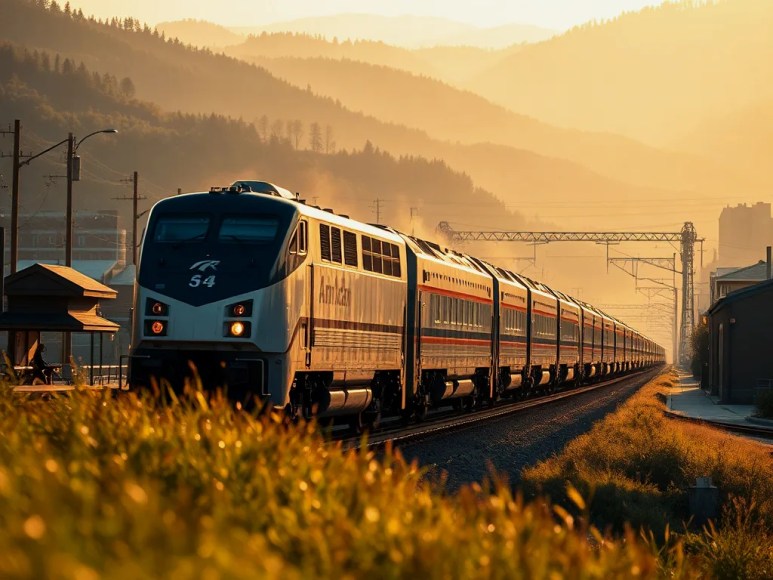
Pennsylvanian Service Expanded: Two Daily Round-Trips Begin November 18, 2026
Amtrak launched a second daily round-trip on the Pennsylvanian route between New York and Pittsburgh on November 18, 2026, effectively doubling daily departures in each direction along the roughly 444-mile corridor. This expansion provides travelers with more schedule flexibility and increases the corridor’s overall passenger capacity, supported by coordinated funding and infrastructure work at federal and state levels.
What Changed on the Pennsylvanian Route and Why It Matters
The line now operates two trains per day each way, improving options for both same-day and overnight travel. The new service targets commuters, regional business travelers, and leisure passengers connecting Pittsburgh, Harrisburg, Johnstown and Philadelphia to New York. Added frequency reduces wait times, enables better connections to other Amtrak routes, and spreads ridership across more departures, lowering peak congestion on individual trains.
Onboard Experience: Amenities and Practical Details
Trains on the Pennsylvanian offer Economy and Business Class seating, complimentary Wi-Fi and a café car. Registered baggage and on-board bicycle accommodation are available on select trains (notably train numbers 42 and 45). Passengers can purchase tickets through Amtrak’s website and mobile app; advance booking remains recommended for Business Class and peak travel periods.
Keystone West Investment: $143.6 Million from FRA
The route expansion leveraged targeted capital improvements on the Keystone West corridor between Harrisburg and Pittsburgh. The Federal Railroad Administration awarded $143.6 million for corridor upgrades, while Pennsylvania committed more than $80 million to related projects. These funds concentrated on track renewals, signaling modernization and reliability improvements on segments operated by Norfolk Southern, which maintains freight operations on the same corridor.
Eleven Infrastructure Projects Drive the Expansion
PennDOT’s Keystone West program encompasses 11 discrete projects that together enabled the second daily round-trip. Priority work included new connections and track reconfigurations near Johnstown, Enola, Lemoyne and Camp Hill to allow smoother junction movements and higher throughput. Other projects upgraded signal systems, constructed new mainline sections and increased capacity approaching Pittsburgh and Harrisburg.
How Passenger and Freight Trains Share the Norfolk Southern Corridor
Pennsylvanian services run over Norfolk Southern’s Pittsburgh Line between Harrisburg and Pittsburgh, a major east‑west freight artery. Project design protected freight capacity while adding resilience for passenger service: targeted siding extensions, upgraded interlockings, and modernized signaling reduce conflicts and allow more precise train spacing. Coordination agreements govern dispatching priorities, crew procedures and contingency responses to protect both freight timetables and passenger reliability.
Ridership Trends: 2024–2025 Data and Short-Term Outlook
Amtrak reported 233,942 passengers on the Pennsylvanian in FY2024 and 236,003 in FY2025, a modest 0.9% increase. The second daily round-trip anticipates further ridership growth by offering better schedule distribution and improved connectivity. Operators will monitor load factors, on-time performance and revenue trends over the first 12–18 months to assess whether additional frequency, rolling stock adjustments, or marketing campaigns are warranted.
Operational Steps Taken to Launch the Second Daily Round-Trip
Key steps carried out before launch:
1. Infrastructure validation and testing: Completed track geometry, signal system testing and route-integrated dispatch simulations on upgraded segments to Validate safe operations at planned speeds.
2. Stakeholder agreements: Finalized operating and maintenance agreements with Norfolk Southern, PennDOT and FRA to define dispatch priorities, slot assignments and incident response workflows.
3. Timetable integration: Synchronized Pennsylvanian schedules with connecting Amtrak services and key commuter rails to improve transfer windows and reduce minimum connection times at Harrisburg and Philadelphia.
4. Public outreach and station readiness: Held local launch events in Pittsburgh and Johnstown, updated station signage, and trained onboard staff for new service patterns and customer information protocols.
Examples of Local Impacts and Benefits
Short case examples illustrate the benefits:
Commuters: A Harrisburg-based consultant traveling to New York for occasional client meetings gains an evening departure option that returns the same day, reducing overnight costs.
Regional tourism: Weekend travelers from New York can now depart on earlier Friday services and return later Sunday services, expanding leisure stays in western Pennsylvania towns.
Freight operations: Freight dispatchers gain predictable passenger windows due to negotiated slot times, enabling improved planning for track outages and manifest movements.
What to Watch Next: Performance Metrics and Expansion Triggers
Authorities set specific performance indicators to evaluate the new service: average load factor per departure, on-time performance percentage, revenue per train-mile, and ridership growth by origin-destination pair. If sustained demand and favorable operational margins appear after 12–24 months, agencies may consider additional frequency increases, further station stops, or equipment reallocations to support capacity.
How This Model Can Guide Other Corridor Upgrades
This project demonstrates a replicable approach for corridors where passenger service must coexist with heavy freight: combine targeted federal funding with state investment, prioritize signaling and connection improvements that relieve bottlenecks, and formalize operating agreements that preserve freight throughput while adding passenger slots The phased, data-driven roll-out—validate infrastructure, stage service changes, then monitor KPIs—reduces risk and builds stakeholder confidence.
Summary: Practical Takeaways for Travelers and Planners
Travelers gain twice-daily flexibility each way across the New York–Pittsburgh corridor, with modern onboard amenities and selective baggage or bike accommodations. Planners have a concrete example of how focused corridor investments, coordinated stakeholder agreements and incremental service changes can expand passenger options without disrupting freight movements. Early ridership data will determine whether this service becomes a stepping stone to further Amtrak growth in the region.